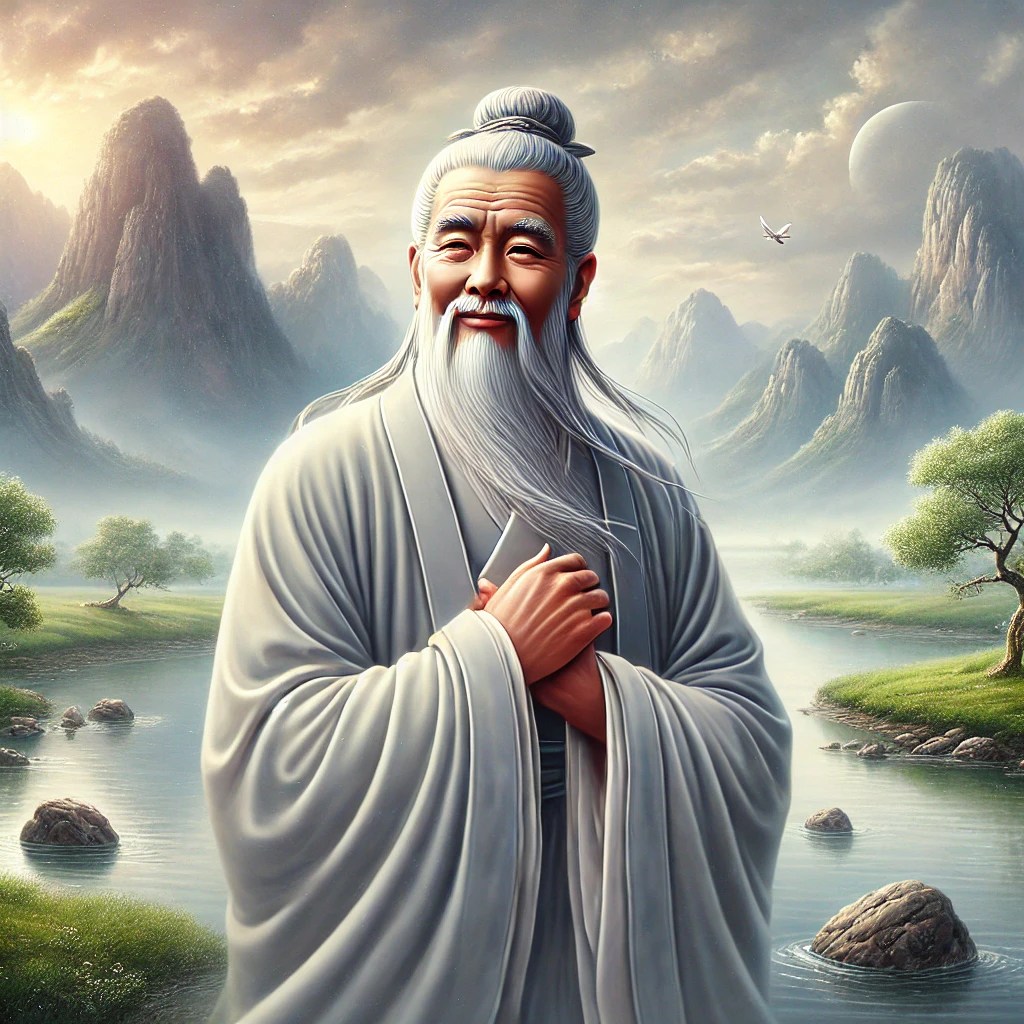
Minimalism

  • IT’S LESS; IT’S NOT MORE.

    “I fear not the man who has practiced 10,000 kicks once, but I fear the man who has practiced one kick 10,000 times.”
    — Bruce Lee

    Fewer techniques. Fewer exercises. Yet high intensity.

    In martial arts and training, refinement is not multiplication—it is distillation.

    You do not become sharp by adding more tools. You become sharp by removing everything that dulls the edge.

    A small set of techniques, trained deeply, with full presence, becomes more dangerous than a wide arsenal practiced shallowly. Repetition compresses awareness into precision. Precision compresses into instinct. Instinct compresses into action without hesitation.

    The same applies to conditioning. Fewer movements, executed with commitment, create more adaptation than scattered effort spread across too many patterns.

    Intensity replaces quantity. Focus replaces variety. Depth replaces display.

    The body learns faster when it is not confused by excess. The nervous system adapts more completely when it is not split across unnecessary options.

    At a certain point, training is no longer about doing more. It is about removing everything that is not essential—and then performing the essential with absolute clarity.

    Simple structure. High demand. No waste.

    This is where efficiency becomes power.

    “It is not daily increase but daily decrease. Hack away the unessential.”
    — Bruce Lee


  • THE WAY OF FEWER MOVES: MASTERY THROUGH EFFORTLESS POWER

    A spiritual warrior does not chase motion—he refines it. He does not glorify effort—he distills it. In a world that equates busyness with progress, the warrior walks a quieter path: do less, achieve more. Not through laziness, but through precision. Not through weakness, but through mastery.

    In martial arts, the novice believes victory comes from doing more—more strikes, more techniques, more force. But the seasoned warrior learns the opposite. Each unnecessary movement is a leak in power, a distraction from truth. The question becomes: How can I accomplish the same result with fewer moves?

    This is the path of economy. The path of essence. The path of control.

    A single well-timed strike is worth more than ten frantic ones. A still mind sees openings that a restless mind cannot. In the silence between actions, clarity arises. In that clarity, action becomes inevitable—clean, direct, undeniable.

    To do less is not to retreat—it is to remove everything that is not necessary. Ego says, prove yourself through volume. The warrior answers, prove nothing—only express what is true. When the unnecessary falls away, what remains is sharp, focused, and unstoppable.

    Consider the body. Tension slows the strike. Relaxation increases speed. The less you interfere, the more naturally power flows. The same is true in life. Overthinking delays action. Fear multiplies steps. Attachment clutters the path.

    But when intention is clear, action becomes simple.

    Bruce Lee captured this spirit when he spoke of mastering one technique through repetition until it becomes effortless. Not a thousand scattered movements—but one perfected expression. This is the difference between activity and mastery. Between noise and signal.

    The spiritual warrior trains to act without excess. To speak without distortion. To move without hesitation. Every action is deliberate, every motion essential. This is not minimalism for its own sake—it is alignment with truth.

    Because truth is simple.

    And simplicity is power.

    So the warrior asks in every moment: What is the most direct path? What can be removed? What remains if I strip this down to its essence? The answer reveals the path forward.

    Do less—but do it fully.
    Move less—but move with purpose.
    Speak less—but speak with weight.

    In this way, the warrior becomes like water—effortless, adaptable, and unstoppable. Not because it tries harder, but because it flows without resistance.

    And in that flow, more is achieved than effort alone could ever produce.


  • SIMPLICITY: THE PATH TO BRILLIANCE


    Carl von Clausewitz was a Prussian military strategist and theorist, best known for his influential work On War, which explores the nature of war, strategy, and the relationship between politics and military conflict.

    Von Clausewitz once said, “Everything in war is very simple, but the simplest thing is difficult.”


    Albert Einstein was a renowned theoretical physicist, best known for developing the theory of relativity, which revolutionized our understanding of space, time, and energy.

    Einstein echoed this sentiment: “Everything should be made as simple as possible, but not simpler.”


    Leonardo da Vinci was an Italian polymath, renowned for his contributions to art, science, engineering, and anatomy, with masterpieces like Mona Lisa and The Last Supper showcasing his genius.

    Da Vinci proclaimed, “Simplicity is the ultimate sophistication.”


    Lao Tzu was an ancient Chinese philosopher and the founder of Taoism, best known for writing the Tao Te Ching, a foundational text that emphasizes living in harmony with the Tao (the Way) and embracing simplicity, humility, and naturalness.

    Lao Tzu stated, “I have just three things to teach: Simplicity, patience, compassion. These three are your greatest treasures.


    Bruce Lee was a legendary martial artist, actor, and filmmaker, renowned for revolutionizing martial arts and popularizing them globally through his philosophy, films, and groundbreaking techniques.

    He also founded the martial art and philosophy of “Jeet Kune Do.”

    As Bruce Lee famously said, “Simplicity is the key to brilliance.”

    For him, simplicity was not just a principle of martial arts, but a path to brilliance, contentment, and personal growth—emphasizing the importance of eliminating the unnecessary to focus on what truly matters.


    CONCLUSION.

    When great minds across different fields—like Clausewitz, Einstein, da Vinci, Lao Tzu, and Bruce Lee—consistently advocate for simplicity as the path to brilliance, it’s hard to ignore their wisdom. I’ve learned that when these geniuses all agree on something, it’s not just a fleeting idea; it’s a timeless principle.

    That’s why I make it a point to implement this concept of simplicity in my own life and systems such as RAT Synthesis. By cutting through the noise and focusing on what truly matters, I find clarity, effectiveness, and greater success-and so can you.