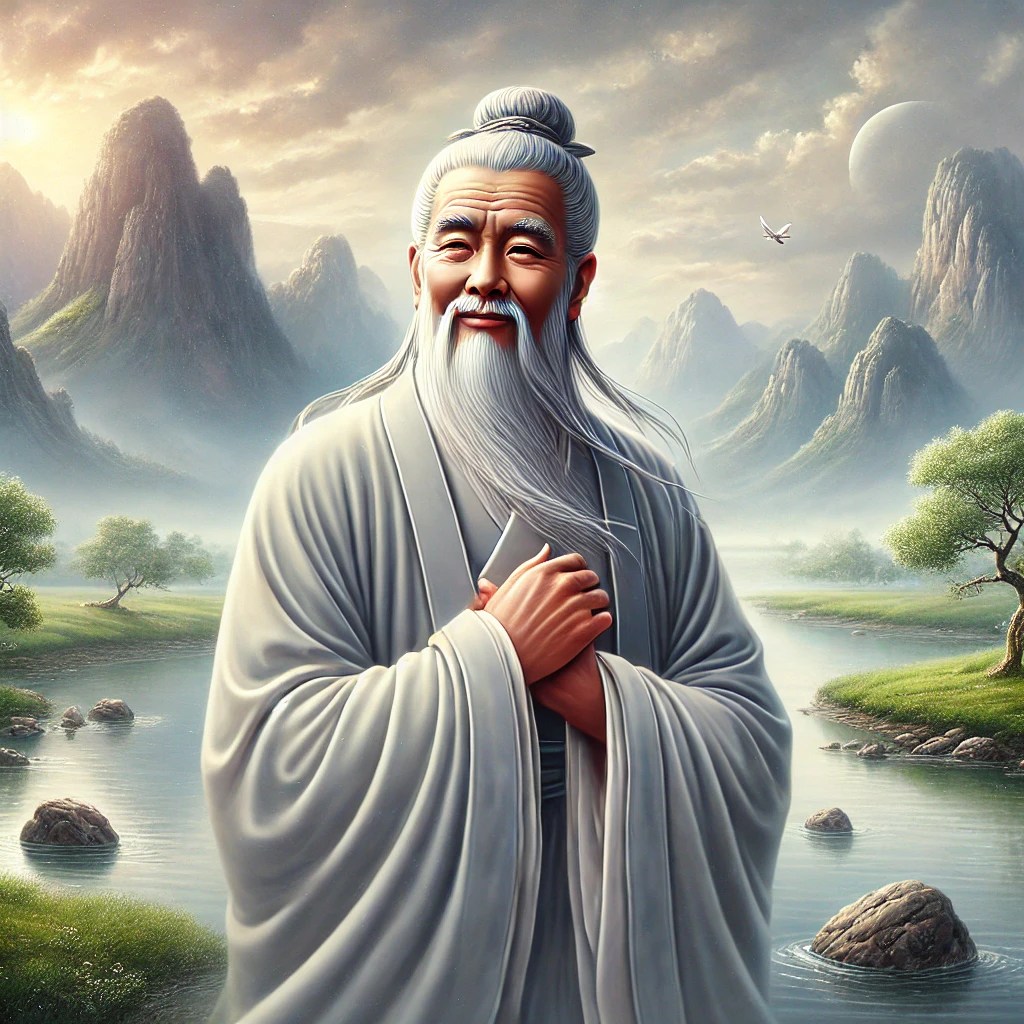
“I fear not the man who has practiced 10,000 kicks once, but I fear the man who has practiced one kick 10,000 times.” — Bruce Lee
Fewer techniques. Fewer exercises. Yet high intensity.
In martial arts and training, refinement is not multiplication—it is distillation.
You do not become sharp by adding more tools. You become sharp by removing everything that dulls the edge.
A small set of techniques, trained deeply, with full presence, becomes more dangerous than a wide arsenal practiced shallowly. Repetition compresses awareness into precision. Precision compresses into instinct. Instinct compresses into action without hesitation.
The same applies to conditioning. Fewer movements, executed with commitment, create more adaptation than scattered effort spread across too many patterns.
The body learns faster when it is not confused by excess. The nervous system adapts more completely when it is not split across unnecessary options.
At a certain point, training is no longer about doing more. It is about removing everything that is not essential—and then performing the essential with absolute clarity.
Simple structure. High demand. No waste.
This is where efficiency becomes power.
“It is not daily increase but daily decrease. Hack away the unessential.” — Bruce Lee
A spiritual warrior does not chase motion—he refines it. He does not glorify effort—he distills it. In a world that equates busyness with progress, the warrior walks a quieter path: do less, achieve more. Not through laziness, but through precision. Not through weakness, but through mastery.
In martial arts, the novice believes victory comes from doing more—more strikes, more techniques, more force. But the seasoned warrior learns the opposite. Each unnecessary movement is a leak in power, a distraction from truth. The question becomes: How can I accomplish the same result with fewer moves?
This is the path of economy. The path of essence. The path of control.
A single well-timed strike is worth more than ten frantic ones. A still mind sees openings that a restless mind cannot. In the silence between actions, clarity arises. In that clarity, action becomes inevitable—clean, direct, undeniable.
To do less is not to retreat—it is to remove everything that is not necessary. Ego says, prove yourself through volume. The warrior answers, prove nothing—only express what is true. When the unnecessary falls away, what remains is sharp, focused, and unstoppable.
Consider the body. Tension slows the strike. Relaxation increases speed. The less you interfere, the more naturally power flows. The same is true in life. Overthinking delays action. Fear multiplies steps. Attachment clutters the path.
But when intention is clear, action becomes simple.
Bruce Lee captured this spirit when he spoke of mastering one technique through repetition until it becomes effortless. Not a thousand scattered movements—but one perfected expression. This is the difference between activity and mastery. Between noise and signal.
The spiritual warrior trains to act without excess. To speak without distortion. To move without hesitation. Every action is deliberate, every motion essential. This is not minimalism for its own sake—it is alignment with truth.
Because truth is simple.
And simplicity is power.
So the warrior asks in every moment: What is the most direct path? What can be removed? What remains if I strip this down to its essence? The answer reveals the path forward.
Do less—but do it fully. Move less—but move with purpose. Speak less—but speak with weight.
In this way, the warrior becomes like water—effortless, adaptable, and unstoppable. Not because it tries harder, but because it flows without resistance.
And in that flow, more is achieved than effort alone could ever produce.
Back in 1989, I ditched martial arts for almost a year and jumped headfirst into a Weider bodybuilding program. I started with the beginner workouts, moved up to intermediate, and quickly realized I had walked into a volume nightmare. Many hours in the gym weekly. Exhaustion. Pain. Aspirins just to push through.
Did I get results? Sure. But not the results I wanted. I didn’t look like a bodybuilder poster boy with hulking muscles. Something was wrong.
Years later, the truth hit me: most bodybuilders and athletes aren’t just working hard—they’re juiced up on steroids. Their insane volume works because their bodies recover unnaturally fast. For those of us training naturally, high volume is a trap.
Enter the real teachers: Mike Mentzer’s Heavy Duty and Arthur Jones, the founder of Nautilus. Their philosophy? Forget spending hours in the gym. Focus on high-intensity training. Hit it hard, then rest. Recover. Let your body do the work. Natural bodybuilding courses confirmed the same thing: intensity, not volume, is the key.
Fast forward, and the lesson hit me in martial arts too. Bruce Lee said training is like sculpting—chiseling away, not piling on. Michelangelo probably would’ve agreed. Less is more.Simple. Focused. Intense. Rested. Repeated.
Now? I get a killer martial arts workout in 2-3 sessions of 45 minutes a week and I cover many of my techniques. No burnout. Just results.
“You can only fight the way you train.” – Miyamoto Musashi, A Book of Five Rings
Let’s get real.
The UFC and modern MMA are a spectacle. Entertaining? Absolutely. Effective? To a point. But if you think what happens in the cage reflects the savage, unpredictable, and dirty nature of real violence—you’ve bought into the modern classical mess Bruce Lee warned us about.
Let’s break it down:
Weight Classes. Rules. Referees.
You don’t get those on the street.
In the octagon, you’ve got timed rounds, doctors, tap-outs, padded gloves, and strict rules that ban the very tools that end real fights in seconds: groin strikes, eye jabs, throat shots, ear slaps, bites, claws, leg fractures, and stomps. That’s not a knock on the athletes—some are phenomenal. But it is a knock on the idea that MMA as a sport is the end-all-be-all of combat training.
Street fighting is no-holds-barred. And if you’re not training for that reality, you’re not ready.
Horrendous EYE POKES That Lead to Fight Stoppages
RAT Synthesis™: MMA for the Street, Not the Cage
(Inspired by Rapid Assault Tactics™ R.A.T.)
RAT Synthesis™ was born from battle and built for victory. This isn’t theory. This isn’t art for art’s sake. This is a combat and mindset system forged from the raw truth of street altercations, military encounters, and years of refining what actually works under real pressure.
👉 Rapid-fire low-line kicks to shatter knees. 👉 Eye jabs that disorient or disable. 👉 Ear slaps that rupture eardrums and shut down balance. 👉 Carotid stuns that drop attackers like a sack of bricks. 👉 Groin destruction that ends the fight before it starts.
This is not “tough guy talk.” These are surgical, ballistic tools you deploy when your life, your loved ones, or your mission is on the line.
“If You Can’t Beat a Trained Fighter With Rules, How Can You Without Rules?”
This is a common misunderstanding.
In reality, removing the rules changes everything. It doesn’t level the playing field—it flips it entirely. The sport-trained fighter operates inside a framework. That framework conditions the fighter’s nervous system, instincts, and tactics. When those rules are stripped away, so is their operating system.
RAT Synthesis™ was built outside that system.
This is chess, not checkers.
While some train to score points or win on the judge’s card, we train to cause pain, break structure, and end the encounter instantly.
💥 Eye jab before they even know the fight started. 💥 Elbow spike into a punch to fracture the attacking limb. 💥 Lead sidekick into the knee as they step forward—fight over before it began. 💥 Intercept, destroy, terminate.
In RAT Synthesis™, defense isn’t passive. We don’t block—we break. We don’t wait—we intercept. We don’t counter—we destroy and finish.
Our method relies on the pain–pressure–termination sequence:
Pain (via destructions, nerve shocks, or sensory disruption like eye jabs), This steals the initiative
Pressure (overwhelming, nonstop forward barrage using a STRAIGHT BLAST that turns them into a pedestrian—backpedaling, panicked, and off-balance),
Termination (decisive, brutal end using headbutts, knees, elbows). If this doesn’t seal the deal, we have more.
This is not theory. It’s not for points. It’s not sparring. It’s survival.
So yes, a highly trained MMA fighter may dominate inside a controlled ruleset—but when the rules are gone, so is their edge.
The way you train is the way you fight.
Another example: when two fighters are tangled on the ground, each scrambling for position with endless counters—why play that game? Instead of trading move for move, a direct attack to a vital target—like seizing the groin—ends the fight immediately. Why memorize a hundred counters when a few ruthless, well-placed moves let you dominate?
RAT Synthesis™ turns chaos into strategy. We operate in the shadows of the rulebook—where speed, ruthlessness, and targeting vital structures matter more than endurance, points, or submission games.
The Missing Link: The Warrior Mind
What’s even more dangerous than technique? Mindset.
The modern martial arts world is missing its heart—the warrior spirit. What gave the Zen Samurai their edge wasn’t just their sword. It was their mind. Calm under chaos. Focused. Fierce. Fully present. Stillness in motion. And killer instinct.
At RAT Synthesis™, we train that. Through warrior meditation and strategic mental conditioning, we forge fighters who are as mentally sharp as they are physically deadly. Because when fear hits, when adrenaline spikes, when the chaos surges—you fall back on your training.
And if your training was built for sport, you lose.
UFC = Entertainment.
RAT Synthesis™ = Survival.
The modern MMA world may laugh now—but in a real violent encounter, they’ll wish they trained for what we train for.
This isn’t a game. This isn’t about belts or titles. This is about walking away alive—every time.
Lastly, as you get older, you don’t have time to play and roll around. You need to end it quickly.
Learn the system that cuts through the noise. Train in the art that ends fights in seconds, not rounds. Forge the mindset that wins before the battle begins.
Bruce Lee wasn’t just a movie icon — he was a nearly unbeatable street fighter in both the U.S. and Hong Kong, the heart of Chinese Kung Fu.
Legends like Chuck Norris, Joe Lewis, Bolo Yeung, Jim Kelly, and Mike Stone (91 straight wins in full-contact karate) all recognized one thing: Bruce had a deadly edge that conventional martial arts never captured. But the complete, real-world system of domination? It was never released. Almost lost forever. Until now.
After decades of relentless study, brutal training, and real-world testing, Sifu Matt Russo has cracked the Bruce Lee code— and now it’s yours. Forget flashy kicks and cage rules. This isn’t for sport. Not for show. This is raw, brutal street fighting — built for one thing: Dominate. Survive. Walk away alive.
Inside this book, you’ll discover:
The hidden blueprint of Bruce Lee’s street-fighting genius — decoded and made battle-ready
Why traditional martial arts and conventional MMA fall short in real-life violence — and what actually works when your life depends on it
The radical simplicity of Jeet Kune Do.
Master the art of striking first and applying offensive defense — with battle-tested tactics to control the fight and end it fast
How Bruce’s vision inspired elite fighters to break from tradition and master the true art of survival
This isn’t a history lesson — it’s a revolution in real-world self-defense.
“Life is really simple, but we insist on making it complicated.” — Confucius The pieces were scattered— but I’ve assembled the puzzle for you. This is your street fighting blueprint: distilled from Rapid Assault Tactics™ (R.A.T.) and the Joe Lewis Fighting System™ — both rooted in Jeet Kune Do — and sharpened through 44 years of training and deep study of Bruce Lee. While Joe Lewis’s system was designed for sport, what I share here is forged specifically to dominate on the street. This recipe gives you clear, decisive advantages in real-world combat, even against larger experienced fighters.
You could study every JKD style, concept, and system, read every JKD book, watch every JKD video, train in multiple arts, and even learn from JKD legends like I did — and still miss the mark. That was me. Lost in the trees. Couldn’t see the forest. Until I found this recipe — and now you can too.
Avoid years of confusion, frustration, or worse—believing you know it all when you don’t. Get this book. Because in the end, truth is simple: “Jeet Kune Do is simply to simplify.” — Bruce Lee
About the Author: Sifu Matt Russo is a warrior, teacher, and seeker with 44+ years of martial arts mastery across Kung Fu, Kickboxing, Kali, and Jeet Kune Do — including years of study with a Bruce Lee lineage instructor, multiple seminars with JKD legends, and training in Chi Ling Pai® under Grandmaster Denis Decker. A spiritual mentor grounded in Raja Yoga and the teachings of Paramahansa Yogananda, Matt blends physical mastery with mental clarity — plus 35 years of corporate strategy experience — to decode Bruce Lee’s ultimate system for survival and success.
When chaos erupts, you won’t rise to the occasion — you’ll fall to your training. If you’re done with illusions… If you want power, precision, and survival skills that work in the real world… Click the link below and unleash Bruce Lee’s complete street-fighting system — finally decoded and battle-ready. The street doesn’t wait. Neither should you.
TABLE OF CONTENTS
INTRODUCTION
UNLEASHING THE STRATEGIC GENIUS OF BRUCE LEE
CONCLUSION: THE RETURN OF THE DRAGON’S CODE
PROGRESSIVE TRAINING SYSTEM
APPENDIX / RESOURCES
ABOUT THE AUTHOR
If you’re done playing games—and ready to unlock real-world fighting power—click HERE
UNLOCK THE SECRET TO UNSTOPPABLE POWER Transcend Fear, Doubt, and Confusion. Awaken the Warrior Within.
What if you could move through life with laser precision, unwavering clarity, and unstoppable effectiveness? What if every decision, every action, every moment was infused with calm power and strategic mastery?
This isn’t a fantasy. This is Mushin.
MUSHIN: THE WARRIOR’S SECRET TO UNSTOPPABLE POWER isn’t just a book—it’s a breakthrough. A battlefield-tested guide forged from ancient Eastern wisdom, elite martial arts, and modern performance science. This is the manual for those who refuse to live an average life.
Mushin means “no-mind, no-self”—a state where fear disappears, doubt vanishes, and action flows effortlessly from a place of higher awareness. It’s how the samurai dominated the battlefield. It’s how world-class CEOs and Hollywood icons stay centered, sharp, and powerful under pressure. And now, it’s how you will rise.
Through this transformational guide, you’ll learn how to:
Eliminate fear and inner resistance
Cultivate unshakable equanimity and calm under chaos
Develop killer instinct—the ability to act decisively and without hesitation under pressure
Develop razor-sharp intuition and lightning-fast clarity
Master perfect timing, distance, and strategic precision
Move with speed, grace, and explosive power
Enhance every aspect of your life—from combat to career
Achieve success faster—and with purpose
This is more than self-help. This is self-mastery.
If you’re ready to break limits, silence the noise, and embody the mindset of warriors and masters—this is your moment.
Don’t just read about greatness. Become it. Get your copy of MUSHIN: THE WARRIOR’S SECRET TO UNSTOPPABLE POWERnow—and begin the journey to supreme mastery. Click HERE to rise!
Ancient Greek aphorism inscribed at the Temple of Apollo at Delphi (circa 6th century BCE)
In today’s world, we are often caught in a whirlwind of illusions. The problem lies in the way our minds are deluded by false thinking, creating a life that feels distant from peace, contentment, and true fulfillment.
Society, corporations, politics, our families, and the ever-present mediareinforce these misconceptions. Many corporations fuel this narrative by convincing us that happiness can be purchased through material possessions, while politicians perpetuate the illusion of external change and fulfillment to secure donations and support.
We’re led to believe that happiness and contentment are somewhere out there—beyond ourselves—and can only be attained through external possessions, achievements, reconstructions, or status.
The greatest deception, however, is the belief in our own separation. We have been conditioned to think of ourselves as individual entities, isolated and pitted against the world in a constant battle.
This belief in separation breeds fear, anxiety, and a sense of hostility. We see the world as a place full of competition, negativity, and scarcity—constantly struggling to survive.
Yet, the world is not always hostile. It is a mixture of light and dark (yin and yang), positive and negative, joy and sorrow. Like sugar mixed with sand, we must learn to sift through life’s challenges, keeping the sweetness and leaving behind the bitterness.
The Problem: The Delusion of Separation
“The greatest trick the Devil ever pulled was convincing the world he didn’t exist”—Charles Baudelaire.
“The second greatest trick the Devil ever pulled was convincing the world he is the good guy”—Ken Ammi.
Our minds are clouded by false thinking, led astray by the fleeting promises of fulfillment offered by the senses—pleasures like excessive sex, wine, drugs, money, and material possessions. These temporary distractions keep us chasing after external gratification, but they never provide lasting contentment.
This false reality, known as Maya, is perpetuated by an external, satanic consciousness that reinforces the illusion that happiness and fulfillment lie outside of ourselves.
The world, obsessed with materialism, fame, and power, only deepens this delusion, telling us that true contentment is something we must acquire, achieve, or possess—whether it’s through career success, societal approval, or the next big purchase.
But the truth is that fulfillment doesn’t lie in the external world. It lies within us, in the stillness of the mind and the peace we cultivate through spiritual practice. “The kingdom of God is within you” – Jesus
This false thinking leads us to perceive the world as completely hostile—like a constant battleground. We’re convinced that we must constantly struggle against others, society, and circumstances to attain happiness. While it’s true that life contains war, it’s not the only reality; life is more nuanced and multifaceted. This belief isolates us further from the truth: that true contentment and peace lie within.
The Solution: Expanding Our Consciousness
The solution to this delusion is profound, yet simple: it is about expanding our consciousness and returning to our true nature. To do this, we must step away from the false narrative of separation and reconnect with the divine essence within ourselves.
One of the most powerful tools for expanding consciousness is meditation. By quieting the mind, we can begin to recognize the inner peace that has always been present. Practices such as Kriya Yoga, a spiritual path taught by great masters like Paramahansa Yogananda, can help purify the mind, elevate our consciousness, and bring us closer to our true selves. Kriya Yoga is not just a practice but a path to self-realization—the recognition that we are not separate, but one with the divine.
Alongside meditation, we can practice the Law of Attraction, which teaches that the energy we put into the world will return to us. By choosing to focus on positive thoughts, emotions, and actions, we align ourselves with higher frequencies of love, abundance, and peace. This practice helps us see that contentment is not something we must seek outside of ourselves, but something we can create from within.
Another key element of the solution lies in adopting a philosophy of Plain Living and High Thinking, as taught by Yogananda. This approach emphasizes:
Simplicity: Avoiding material excess, practicing moderation, and living with minimal distractions.
Elevated Thinking: Focusing on God, self-realization, and service to others.
Balance: Engaging in work and responsibilities while maintaining a spiritual focus.
Meditation: Using practices like Kriya Yoga to purify the mind and elevate consciousness.
Harmony: Living sustainably, cultivating virtues, and fostering positive relationships.
By living simply, we can enjoy the little pleasures of life—the taste of food, the beauty of nature, the joy of deep connection with others—without the need for constant external validation or material gain. Inner peace comes from within, and by focusing on the small things, we unlock a more profound sense of fulfillment.
The RAT Synthesis Transcendental Life Mastery (TLM) Approach: A Path to Liberation
At the heart of Transcendental Life Mastery (TLM) lies the understanding that true mastery of life is not about accumulating wealth or achieving success in the conventional sense. It is about aligning with universal principles, expanding our consciousness, and attaining divine freedom. The problem is not having things or engaging in activities; it’s being possessed by them.
The RAT Synthesis method, which blends ancient wisdom and modern strategies, can help you break free from the delusions of the mind and guide you toward a path of self-realization and mastery. By integrating practices like meditation, strategic thinking, and personal development, TLM helps you cultivate mental clarity, emotional resilience, and spiritual growth.
Through the RAT Synthesis method, you can:
Break free from limiting beliefs and false thinking.
Cultivate a mindset of abundance, peace, and joy.
Practice meditation and energy work to elevate your consciousness.
Embrace simplicity and discipline to live with greater contentment.
Learn how to play chess with life securing both internal and external victory
TLM provides you with the tools to rise above the noise of the world and live a life of purpose, fulfillment, and peace.
Take the Next Step
If you’re ready to transform your life and break free from the delusions of the mind, Transcendental Life Mastery offers a path forward. Whether you are drawn to the teachings of Self-Realization Fellowship (SRF), Ananda, the TLM Program, or some other pathway, each path offers unique tools for spiritual awakening and personal mastery.
Self-Realization Fellowship: Explore the teachings of Paramahansa Yogananda on Kriya Yoga and self-realization. SRF Website
Ananda: Discover the path of meditation and service through the teachings of Swami Kriyananda. Ananda Website
TLM Program: Dive deeper into the Transcendental Life Mastery program, which combines spiritual practices and life strategies for achieving your highest potential. TLM Website
Embrace Plain Living and High Thinking, and begin your journey towards true peace, inner contentment, and spiritual mastery. The solution to the world’s delusions is within you—waiting to be discovered.
Carl von Clausewitz was a Prussian military strategist and theorist, best known for his influential work On War, which explores the nature of war, strategy, and the relationship between politics and military conflict.
Von Clausewitz once said, “Everything in war is very simple, but the simplest thing is difficult.”
Albert Einstein was a renowned theoretical physicist, best known for developing the theory of relativity, which revolutionized our understanding of space, time, and energy.
Einstein echoed this sentiment: “Everything should be made as simple as possible, but not simpler.”
Leonardo da Vinci was an Italian polymath, renowned for his contributions to art, science, engineering, and anatomy, with masterpieces like Mona Lisa and The Last Supper showcasing his genius.
Da Vinci proclaimed, “Simplicity is the ultimate sophistication.”
Lao Tzu was an ancient Chinese philosopher and the founder of Taoism, best known for writing the Tao Te Ching, a foundational text that emphasizes living in harmony with the Tao (the Way) and embracing simplicity, humility, and naturalness.
Lao Tzu stated, “I have just three things to teach: Simplicity, patience, compassion. These three are your greatest treasures.“
Bruce Lee was a legendary martial artist, actor, and filmmaker, renowned for revolutionizing martial arts and popularizing them globally through his philosophy, films, and groundbreaking techniques.
He also founded the martial art and philosophy of “Jeet Kune Do.”
As Bruce Lee famously said, “Simplicity is the key to brilliance.”
For him, simplicity was not just a principle of martial arts, but a path to brilliance, contentment, and personal growth—emphasizing the importance of eliminating the unnecessary to focus on what truly matters.
CONCLUSION.
When great minds across different fields—like Clausewitz, Einstein, da Vinci, Lao Tzu, and Bruce Lee—consistently advocate for simplicity as the path to brilliance, it’s hard to ignore their wisdom. I’ve learned that when these geniuses all agree on something, it’s not just a fleeting idea; it’s a timeless principle.
That’s why I make it a point to implement this concept of simplicity in my own life and systems such as RAT Synthesis. By cutting through the noise and focusing on what truly matters, I find clarity, effectiveness, and greater success-and so can you.
In the RAT Synthesis™ fighting method, we integrate Mike Tyson–inspired kickboxing into our offensive, follow-up, and finishing phases. Rather than bobbing and weaving, we emphasize interception, destruction, and simultaneous block-striking. Iron Mike–style Street Kickboxing makes up 20% of the RAT Synthesis™ system.
This video is a Masterclass in Mike Tyson’s boxing style:
Peek-a-boo guardwith head movement to slip punches and close distance
Jab
Jab-Jab
Blinding Jab-overhand
Hooks – Body and Head
Lead hook head, rear uppercut chin
Hook to the Body, then Uppercut (same hand) (open guard, lift chin)
Uppercut to the Chin in Close Range (capitalize on tight space)
Left Hook (signature weapon, powerful finisher)
“Punches in bunches”
“Throw punches with bad intentions“
Breaking Down Mike Tyson’s Signature Uppercut | His Most Dangerous Punch 🥊
Mike Tyson’s Deadliest Combos (Breakdown)
Animals Wide 23 📅 January 27 at 4:10 PM
Kevin Rooney was asked when Mike Tyson was at his absolute prime. His answer? 😳
“When he beat Michael Spinks… He knocked out Michael Spinks in 90 seconds. It wasn’t a joke. I mean, he knocked him out. So l think that fighter, in my opinion, could have and should have probably beaten anybody that was in his path. Anybody including Rocky Marciano and Muhammad Ali. Well, I’ll give Muhammad Ali and Rocky, well it could have been different, I mean, Rocky punched like hell. Muhammad punched like hell. Rocky had beat everyone. Muhammad had heart and was hard to hit. The fights would have been interesting. But I believe that Mike would have come out the better. Because he punched very hard. I believe that Mike is one of the hardest punchers in history. He punches harder than Rocky. Punches harder than Joe Louis. Punches harder than George Foreman.”
Core Combat Principles:
Indomitable Warrior Spirit
Psychological Warfare
Discipline and Simplicity
Adaptability and Resilience
Peek-a-Boo Style
Power Punching
Aggressive Counterpunching
Body Attacks and Combinations
Angles and Footwork
Mike Tyson is a lifelong student, deeply dedicated to learning. He meticulously studied the techniques of the old-time great fighters and drew inspiration from legendary warriors throughout history. His success wasn’t merely the result of raw power and physical prowess; it was built on a foundation of profound knowledge, strategy, and insight. Beyond the ring, Tyson is a highly intelligent individual and a reflective philosopher. Despite facing his share of flaws and challenges, he has grown and matured significantly over the years, embodying resilience and transformation.
This blend of intelligence, strategy, and resilience has made Tyson a living legend in the world of boxing. His ability to master both the mental and physical aspects of his craft serves as a powerful example of achieving greatness. Let’s break down the key components of Tyson’s mindset and strategic principles that propelled him to the top and explore how these principles can be applied to success in any endeavor.
The Mindset: A Foundation of Strength and Resilience
Mike Tyson’s mindset was shaped by his difficult upbringing and the guidance of his trainer, Cus D’Amato. Below are the essential elements that define Tyson’s powerful mental game:
1. Unwavering Confidence
Tyson’s belief in himself was a cornerstone of his mindset. From the very beginning, he was taught by D’Amato to visualize success and maintain a positive self-image. Tyson was certain of his greatness and knew that without this unshakeable confidence, he would lose before the fight even began. His confidence allowed him to take on any opponent, no matter the odds.
2. Mind Over Matter
Tyson understood that controlling his mind was just as important as controlling his body. He learned to channel fear into aggression, using mental conditioning to push through pain and doubt. By visualizing his opponents folding before him, Tyson was able to dominate the psychological aspect of his fights, gaining a mental edge over his adversaries.
Tyson’s ability to visualize his opponents folding aligns with the Law of Attraction, which emphasizes the power of focused thought and belief in manifesting outcomes. By visualizing victory and mentally dominating his opponents, Tyson tapped into the energy of his intentions, attracting success and psychological dominance in the ring.
3. Discipline and Relentless Work Ethic
Despite his chaotic public persona, Tyson was known for his intense work ethic. Under D’Amato’s mentorship, he developed a disciplined approach to training that included mastering the fundamentals, conditioning, and mental preparation. Tyson’s mindset was one of constant improvement—never satisfied with “good enough,” he was always striving for excellence.
“If someone is doing more than me, I’ll do more. If he gets up at 5 to go running, I get up at 4. If he gets up at 4, I get up at 3. If he gets up at 3, I won’t sleep.” — Mike Tyson
4. Focus on the Present Moment
Tyson emphasized the importance of focusing entirely on the present moment, particularly in the ring. He left behind distractions like fame or external pressures and concentrated solely on the task at hand. This intense focus allowed him to stay in the zone, operating with precision and clarity during his fights.
Tyson’s intense focus on the present moment mirrors the essence of Zen and yoga, where mindfulness and presence are key to mastering both the mind and body. Just as Tyson shut out distractions to perform with precision, Zen and yoga teach us to center our attention, shedding external pressures and embracing the flow of the present to achieve clarity and inner power.
5. Embracing Fear
Rather than being paralyzed by fear, Tyson learned to harness it. Fear, to him, was a natural emotion that could be transformed into energy. By embracing fear and using it as fuel, Tyson became more intense and aggressive, turning an obstacle into a powerful motivator.
Tyson’s ability to transmute fear into powerful motivation mirrors the yogic practice of transmutation, where negative emotions are transformed into positive energy. Just as yogis convert inner turmoil into strength, Tyson harnessed fear, turning it from a hindrance into a driving force that propelled him to greater intensity and focus.
6. Anger as Motivation
Tyson often channeled his anger into his fights. His personal struggles, from his troubled upbringing to his turbulent emotions, gave him the fire to fight harder. Anger became a source of energy that propelled him to perform with even more intensity in the ring.
In RAT Synthesis, anger is not something to channel or use as fuel. A yogi doesn’t engage with anger but either cuts it off or simply observes it as a passing phenomenon, detached from the self. Tyson’s approach of using anger as motivation contrasts with this teaching, where emotional mastery and detachment are key to maintaining clarity and inner peace.
7. Mental Toughness and Resilience
Tyson’s life was filled with obstacles, from growing up in poverty to facing legal issues. Yet, he always believed he could rise above these challenges. This mental toughness and resilience made him a formidable force, allowing him to handle pressure and adversity like few others.
8. The Will to Win
Tyson’s mindset wasn’t just about physical preparation—it was about an unrelenting psychological drive to win. His desire to dominate in the ring was so intense that he couldn’t imagine losing. This drive, combined with his skill and mental focus, made him an overwhelming opponent.
9. The Influence of Cus D’Amato
Cus D’Amato played a pivotal role in shaping Tyson’s mindset. Beyond teaching Tyson boxing techniques, D’Amato instilled in him the belief in his own invincibility. D’Amato’s coaching taught Tyson the importance of mental strength and the development of a champion’s mindset, which became one of Tyson’s most valuable tools.
Yoga teaches the invincibility of the soul, a concept embodied by Arjuna in the Bhagavad Gita, who realizes that his true self is beyond the limitations of the body and mind.
10. Humility and Self-Awareness
In his later years, Tyson reflected on the destructive power of unchecked pride and ego. He recognized the importance of humility and balance, seeking peace within himself. This self-awareness became a key aspect of his mindset as he continued to grow, learn, and evolve.
Masters embrace egolessness because it allows them to remain open to learning and growth. By letting go of unchecked pride and ego, they cultivate humility and inner peace, which creates the space for true wisdom and adaptability. This self-awareness, as Tyson discovered later in life, becomes a powerful advantage, enabling one to transcend limitations and evolve both personally and professionally.
The Strategy: Aggression, Adaptability, and Psychological Mastery
Tyson’s strategic approach in the ring was built on a blend of intense preparation, psychological warfare, and sheer aggression. Here are the key elements of his strategy:
1. Intense Preparation
Preparation was the foundation of Tyson’s success. He trained rigorously, mastering both his physical and mental skills. This included perfecting his fundamentals, conditioning, and mental resilience. Tyson believed that preparation wasn’t just about the body—it was about ensuring that the mind was equally prepared to face the challenge ahead.
Sun Tzu, like Tyson, emphasized the importance of preparation as the key to success. In The Art of War, he stresses that victory is won long before the battle begins, through careful planning, strategy, and mental readiness. Sun Tzu believed that thorough preparation of both the body and mind is essential to achieving victory, a principle that Tyson applied both in and out of the ring.
2. Fearlessness and Aggression
“A good offense is the best defense”
Tyson’s approach to fighting was rooted in fearlessness and aggression. He was known for overwhelming his opponents right from the start, using his speed and power to take control of the fight. Tyson believed that the key to success was to never back down and to be the aggressor in every fight.
The Samurai Warriors, particularly under figures like Miyamoto Musashi, were trained in the art of swift, aggressive action. Musashi’s philosophy emphasized striking first, using speed and precision to overwhelm the opponent.
Similarly, Bruce Lee’s martial arts philosophy was about dominating with precision and fluidity. Lee believed in creating the action rather than waiting for the opponent, staying one step ahead at all times.
3. Adaptability and Flexibility
While Tyson was known for his aggressive style, he also understood the importance of adaptability. He didn’t rely on a single strategy but adjusted his approach based on the strengths and weaknesses of his opponent. This flexibility allowed him to stay unpredictable and maintain control over the flow of the fight.
Similarly, Joe Lewis, the karate champion, used Bruce Lee’s five ways of attack to defeat different fighter archetypes. By blending speed, timing, and the right choice of attack, Lewis was able to adapt his strategy to overwhelm counterfighters, defensive fighters, and aggressive fighters, much like Tyson, remaining unpredictable and in control of the fight’s flow.
4. Intimidation and Psychological Warfare
Tyson was a master of psychological warfare. He used his intense presence and reputation to break down his opponents mentally before the fight even began. Whether through staring them down, trash-talking, or simply projecting dominance, Tyson’s ability to plant seeds of doubt in his opponent’s mind was a key component of his strategy.
Like Tyson, MuhammadAli used psychological tactics such as trash talk and mind games to break his opponents before the fight. His ability to dominate mentally as well as physically was a key part of his strategy, famously using his trash talk to get into the heads of fighters like Sonny Liston and George Foreman.
Bruce Lee used psychological warfare by projecting confidence and unpredictability to unsettle his opponents. His intense presence, quick movements, and direct eye contact often created a mental edge, destabilizing adversaries before the fight even began. Lee’s adaptability and calm focus also kept opponents guessing, giving him control both mentally and physically.
5. Simplicity and Directness
Tyson’s in-ring strategy was simple yet effective. His coach, Cus D’Amato, taught him the “peek-a-boo” style, focusing on quick movements, head fakes, and powerful combinations. Tyson’s strategy was to keep things direct and to the point, minimizing the risk of mistakes while maximizing his offensive power.
Similarly, Bruce Lee embraced simplicity and directness in his approach, favoring efficiency over complexity. Lee’s philosophy of “absorb what is useful” was about using the most effective techniques with minimal movement, eliminating unnecessary actions to create maximum impact. Both Tyson and Lee understood the power of clarity and focus in achieving success.
6. The Power of the First Punch
Tyson believed that the first punch could change the trajectory of the fight. His strategy often centered on delivering a powerful, decisive blow early on to set the tone and gain the psychological advantage. This first punch often left his opponents reeling, both physically and mentally.
Under leaders like Miyamoto Musashi, samurai often struck first to gain the initiative. Musashi’s philosophy of “sword drawing first” emphasized the importance of taking control from the start to dominate the opponent both physically and mentally.
Bruce Lee’s approach in martial arts also revolved around striking first, using speed and fluidity to surprise opponents. His emphasis on controlling the fight from the start aligned with Tyson’s principle of taking the initiative early.
7. Control and Domination
Ultimately, Tyson’s strategy was about controlling the pace and rhythm of the fight. He aimed to dominate every aspect—physically, mentally, and emotionally—by staying aggressive and keeping his opponent on the defensive.
Conclusion: The Tyson Mindset and Strategy for Success
Mike Tyson’s mindset and strategic approach were essential to his rise as one of the greatest boxers in history. His blend of confidence, fearlessness, mental toughness, and adaptability helped him dominate in the ring. Tyson’s strategy, which combined psychological mastery with aggressive offense, became a blueprint for success.
The lessons from Tyson’s mindset and strategy aren’t confined to boxing. They can be applied to any area of life—whether it’s business, personal growth, or overcoming challenges. By developing an unshakable belief in yourself, embracing fear, staying disciplined, and adapting to changing circumstances, you can unleash your own power and achieve success, just like Tyson did.
SIFU RUSSO’S BOXING AND KICKBOXING EXPERIENCE
Guro Martin Gross Extensive training in Jeet Kune Do, Kali/Eskrima, and Kickboxing under the mentorship of Guro Martin Gross, a student of Dan Inosanto at the Inosanto Academy of Martial Arts in the 1970s.
Tony Bersani Studied some western boxing under the tutelage of Tony Bersani, Fitness Works Boxing Center, Philadelphia, PA.
Multiple sparring sessions with other practitioners, including a Golden Gloves-level amateur boxer.
Twelve Rounds with Mike Tyson
Sifu Russo completed 12 Rounds with Tyson, a transformative program designed by Mike Tyson to help individuals develop a champion’s mindset for success.
The Fundamentals of the Peekaboo & Power Punching by Mike Tyson
Sifu Russo completed The Fundamentals of the Peekaboo & Power Punching by Mike Tyson, an online course from Dynamic Striking where the legendary boxer shared his iconic Peekaboo style and the secrets behind his unparalleled power and speed.
In the world of martial arts, many search for the “ultimate” technique or system—a holy grail of combat that guarantees victory in any situation. But here’s the truth: there is no ultimate. As Bruce Lee said, The ultimate “lies in utilizing all ways while being bound by none.” It’s not about clinging to a singular style or technique but embracing adaptability, simplicity, and mastery of the essentials.
The Limitations of Internal Power
Internal power is often revered as the pinnacle of martial achievement. Devotees of practices like push hands excel at a specific range of combat, mastering the ability to redirect force and maintain balance while projecting their attackers or damaging them internally. While impressive, this expertise often depends on a crucial assumption: that the opponent will engage within the confines of their chosen context.
But what happens when the attacker steps outside that range? What if they strike without committing their energy or attack in a way that push hands cannot address? The system breaks down. Internal power, while valuable, is not the ultimate answer. Becoming overly reliant on it creates blind spots and vulnerabilities that a skilled opponent can exploit.
Specialization: A Double-Edged Sword
Perfecting a single range of combat—whether it’s ground fighting, kicking, or striking—can be equally limiting. Ground fighters may dominate on the mat, but what happens if there are multiple attackers? Kicking specialists may shine at a distance, but what if an opponent closes in and nullifies their reach? Specialization, while useful, creates gaps in your skill set that a versatile fighter can exploit.
The Power of a Complete System
True mastery comes from a system that is complete yet concentrated on the essentials. A complete system doesn’t rely on one range, technique, or style—it incorporates them all. It adapts seamlessly to any situation, combining the precision of internal power with the effectiveness of proactive aggression as defense, a relentless offense, and the ability to exploit an opponent’s weaknesses.
This is why simplicity is so powerful. Having hundreds of techniques, forms, and drills may seem like a sign of mastery, but in reality, it spreads your energy thin. It dilutes your focus and makes it harder to develop any single technique into a truly powerful weapon. Wu wei, the principle of effortless action, teaches us to achieve more by doing less—by focusing on what truly matters and discarding the superfluous.
The Path Forward
If you want to become a powerful fighter, don’t waste time chasing the “ultimate” technique or mastering endless forms. Instead:
Train for adaptability: Incorporate techniques for all ranges of combat—kicking, striking, grappling, and internal power—while staying flexible enough to adapt to any situation.
Focus on the essentials: Invest your time and energy into mastering the core techniques that work across a wide range of scenarios.
Combine offense and defense: Learn to blend proactive aggression as defense with a solid offense to ensure you’re always in control of the fight.
Embrace simplicity: Cut away the unnecessary. Mastery doesn’t come from doing more—it comes from doing the right things with precision and focus.
By training with this mindset, you won’t just become a better martial artist—you’ll become a complete one. You’ll embody the philosophy that there is no ultimate, only the relentless pursuit of growth, adaptability, and mastery.
Remember, the ultimate system isn’t found in any single style, technique, or philosophy. It’s in your ability to integrate, adapt, and stay focused on what truly matters. When you achieve that, you’ll be ready for anything.
Rose Cross, symbol of the enlightenmentAligning with the structure of Yin/Yang/Tao brings harmony with reality and avoids partial outcomes.
“The successful warrior is the average man, with laser-like focus” – Bruce Lee
The wisdom of the 80-20 rule, known as the Pareto Principle, reveals a powerful insight: 80% of outcomes stem from just 20% of causes, urging you to focus on the vital few that drive the greatest impact.
Fighting Stances: We primarily use three main on-guard positions:
High P’eng/Hinge (PaGua, Ox Tongue): This is our main stance.
High Peekaboo Guard: Mike Tyson.
Gun Sight: Bruce Lee.
We adopt the high guard because it allows for effective execution of elbow destructions from the R.A.T. system. The dominant side is preferred, but we train both sides for balance and versatility.
“You should not have a fixed stance. Stance changes according to the situation.” attributed to Miyamoto Musashi, sword saint of Japan
Primary Targets: Eyes, throat, groin, ears, neck (including carotid), knee caps, painful points on the legs and arms.
Long Range:
Front kick (toes, ball of foot, heel)
Oblique Kick
Round Kick (Shin, ball of foot, instep, toes)
Side Kick
Medium Range:
Backfist
Carotid stun
Chop
Cross
Ear Slap
Finger Jab (eye, throat, Snake)
Hook
Jab
Leopard Fist (strike, destruct)
Overhand
Palm block
Palm strike, palm slap (Bear, PaGua)
Phoenix eye fist
Straight blast
Uppercut
Trapping Range (Immobilization Attack, IA):
Elbow destruct
Gunting (middle knuckle scissors action)
Huen Sao
Jao Sao
Jut Sao and Double Jut sao (Monkey)
Lop Sao
Pak Sao
Kop Sau
Elbow strikes
Headbutt
Kick their kick
Knee Strike
Knee destruct
Wedge
Grappling Range:
Arm bar takedown
Chin lift rear takedown
Back sweep
Bite
Crouching beside a downed opponent while striking and controlling them.
SIFU MATT RUSSO, FOUNDER RAT SYNTHESIS™ FIGHTING AND LIFE MASTERY SYSTEM
With over 44 years in martial arts, 35 in corporate strategy, and 20 in deep spiritual training, Sifu Matt Russo forged RAT Synthesis™—a powerful fusion of warrior discipline, spiritual wisdom, and modern success. If he could transcend the system and win from within, so can you.
This is the insider know-how you won’t find in classrooms, sport systems or mainstream dojos. Most have never seen this. Fewer have mastered it.
🥋 JOIN THELIVE WARRIOR TRAINING.
COMBAT-FITNESS-MINDSET-STRATEGY.
Learn how to End street fights in seconds — and master life beyond combat.
Train anytime. Anywhere. Master elite tactics, mindsets, and inner power — from your living room to the battlefield of life. No excuses. No limits.
⚔️ Rise. Train. Dominate.
Courses Coming Soon
Disclaimer: the information contained on my videos and webpages and within its programs, forms, and documents, is purely for entertainment and informational purposes only.
As Lao Tzu wisely said, “Do the difficult things while they are easy, and do the great things while they are small. A journey of a thousand miles begins with a single step.”
This means making things so small, easy, and impactful that they require minimal effort.
In today’s busy and often distracting world, embracing wu wei allows us to approach our goals in a way that feels natural and manageable.
Since the tasks are so small and easy, we can seamlessly fit them into the busyness of our day.
By making things wu wei, you’ll find yourself more productive, steadily achieving your goals with persistence and minimal strain.