victory

  • The Art of War in Action: President Donald Trump, Iran, and the Strategy of Preventing Greater Harm

    “An ounce of prevention is worth a pound of cure” – Benjamin Franklin


    War is ugly.
    Violence is tragic.
    No serious person should celebrate either.

    I certainly do not.

    Yet history teaches a hard truth: there are things worse than violence. There is unchecked aggression. There is delayed action that allows a threat to mature. There is weakness disguised as morality, where hesitation permits catastrophe.

    This is the difficult terrain of statecraft, and in the current handling of the conflict with Iran, President Donald Trump appears to be applying principles remarkably consistent with The Art of War: apply decisive pressure, control escalation, and force negotiation from a position of undeniable strength. Recent reporting indicates a strategy of calibrated military pressure followed by pauses for diplomacy, including the temporary halt of “Project Freedom” while negotiations continue.

    “The supreme art of war is to subdue the enemy without fighting.”

    This may be the most misunderstood line in strategic thought.

    It does not mean pacifism.
    It means applying such overwhelming leverage that your adversary chooses surrender, negotiation, or retreat rather than continued resistance.

    Reports suggest that after sustained military and economic pressure—including maritime operations around the Strait of Hormuz—the administration shifted toward securing diplomatic concessions rather than indefinite escalation.

    This reflects classic strategic doctrine:

    Demonstrate capability.
    Create pressure.
    Offer resolution.

    Strength first. Diplomacy second.

    That sequence matters.


    Strategic Initiative: Acting Before Crisis Becomes Catastrophe

    One of Sun Tzu’s central teachings is simple:

    He who arrives first and awaits the enemy is at ease.

    The essence of strategic wisdom is initiative.

    Waiting until a threat fully materializes is not restraint. It is negligence.

    If an adversarial regime is moving toward expanded military capability, regional destabilization, or strategic disruption, then proactive containment can be the lesser evil compared to reactive war later.

    This is where many confuse peacefulness with passivity.

    They are not the same.

    A martial artist understands this instinctively.

    In self-defense, waiting until the punch lands is not compassion—it is poor timing.

    Likewise, a nation sometimes acts early not because it desires conflict, but because delayed action often multiplies suffering. Reports on the conflict repeatedly frame the administration’s approach as seeking limited objectives and then transition to negotiation rather than open-ended war.

    That is strategic pressure, not reckless aggression.


    Controlled Force, Not Endless War

    One notable feature of this strategy has been the repeated signaling that military operations have finite objectives.

    Statements describing major operational goals as achieved, coupled with pauses for negotiation, suggest an attempt to avoid the historical trap of mission creep.

    This aligns directly with another Art of War principle:

    Never prolong conflict unnecessarily.

    A prolonged war bleeds morale, resources, public trust, and strategic clarity.

    The strongest commander is not the one who fights the longest.

    It is the one who resolves conflict fastest with the least total destruction.

    If force is used to establish leverage for peace, then its purpose is fundamentally different from war pursued for conquest or ideology.


    There Are Things Worse Than Violence

    This is the uncomfortable truth many modern people resist.

    Violence is terrible.

    But there are things worse:

    • Allowing threats to grow unchecked
    • Sacrificing future stability for present comfort
    • Mistaking indecision for virtue
    • Letting fear of criticism paralyze necessary action

    In both martial training and geopolitics, avoidance is not always peace.

    Sometimes avoidance is merely postponed confrontation—with greater consequences later.

    This is why proactive strategy matters.

    If pressure applied now prevents wider regional war later, then decisive action may represent not brutality, but responsibility.


    The Warrior’s Burden

    The true warrior does not seek conflict.

    He seeks resolution.

    He understands that strength exists precisely so it rarely needs full expression.

    This is the paradox of power.

    When used correctly, visible force can prevent actual destruction.

    Whether one agrees with every tactical decision or not, the strategic framework emerging in this conflict reflects enduring principles of disciplined warfare:

    Act decisively.
    Control escalation.
    Maintain leverage.
    Pursue peace from strength.

    That is not warmongering.

    That is strategy.

    And as both Sun Tzu and every seasoned martial practitioner understands:

    The greatest victories are often the ones that prevent the bloodiest battles from ever being fought.


  • Chess as a Path of Mastery and Mindful Strategy

    The mastery you cultivate in chess — mastering openings, anticipating patterns, dismantling the opponent’s strategy, and seizing opportunities — translates directly to martial arts, where you apply the same principles of timing, positioning, and decisive action, as in RAT Synthesis™.


    Chess is more than a game; it is a mirror of the mind, a battlefield of strategy, and a training ground for intuition and self-mastery. To approach chess with the mindset of a spiritual warrior or strategist is to see beyond mere moves and pieces and recognize that the game is a study of cause and effect, patience, and the exploitation of patterns. In the pursuit of excellence, one truth stands out: mastery begins with focus.

    A strong chess player does not attempt to learn every opening or memorize every possibility. Instead, they choose one opening and commit to understanding it deeply — the ins and outs, the recurring patterns, the subtle tactics that arise from it. Personally, I favor the Four Knights Game, an opening renowned for its balance and flexibility. By mastering this opening, I gain a foundation that allows me to anticipate the flow of the game, predict likely developments, and execute attacks with confidence. From this foundation, I may weave in tactical motifs such as the Scholar’s Mate, the classic four-move checkmate, which illustrates the power of positioning and coordination between pieces.

    The beauty of chess lies in choice and flexibility. One may capture a key square with a knight and bishop, leveraging speed and surprise, or opt for a more methodical approach — advancing pawns, coordinating the rook, and slowly applying pressure. These choices exemplify the Pareto principle in action: by mastering the twenty percent of strategies and moves that produce eighty percent of results, a player can operate efficiently, confidently, and strategically. In chess, as in life, effectiveness is often rooted not in exhaustive effort but in focused mastery.

    This principle is mirrored in Sun Tzu’s insight: “Thus, what is of supreme importance in war is to attack the enemy’s strategy.” In chess, one does not fight the opponent directly but dismantles their strategy. Recognizing the enemy’s frequently employed tactics — the Wayward Queen attack, the pawn blast, the Scholar’s Mate — allows a player to counteract with precision. When the opponent’s plan is disrupted, they are often left without alternatives, and victory becomes a natural consequence of strategic superiority. The game, then, becomes a study of patterns, foresight, and the disciplined application of knowledge.

    Sun Tzu continues: “To secure ourselves against defeat lies in our own hands, but the opportunity of defeating the enemy is provided by the enemy himself.” In chess, this is the mathematical reality of the game. White is statistically favored, having the first move, yet it is the mistakes of the opponent that often determine the outcome. A single overlooked threat, a mispositioned piece, or a neglected defense opens the door to victory. Success comes not from coercion or aggression alone, but from observation, patience, and the readiness to capitalize on the openings the opponent unknowingly provides.

    Yet chess is not only a battlefield of calculation; it is also a meditation. When approached with a clear mind, the player enters a state of mushin — no-mind, no-self — where intuition and pattern recognition merge. The pieces become extensions of thought, the board a landscape of possibilities, and the mind a calm observer of both strategy and chance. This meditative state transforms chess from a contest into a practice, a journey toward mastery of self as much as mastery of the game.

    Ultimately, mastery requires repetition. One cannot learn chess through theory alone or by studying great games in isolation. True skill emerges through experience — through countless games, through victories and defeats, through reflection and adaptation. Each game refines the mind, hones strategy, and deepens the understanding of patterns, mistakes, and opportunity. The path of chess, like the path of life or spiritual practice, is one of dedication, discipline, and mindful engagement.

    Chess teaches that focus and mastery are inseparable. It teaches that strategy is more important than raw force, that patience often outmatches aggression, and that the mind is the ultimate battlefield. By mastering one opening, understanding recurring patterns, dismantling the opponent’s strategy, and cultivating intuition through meditation and practice, one transforms chess from a mere game into a profound practice of self-mastery, strategy, and mindful action.


  • The Essential Carl von Clausewitz: Mastering Chaos, Commanding Strategy, and Conquering the Storm!

    In war, as in life, everything is uncertain and the outcome depends on the will to persevere and adapt.

    RAT SYNTHESIS: THE ART OF STRATEGIC DOMINANCE.


    Introduction:

    Carl von Clausewitz (1780–1831), the legendary Prussian general and strategist, left an indelible mark on the world with his timeless work On War. Known for his profound understanding of the nature of conflict, Clausewitz saw war not just as a physical battle, but as a continuation of politics by other means.

    His insights into strategy, willpower, and the unpredictability of war have extended far beyond the battlefield, offering powerful lessons for leadership, personal mastery, and success in all areas of life.

    At the core of Clausewitz’s philosophy are concepts like the “fog of war” (the uncertainty of conflict), “friction” (the unexpected obstacles that arise), and the immense power of moral forces—courage, leadership, and resilience. These principles, though born from military thought, can be applied to daily challenges, personal growth, and achieving mastery over one’s own path.

    In this post, we’ll dive into the essential teachings of Clausewitz and explore how his strategies can be adapted to navigate the chaos of life, achieve success, and lead with strength and clarity. Whether in business, relationships, health, or personal development, Clausewitz’s insights provide a blueprint for mastering both the internal and external battles we all face.


    The Yin and Yang of Strategy — Sun Tzu & Clausewitz Unified

    Sun Tzu teaches how to win through preparation, positioning, and strategy—the art of fighting without fighting. He embodies Yin—subtle, fluid, and indirect.

    Clausewitz teaches how to win through decisive action in chaos—the art of fighting through the storm. He represents Yang—forceful, direct, and bold.

    Together: Outsmart the conflict before it begins (Sun Tzu / Yin), and overcome it when it’s unavoidable (Clausewitz / Yang).


    The Essence of Clausewitz: Mastering Strategy, Chaos, and Victory with the 80/20 Rule

    • War is the continuation of politics by other means.
      Strategy must always serve political objectives.
    • Friction defines reality.
      No plan survives contact with the enemy; real-world uncertainty always disrupts perfect plans.
    • The “fog of war” clouds judgment.
      Commanders must act with limited information and maintain clarity under pressure.
    • Moral forces (will, courage, leadership) often outweigh material strength.
      Victory depends as much on spirit and resolve as on weapons and numbers.
    • Center of gravity.
      Identify and strike at the enemy’s core source of power to break their will.
    • Absolute vs. real war.
      Absolute war is theoretical and total; real war is always shaped by limitations—political, moral, and practical.
    • Genius in warfare = coup d’œil + boldness

    Coup d’œil is a French term that translates to “stroke of the eye” or “a glance.” It refers to the ability to quickly assess a situation, understand its core elements, and make a decisive judgment or decision. It’s the skill of seeing through the chaos, understanding the essence of the moment, and acting swiftly and effectively.

    It combines keen perception with the boldness to act without hesitation—key traits of great generals or leaders. Great generals see clearly through chaos and act decisively with courage.


    🔥 STRATEGY IN THE STORM 🔥

    Real-Life Power Plays from Clausewitz — Master the Chaos, Win the War

    Here’s how Clausewitz’s strategic wisdom can be applied in real-life across multiple domains, grounded in his principles like friction, fog of war, decisive action, moral forces, and political alignment:


    🥋 Martial Arts Example

    Clausewitz Principle: Friction and Moral Forces
    In a sparring match, unexpected obstacles arise—fatigue, pain, the opponent’s unpredictability. Clausewitz reminds us that even simple moves become difficult in real combat. The fighter who maintains composure, adjusts tactics on the fly, and stays mentally resilient will win.
    Lesson: Prepare, but expect friction. Stay adaptive and centered under pressure.


    💼 Work Example

    Clausewitz Principle: Fog of War & Decisive Action
    A project derails due to unclear communication or sudden market shifts. You don’t have all the answers, but waiting too long causes more damage. Channel Clausewitz: make the best possible decision with imperfect information, then commit fully.
    Lesson: In uncertainty, bold and timely action often wins over hesitation.


    ❤️ Relationship Example

    Clausewitz Principle: War as Continuation of Politics
    Conflicts in relationships often stem from deeper emotional “politics.” Instead of reacting emotionally, step back, understand the underlying motives, and realign your shared goals.
    Lesson: Don’t fight to win—fight to restore unity and direction. Channel strategic empathy.


    💰 Wealth Example

    Clausewitz Principle: Concentration of Force
    Instead of spreading your time and energy thin across many ventures, concentrate your resources on your highest-impact strategy—whether it’s investing, business, or skill-building.
    Lesson: Focus like a general preparing for a decisive campaign.


    🧘‍♂️ Health Example

    Clausewitz Principle: Persistence through Friction
    Building health isn’t a clean path. There’s friction: setbacks, fatigue, temptations. Clausewitz teaches us that discipline is tested in resistance, not ease.
    Lesson: Health mastery is the art of persisting through friction with unshakable will.


    🔱 Spiritual Mastery Example

    Clausewitz Principle: Moral Forces Over Material
    Spiritual growth often requires inner strength more than outer comfort. When doubts or chaos arise, it’s the will to stay on the path that brings transcendence.
    Lesson: In the spiritual war, clarity of purpose and strength of spirit conquer all.


    Carl von Clausewitz’s secret is this:

    The chaos is not the enemy—it’s the proving ground.
    Victory doesn’t belong to the one with the best plan, but to the one with the will to act boldly despite the fog, adapt swiftly in the face of friction, and never lose sight of the true objective.
    His genius lies in turning uncertainty into opportunity—using strategy, spirit, and clarity of purpose as weapons stronger than any army.

    He teaches us that mastery is not about control—it’s about command in chaos.


    Conclusion:

    Victory is not the absence of conflict, but the mastery of it.

    Carl von Clausewitz’s wisdom transcends the battlefield, offering a blueprint for mastery in all aspects of life. His profound understanding of strategy, chaos, and the power of the human will reveals that victory is not simply a result of force, but of clarity, resilience, and adaptability in the face of uncertainty.

    The fog of war is not just a military challenge—it is the uncertainty we face daily in our careers, relationships, and personal growth. Friction is not only an obstacle in combat—it is the unexpected adversity that tests our resolve.

    Clausewitz teaches us that to win, we must embrace the chaos, act decisively with limited information, and harness the strength of moral forces—our courage, leadership, and spirit. In our own wars—whether external or internal—we must cultivate the genius of boldness and clarity, turning obstacles into opportunities, and making decisive moves even when the path ahead is unclear.

    As you walk through the storm of life, remember Clausewitz’s timeless message: Victory is not the absence of conflict, but the mastery of it. Adapt to the chaos, lead with strength, and let your willpower be your greatest weapon. Embrace the art of strategy—whether on the battlefield or in the arena of life—and you will emerge not just victorious, but as a true master of your destiny.


    Sifu Russo’s works are a collaboration between AI tools such as ChatGPT and himself.

  • Liberate Yourself from External Dependence: The Path to True Empowerment

    “Life is war”

    The Essence of Tao, Grandmaster Alex Anatole

    Also see, Clarifying “Life is War”


    In a world that constantly pulls us outward—toward inflammatory politics, institutions, validation, material success, and fleeting pleasures—true empowerment lies in turning inward. The more we rely on external forces for happiness, the more we become prisoners of circumstances. But liberation is possible. The key? Mastering your inner world.

    Meditate: Master Your Mind

    “If every eight year old in the world is taught meditation, we will eliminate violence from the world in one generation” – Dalai Lama

    Meditation isn’t just a practice; it’s a gateway to clarity, focus, and inner peace. When you silence the noise, you gain control over your thoughts, emotions, and reactions. Instead of being swayed by the world, you become the still center around which life moves. Learn to be the still center—master life like a chess grandmaster and martial arts legend. Click HERE.

    Harness Energy: Command Your Power

    Everything is energy—your thoughts, emotions, and even your presence. Learning to cultivate and direct your energy (chi) through breathwork, stillness, and focused intention allows you to radiate strength, attract opportunities, and maintain unshakable confidence. It also amplifies the Law Of Attraction. Learn how HERE

    Attract: Align with Universal Laws

    The Law of Attraction isn’t about wishful thinking; it’s about embodying the frequency of what you seek. When your thoughts, emotions, and actions are in harmony, you magnetize abundance, success, and fulfillment effortlessly.

    Listen to God: Connect to Divine Wisdom

    True power comes from alignment with the divine. Whether through prayer, intuition, or deep contemplation, listening to God—or the higher intelligence guiding the universe—grants you wisdom beyond logic. It leads you toward your highest potential.

    Act on Inspiration: Move with Purpose

    Empowerment isn’t passive. When you receive insight, act immediately. Inspired action is effortless yet powerful—it flows from a place of knowing, not struggle. This is how vision turns into reality.

    Also, when you are able to do so, help others. Jesus taught that true greatness comes from serving others, not from seeking power or status. “The greatest among you shall be your servant.” (Matthew 23:11)

    The Tao of Inner Contentment: Finding Fulfillment Beyond External Validation

    In the pursuit of true empowerment, Taoism teaches that the ultimate goal is inner contentment. This state of being is not dependent on external circumstances but arises from cultivating inner harmony and balance. As you free yourself from the need for validation and material success, you align with the natural flow of life.

    True contentment comes when you are in tune with the universe, centered within yourself, and at peace with what is. By focusing on your inner world, you discover the lasting fulfillment that transcends fleeting desires and leads to a life of purpose, power, and serenity.

    Break Free and Rise

    “The kingdom of God is within you” – Luke 17:21

    Liberating yourself from external dependence means realizing that everything you seek is already within you. When you master your inner world, the outer world bends to match it. Meditate, harness energy, attract, cultivate inner contentment, listen to God, and act on inspiration. This is true empowerment.

    The time to reclaim your power is now. Will you step into it?

    “The state of your life is nothing more than a reflection of the state of your mind.” – Wayne Dyer


  • Divine Warriors: The Path of Christian Combat Mastery and Spiritual Transcendence

    Saint Joan Of Arc, Divine Warrior

    “Fight for a living, fighting the world consciousness (delusion)” – Manowar


    Throughout history, Christian warriors have walked the razor’s edge between battle and faith, embodying the sacred fusion of martial skill, divine purpose, and spiritual transcendence. From the Knights Templar to St. Joan of Arc and St. Michael the Archangel, these warriors exemplified the highest virtues of courage, discipline, and unwavering faith in the face of overwhelming odds.

    Their path was not merely one of physical combat—it was a spiritual war against darkness, illusion, and fear. This mirrors the essence of RAT Synthesis, where one trains not just for self-defense but for total mastery of body, mind, and soul. The warrior’s battlefield is both external and internal, and the greatest victory is not over enemies but over the self.

    Christian Warriors: The Sacred Path of Mastery

    St. Michael the Archangel: The Warrior of Divine Authority

    St. Michael, the heavenly general, leads God’s army against the forces of darkness. His sword represents divine justice, and his battle cry echoes the ultimate warrior’s mindset: “Who is like God?” This is not just a rhetorical question—it is a call to absolute alignment with the divine.

    In RAT Synthesis, this principle manifests in Mind-Range™ training, where the warrior tunes into higher consciousness, acting with effortless precision, free from hesitation or doubt. Like St. Michael, the warrior does not fight out of hatred but out of divine duty, clarity, and righteousness.

    The Knights Templar: The Sacred Order of the Warrior-Monks

    The Templars were not mere soldiers—they were spiritual warriors, living by strict codes of prayer, meditation, and discipline. Their training was both physical and metaphysical, forging warriors who could fight without fear of death because they were already surrendered to a higher purpose.

    This embodies the Mind-Range Warrior’s Path in RAT Synthesis: mastering the art of stillness within action, where the mind remains unmoved even in the chaos of battle. The greatest warrior is not the one who attacks mindlessly but the one who moves with divine precision, responding to each moment with grace, power, and awareness.

    St. Joan of Arc: The Fearless Messenger of God

    Joan of Arc defied logic, standing as a teenage girl leading armies to victory. But her power did not come from military strategy alone—it came from absolute faith in divine guidance. She trusted the inner voice of God, transcending fear, doubt, and limitation.

    In RAT Synthesis, this aligns with intuition, flow, and divine inspiration—what martial artists call wu wei, effortless action. A true warrior does not resist the flow of life but moves in harmony with it, allowing God’s will to express itself through action.


    RAT Synthesis and the Christian Warrior Path

    John 1:5. The light shines in the darkness, and the darkness has not overcome it.

    Overcoming Fear Through Faith and Training

    The greatest enemy is never outside—it is always within. Fear, doubt, hesitation, and weakness are the true adversaries. But in the path of the Christian warrior, these are transformed into faith, clarity, action, and mastery.

    • Faith is the sword that cuts through illusion.
    • Discipline is the armor that protects against doubt.
    • Wisdom is the shield that allows one to move beyond reactive battles into conscious action.

    Just as the Templars trained relentlessly to face the harshest trials, so too does the RAT Synthesis practitioner hone mind, body, and spirit to transcend the ordinary and touch the divine.

    Mind-Range: Training in Stillness and Action

    A true warrior knows that battle is not always external. The most crucial battles happen in the mind and soul. This is why RAT Synthesis incorporates meditative awareness, intuition training, and flow-state mastery—to bring the practitioner into a state of divine readiness.

    This aligns perfectly with the Christian mystical tradition, where saints and warriors alike practiced contemplation, prayer, and absolute surrender to divine will, becoming channels for a supreme intelligence in battle and in life.

    This state of stillness and action is the no-mind state in which the warrior’s consciousness remains clear and undistracted, allowing for intuitive, fluid movement that transcends the ego and responds directly to divine guidance.


    The Ultimate Victory: Mastering the Self

    The true warrior does not fight for ego, for gain, or for mere survival. The Christian warrior fights for truth, for righteousness, for God. This is the highest realization of RAT Synthesis—where combat is no longer just about self-defense or the self, but about alignment with divine will.

    By mastering technique, strategy, and inner stillness, the warrior becomes a vessel for something greater than themselves. This is the path of St. Michael, the Templars, and St. Joan of Arc. This is the path of transcendence.

    Are you ready to become a warrior of mind, body, and spirit?

    🔗 RAT Synthesis – The Ultimate Warrior Path
    🔗 What is RAT Synthesis?
    🔗 Unyielding Life Mastery: The Mind-Range Warrior’s Path


    Psalm 144:1: “Praise be to the LORD my Rock, who trains my hands for war, my fingers for battle”

    “But, father, I work in a factory as an accountant; how can I be a saint in such a place?”
    “Yes, in every place! God’s grace is available to you everywhere. Open yourself to it, and you can become a saint, no matter where you are.” – Pope Francis

    “There are two kinds of noble warriors—the soldier of any land who engages himself in a righteous war for the protection of his country, and the spiritual warrior who is ready to use self-control and undaunted endeavor to protect the inner kingdom of peace.” – Paramahansa Yogananda, reincarnation of William The Conquerer


  • Arjuna: The Ultimate Warrior and the RAT Synthesis Path to Mastery

    In the grand epic of the Mahabharata, Arjuna stands as the embodiment of the ultimate warrior—not merely because of his unmatched skill in battle, but because of his mastery of mind, spirit, and action. His journey, as told in the Bhagavad Gita, mirrors the path of all those who seek mastery in life, whether in combat, personal development, or spiritual enlightenment.

    This journey—one of discipline, resilience, and transformation—is also the essence of RAT Synthesis, a system that fuses ancient wisdom with modern strategies for total life mastery. Just as Arjuna underwent intense training, faced his deepest fears, and ultimately transcended his limitations, the RAT Synthesis warrior follows a path of rapid adaptation, strategic execution, and transcendental awareness to unlock their highest potential.

    Arjuna’s Mastery: The RAT Synthesis Blueprint

    1. Training with Relentless Focus – The Science of Skill

    Arjuna’s training under Guru Drona is legendary. He was not just naturally talented——like Mike Tyson, a modern warrior, he outworked everyone. His ability to focus solely on the target (as seen in the story where he sees only the bird’s eye) is the essence of single-pointed awareness, a core principle in RAT Synthesis.

    🔹 RAT Principle: Precision & Execution – In RAT Synthesis training, mastery comes from deliberate practice and relentless refinement of technique—whether in combat, strategy, or life. Like Arjuna, the RAT Synthesis practitioner hones their skills until execution becomes instinctual.

    2. Facing the Dark Night of the Soul – Overcoming Internal Conflict

    Before the great battle of Kurukshetra, Arjuna experiences doubt, fear, and hesitation. He questions his purpose, the morality of war, and the very nature of existence. This mirrors what every warrior—physical or spiritual—must face: the inner battle against fear, doubt, and limitation.

    🔹 RAT Principle: Psychological Warfare & Mental Resilience – RAT Synthesis teaches that the greatest battle is fought within. Through witnessing-monitoring meditation, breath control, and deep introspection, the warrior develops an unshakable mindset, moving beyond hesitation into decisive action.

    3. The Power of Mushin – Entering the Flow State

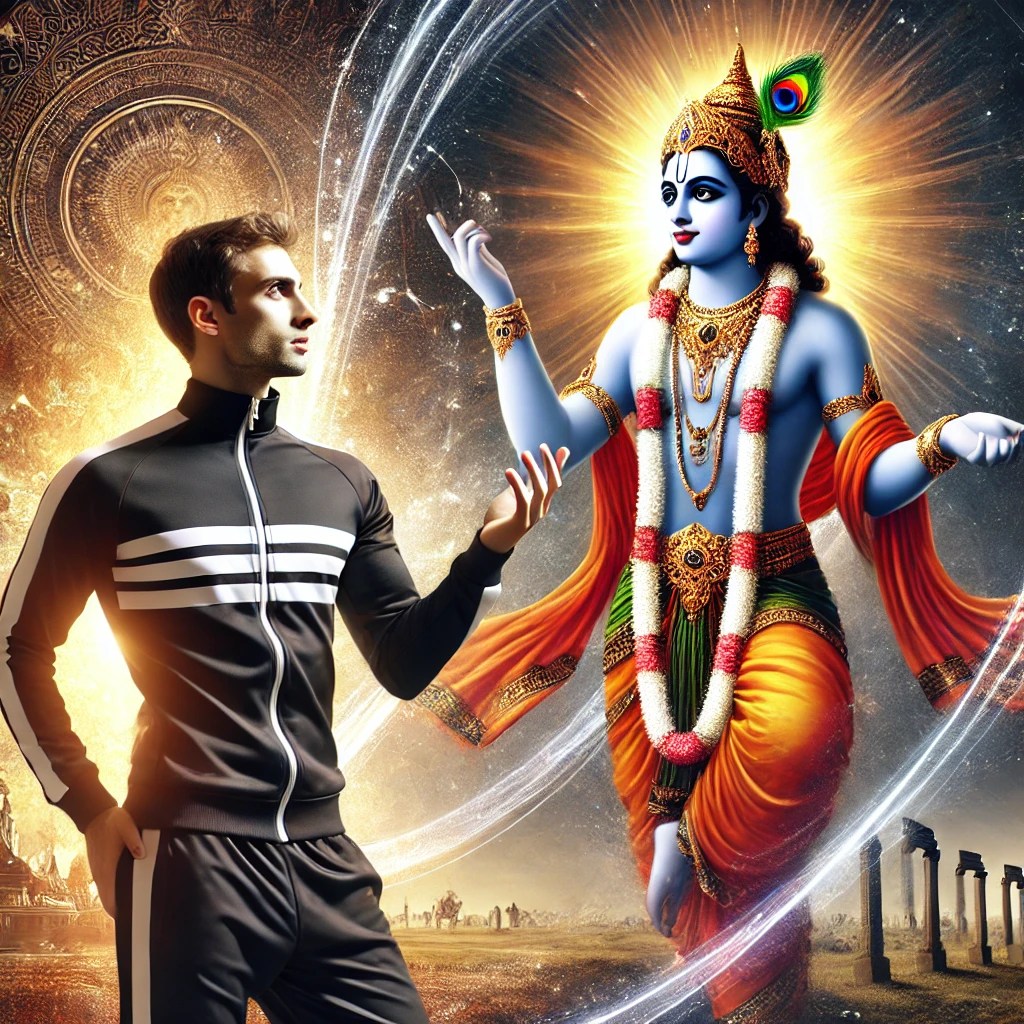
    When Krishna (God) reveals the ultimate truth to Arjuna in the Bhagavad Gita, Arjuna transcends self-doubt and enters a state of pure, unattached action—the Zen concept of mushin (no-mind). In this state, action is effortless, precise, and unstoppable.

    🔹 RAT Synthesis Principle: Adaptation & Fluidity – Just as Arjuna becomes a divine instrument of action, the RAT Synthesis warrior learns to adapt instantly, responding with precision, rather than overthinking. This applies in combat, business, relationships, and any domain requiring mastery.

    4. Fighting Without Attachment – The Grandmaster’s Code

    Krishna teaches Arjuna the path of Nishkam Karmaacting without attachment to results. The true warrior fights not just for victory, but for duty, embodying pure, detached action.

    🔹 RAT Synthesis Principle: Effortless Mastery & Wu Wei – In RAT Synthesis, mastery is achieved through effortless action, where mind, body, and spirit align. The RAT warrior doesn’t struggle—they flow, making every move intentional yet free from ego-driven desire.

    Karma Yoga:

    “You have a right to perform your prescribed duties, but you are not entitled to the fruits of your actions.
    Never consider yourself the cause of the results of your activities, and never be attached to not doing your duty.” – BG 2.47: Chapter 2, Verse 47

    • Perform your duty with full dedication and heart.
    • Let go of attachment to results and surrender the ego.
    • You are not the Doer—God acts through you; you are His instrument.
    • Avoid laziness or spiritual bypassing—escapism is not true spirituality.

    5. The Warrior’s Dharma – Aligning with Higher Purpose

    A true warrior fights not for personal gain but for a higher cause. Arjuna’s dharma (duty) is to uphold righteousness, just as the RAT warrior’s path is one of continuous growth, service, and transcendence.

    🔹 RAT Synthesis Principle: Transcendental Life Mastery – RAT Synthesis is not just about combat or success—it’s about transcendence. The ultimate goal is to rise above fear, ego, and limitation, merging skill with wisdom, power with humility.

    Become the Arjuna of Your Own Life

    Arjuna’s journey is the warrior’s journey—your journey. Whether you seek to master martial arts, business, relationships, or your own inner world, the path remains the same:

    Train with relentless focus
    Face and conquer your inner battles
    Enter the flow state—become effortless in action
    Detach from results—embrace the process
    Align with a higher purpose—transcend the ordinary

    Through RAT Synthesis, this path is not just philosophy—it’s a living system. By training your body, sharpening your mind, and elevating your spirit, you unlock the warrior within—one who moves with power, wisdom, and ultimate freedom.

    🔥 Arjuna was the ultimate warrior of his time. Will you be the ultimate warrior of yours? 🔥

    Master your moves. Win big. Transcend everything.

    🚀 Learn more at RATSynthesis.com 🚀

  • Overcoming Anger, Fear, and Sense Slavery: Unlocking the Secrets to Life, Strategy, and Spiritual Power

    Control your anger. If you hold anger toward others, they have control over you. Your opponent can dominate and defeat you if you allow him to get you irritated. – Miyamoto Musashi

    You’ve been there, haven’t you? Someone cuts you off in traffic, or maybe they say something that rubs you the wrong way. Suddenly, you feel a fire ignite within you—uncontrollable anger, as if it has taken over your entire being. In those split seconds, your mind is consumed with thoughts of revenge, and you find yourself tailgating, shouting words that would make even the calmest person cringe, or perhaps, taking it to the next level. This behavior can even become lethal.

    It feels good in the moment, doesn’t it? The rush, the desire to right the wrong, to show them who’s boss. But here’s the twist: this is self-sabotage in action.

    Why? Because in that moment of rage, you’re not just attacking another person—you’re attacking yourself. Anger is a negative emotion, and like attracts like. When you allow yourself to be pulled into that emotional tornado, you begin to generate negative energy, not just towards that person, but also towards yourself.

    This, my friends, is the boomerang effect at play. Every harmful thought, every word of hate, and every vengeful action you take is a direct attack on your own karma. You’re planting seeds of suffering that will undoubtedly come back to you. It’s a law of the universe that cannot be ignored.

    For example, medical science shows that 90 percent of illnesses and diseases are either caused or significantly worsened by stress. This means that stress plays a major role in the development and progression of many health issues—stress, not germs or other external factors.

    And the root of stress lies in our thinking, programming, and reactivity, meaning it is ultimately self-created. And this can be changed. I’ve known at least two individuals who believed anger was a source of power. Both suffered health problems as a result of this misconception.

    But there’s another layer to this. Every single person you encounter, regardless of how they behave, is an image of God. This might sound lofty, but it’s the truth. To demonize another person, no matter how bad they appear, is to forget their divinity, to forget that they, too, are a reflection of the divine spark that resides in all of us.

    When you lash out, you are attacking God in another form. And that, my friends, creates bad karma—energy that rebounds, bringing suffering back into your life.

    This is why the great spiritual masters, including Christ and many others, taught us to love and bless our enemies. You don’t have to love them personally or agree with their behavior, but you can love the God within them. When you do this, you release yourself from the chains of anger and frustration. You shift your energy from negativity to positivity, from darkness to light. You stop the cycle of self-sabotage and step into a place of power.

    Now, I’m not suggesting you stand idly by if someone throws a punch at you or attacks you with hateful words. Self-defense is a natural instinct, and it’s necessary to protect yourself and those around you. But there’s a difference between reacting in anger and acting in self-defense. The former is a reflection of chaos and a lack of control, while the latter is a deliberate and conscious choice to protect yourself in a calm and centered manner. Protecting yourself and others is an act of self-love and respect.

    The real magic happens when you learn to change your internal state. Calmness is a superpower. When you can remain calm in the face of adversity, you can see beyond the immediate emotional reaction. You begin to play the game of life like a grandmaster plays chess—strategically, without the distraction of impulsive reactions. Calmness allows you to step back, assess the situation, and make choices that are in alignment with your higher purpose, not your fleeting emotions.

    When you are calm, you become open to the voice of reason and intuition. You see things you would not have seen when under the spell of anger’s tunnel vision. You stop being driven by knee-jerk reactions and start making moves that are in your best interest and the best interest of others.

    Meditation is the key that unlocks this power. Through regular practice, you retrain your nervous system to operate from a place of peace. You step into the state of Mushin—the “mind of no mind”—where you are unperturbed by the chaos around you. In this state, you can move swiftly and decisively, without the interference of overthinking. Unlike thinking, No-mind is fast, efficient, and powerful. It allows you to be in the flow of life, making the right moves without second-guessing yourself.

    At RAT Synthesis, we teach our students how to enter this state and harness its power. At the end of each class, we engage in a 15-minute powerful Mind Range™ session that helps to instill calmness, clarity, and the ability to remain unshaken in the face of stress and chaos.

    We also incorporate energy practices and other techniques. These attributes are the foundation for transformation, transcendence, and mastery over the world around us. Just like a chess grandmaster, we train to see the bigger picture, make the right moves, and win the game of life—without getting lost in the emotion of the moment.

    Fear, too, is a powerful negative emotion that the Mind Range™ technique neutralizes, just as it does with anger. When we allow fear to take hold, it clouds our judgment, paralyzes us, and prevents us from taking decisive action. It too creates stress that leads to disease. But when we transcend fear, we unlock the calmness of the yogi and the intensity of the samurai—both unshaken by external circumstances. The yogi remains centered in the face of life’s challenges, while the samurai acts with unyielding focus and precision. In this space, fear becomes irrelevant, and we are free to act with clarity and purpose.

    In addition to this, we study the strategies and wisdom of ancient sages—those who understood the art of mastery, not just in the physical realm, but in the realm of the mind and spirit. By embracing their teachings, we align ourselves with universal truths, paving the way for a life of peace, strength, and lasting success. This success extends beyond inner fulfillment to manifest in the realms of health, wealth, and relationships.

    If you’re ready to stop the cycle of self-sabotage and start mastering your emotions, programming, and influences from the environment, check out RAT Synthesis. Let us guide you on your journey to inner peace, self-mastery, and true empowerment. Learn how to transform your mind, transcend your limitations, and become the grandmaster of your destiny.

    To learn more, visit RATSynthesis.com.

    Remember: Calmness is your superpower.

  • Unstoppable Focus: Unleash Your Inner Force and Conquer your World

    “The successful warrior is the average man, with laser-like focus.” — Bruce Lee

    What if the real secret to success isn’t hidden in complex strategies, endless hustle, or the latest productivity hacks? What if it’s something simpler, yet infinitely more powerful—something that’s already within you, waiting to be unleashed? The answer lies in one word: focus.

    The Enemy of Focus: The Shiny Object Syndrome

    In today’s hyper-connected world, distraction is the norm. Social media, smartphones, endless notifications—all meticulously designed to hijack your attention and sell it to the highest bidder.

    Every ping, every scroll, every pop-up notification pulls you further from your purpose and into the vortex of someone else’s agenda. But distractions aren’t limited to the digital realm—your own mind, emotions, other people, and life events also have the power to divert your focus and energy.

    But here’s the hard truth: Your attention is your most valuable asset. If you don’t control it, someone else will.

    Reclaiming Your Power: Aligning Focus with Divine Will

    The goal isn’t just to regain your focus but to align it with Divine will. When your attention serves your highest purpose, you’re not just productive—you’re unstoppable. This isn’t about tunnel vision, where you block out the world to zero in on a single point. Instead, it’s about cultivating wide-angle vision or what the samurai called mushin (mind of no mind).

    Mushin isn’t emptiness in the sense of nothingness; it’s emptiness of distraction. It’s the clarity to perceive everything while being attached to nothing. This state of flow integrates both focus and awareness, allowing intuition to rise as one of your secret weapons. The other? Calmness. In stillness, you find clarity; in clarity, you find power.

    If you’re reactive, upset, angry, or worried, you can’t play a good game of chess—nor can you find inner peace.

    The RAT Synthesis Mind Range™: Focus Redefined

    Enter the RAT Synthesis Mind Range™ sessions—designed to develop these attributes in under 15 minutes. How? By embodying the 80/20 rule: delivering 80% of transformative benefits—mental clarity, emotional resilience, and strategic focus—with just 20% of the effort and time.

    An efficient system minimizes its impact on the rest of your life, giving you the freedom to focus on other priorities.

    These sessions are a fusion of:

    • Samurai Discipline: Mastery over the mind through sharp, intentional practice.
    • Yoga Meditation: Harnessing breath and stillness to center the soul.
    • Universal Wisdom: Timeless truths distilled into actionable strategies. See our Ten Mentors.

    Just like in the RAT Synthesis Combat Fitness Class, this isn’t theoretical fluff. It’s a tangible, achievable pathway to mastery.

    Why It Works

    When you train your focus like a laser, it doesn’t just illuminate—it cuts through steel. Distractions fade. Mental clutter dissolves. Your mission becomes crystal clear. You operate from a place of calm authority, guided by intuition and fortified by discipline.

    This is the art of the modern warrior. Not through force, but through mastery of attention. Not through chaos, but through clarity.

    The Call to Action

    Are you ready to reclaim your focus? To cut through the noise and align with your highest purpose?

    Your mind is the most powerful weapon you possess. Sharpen it. Master it. Let it serve you—not the highest bidder.

    Discover the transformative power of RAT Synthesis Mind Range™ sessions and experience what true focus feels like. Not someday. Today.

  • BECOME UNSTOPPABLE: THE QUEST FOR YOUR TRUE SELF

    BE RELENTLESS.

    Fear death? Fear not living. To ignore your dreams is to die before you’re gone.


    The only one stopping you is you. Not your circumstances. Not your family. Not your friends, your boss, your acquaintances, or the politicians pulling strings behind the scenes. It’s not society, the economy, or fate. No excuses. No illusions.

    Look in the mirror.

    Stare into your own eyes and confront the undeniable truth: It starts and ends with you.

    Success belongs to those who reject excuses, embrace discomfort, and take relentless action toward greatness.

    The one who endures to the end—wins.

    So ask yourself: Have you truly begun your quest? Or is it just a fleeting idea, a wish whispered into the void, fading with the morning light?

    People will tell you that if you follow the path of greatness, you’ll suffer. That it’s too hard. Too dangerous. That you’ll lose everything, maybe even your life.

    But here’s the paradox: If you don’t follow that path, you’re already dead inside. You’ll walk the earth like a shadow, living without ever having truly lived.

    It’s not about money. It never was.

    The Law of Attraction isn’t magic—it’s focused psychology.
    When your thoughts, beliefs, and actions align, your mind starts filtering the world differently.
    You begin to see and pursue the right opportunities.
    Commitment turns clarity into momentum.

    It’s your mind.

    The battlefield isn’t out there. It’s within.

    You haven’t failed because of obstacles; you’ve failed because you haven’t made the choice to dive in deep and keep going when it gets unbearable. When it’s dark, cold, and lonely. But remember this:

    It’s always darkest before the dawn.

    If it’s not working, adapt.
    Gain clarity. Shift your approach.
    Move forward with purpose—on the path that’s truly yours.

    Funds running low? Get a job. Stack cash. Build the bridge while you chase the dream. Chuck Norris did it. So what makes you special?

    You ain’t so bad, Rocky growled at Mr. T. Hit me with your best shot. I’ll keep coming. And I’ll win.

    I know this because I’ve been through the fire. I’ve bled. I’ve faced the pain, the bullies, the heartbreaks, the crushing defeats. I’ve fallen and clawed my way back. And in that crucible, I found the knowledge, the strategies, the tools, and the methodologies to rise. To conquer.

    With a little help from my friends I’ve solved the problems. Overcome the challenges. And now, I’m here to help others do the same. To raise consciousness. To shout from the rooftops:

    YOU HAVE A CHOICE.

    Victory isn’t reserved for the chosen few. It’s not locked behind some cosmic gate. It’s yours. If you have the courage to claim it.

    So watch me. Watch me go all in. Watch me fight, fall, rise, and triumph.

    And I dare you to do the same.

    Become a Warrior-Sage. A general with the discipline of a monk and the heart of a lion.

    Take life by the horns.

    Ignore the naysayers. Silence the inner critic, the doubts, the devil whispering that you’re not enough.

    Listen to the only voice that matters—the voice of God within you, whose Son said:

    “You are gods.”

    Now act like it.


    “And seek not ye what ye shall eat, or what ye shall drink, neither be ye of doubtful mind. For all these things do the nations of the world seek after: and your Father knoweth that ye have need of these things. But rather seek ye the kingdom of God; and all these things shall be added unto you.”

    — Luke 12:29

    AUM, PEACE, AMEN

  • Mastering Life Through Combat Wisdom: Life Lessons from the RAT Synthesis System

    Inspired by Dai Go Long Tran, “Big Brother” “大哥”, pronounced “daai go” in Cantonese. My teacher in Vietnamese Gung Fu and an influencer in my life.

    Life often feels like a battlefield. Whether we’re facing career obstacles, personal challenges, or striving for our goals, the need for clarity, focus, and decisive action is universal. The RAT Synthesis Combat System, a dynamic fusion of Bruce Lee’s martial philosophy, the strategies of Denis Decker and Joe Lewis, and the precision and intensity of Mike Tyson, offers profound lessons not just for combat but for living a powerful and purposeful life.

    Here are some key life teachings inspired by RAT Synthesis:


    1. Meet Challenges Head-On (Interception)

    Bruce Lee’s principle of interception—striking before an opponent’s attack gains momentum—is a powerful metaphor for tackling life’s challenges. Waiting too long to address an issue allows it to grow into something overwhelming. Instead, act swiftly and decisively.

    • Life Application: When faced with obstacles, don’t procrastinate. Whether it’s resolving a conflict, seizing an opportunity, or breaking a bad habit, meet it head-on with clarity and confidence.
    • Mindset: Stay present. Challenges lose their power when you confront them at the source, rather than letting them fester.

    2. Overcome Limiting Beliefs (Destruction)

    In RAT Synthesis, destruction means neutralizing an opponent by defanging the snake and attacking the attack. For instance, let their punch collide with your elbow. In life, this principle applies to breaking through limiting beliefs and habits that hinder personal growth.

    • Life Application: Identify what’s holding you back—self-doubt, fear, procrastination—and address it at its root.
    • Mindset: Destruction isn’t about tearing down for the sake of it; it’s about clearing space for growth, success, and freedom.

    3. Build Momentum (The Straight Blast)

    The straight blast—a series of relentless, direct strikes—teaches us the power of sustained effort. In life, this principle reminds us that persistence and focus can break through almost any barrier.

    • Life Application: When pursuing a goal, keep pushing forward. Even small, consistent actions create unstoppable momentum over time.
    • Mindset: Stay relentless, but balanced. Progress comes from focused energy applied with purpose.

    4. Act Boldly When It Matters (Termination Phase)

    In combat, the termination phase involves powerful techniques like elbows, knees, and headbutts—decisive moves designed to end the confrontation. In life, these represent bold actions that create significant shifts.

    • Life Application: Make the tough calls. Whether it’s leaving a toxic job, setting boundaries, or taking a leap of faith, bold moves often lead to breakthroughs.
    • Mindset: Boldness is not recklessness. It’s decisive, calculated action when the stakes are high.

    5. Adapt to Different Situations (The Three Opponent Archetypes)

    In RAT Synthesis, opponents are categorized as Jammers, Blockers, or Runners—each requiring a different strategy. In life, these archetypes can represent the types of challenges or individuals we encounter.

    • The Jammer: Represents aggressive challenges that demand direct confrontation.
      • Life Strategy: Stay calm, assertive, and don’t let their energy overwhelm you.
    • The Blocker: Represents resistance or obstacles that require patience and persistence.
      • Life Strategy: Find alternative routes or solutions. Sometimes persistence is the key.
    • The Runner: Represents elusive challenges or opportunities that require timing and strategy.
      • Life Strategy: Stay observant and act when the moment is right.

    By recognizing these archetypes, we can tailor our approach and stay adaptable in any situation.


    6. Stay Versatile and Persistent (Relentless Offense and the Five Ways of Attack)

    RAT Synthesis emphasizes relentless offense and versatility in attack—both critical for success in life. Whether it’s pursuing your dreams or navigating relationships, adaptability and persistence are vital.

    • Life Application: Don’t rely on a single strategy. Be willing to pivot, adapt, and try new approaches until you succeed.
    • Mindset: Persistence beats resistance. Life rewards those who keep moving forward.

    Conclusion: Mastering Life as a Martial Art

    The RAT Synthesis Combat System offers more than just martial techniques—it provides a framework for mastering life itself. By embracing principles like interception, destruction, staying versatile and persistent, and relentless focus, you can navigate life’s challenges with strength, adaptability, and purpose.

    In the end, life is an art. Just as in combat, the key is balance—between action and stillness, courage and caution, adaptability and persistence. The tools are in your hands. The question is: Are you ready to use them?


    Discover More: Explore how the RAT Synthesis system can help you master not just self-defense but the art of living. Whether it’s through physical training, mindset shifts, or strategic life lessons, the journey starts with one decisive step.

    Aum is the cosmic vibration of creation and divine consciousness.
    Aum is the cosmic vibration of creation and divine consciousness.
    Rose Cross, symbol of the enlightenment
    Aligning with the structure of Yin/Yang/Tao brings harmony with reality and avoids partial outcomes.