There is a reason chess has fascinated humanity for over a thousand years. It is far more than a game of kings and queens. It is a mirror held up to the mind. Every move reveals not only the position on the board, but the condition of the player.
The chessboard is a miniature universe. Within sixty-four squares exists conflict and harmony, strategy and sacrifice, patience and urgency, victory and defeat. Though the battlefield is small, the lessons are immense. In this way, chess becomes a microcosm of life itself.
Every game begins the same. The pieces are arranged in perfect balance. No one has yet made a mistake. No one has won or lost. What follows is determined not by fate alone, but by awareness, judgment, discipline, and the ability to adapt.
Life unfolds the same way.
Many people imagine that success comes from making brilliant moves. Yet experienced chess players know something deeper. Most games are not won through flashes of genius but by avoiding unnecessary mistakes, remaining patient, and steadily improving one’s position. Likewise, a fulfilling life is often built through consistent, thoughtful choices rather than dramatic moments.
When I play chess meditatively, I discover that my true opponent is not the player sitting across from me or on the other side of the screen. My real opponent is distraction. It is impatience. It is fear after making a mistake. It is greed when I see an opportunity that isn’t really there. It is attachment to winning.
The board exposes every weakness of the mind.
Meditation seeks to do exactly the same.
In meditation I observe thoughts arise without clinging to them. During a chess game I observe impulses arise without obeying them. The urge to attack recklessly, to move too quickly, to force combinations that do not exist—all are invitations to lose awareness. The disciplined player waits. He breathes. He sees the position clearly before acting.
This is mindfulness expressed through sixty-four squares.
As I play, I strive to remain the witness. I observe thoughts, emotions, impulses, and the desire to move immediately without becoming identified with them. Before every move, I use the pause—that sacred space between stimulus and response. In that pause lies freedom. Rather than reacting automatically, I choose my next move consciously.
This is meditation in motion.
The discipline is identical to my meditation practice. During meditation I observe thoughts arise and pass without attachment. During chess I observe strategic ideas, emotions, hopes, fears, and temptations arise in exactly the same way. I neither suppress them nor blindly obey them. I simply witness them, allowing awareness rather than impulse to guide my next move.
The more faithfully I practice this process on the board, the more naturally it carries over into everyday life. Conversations become more thoughtful. Decisions become less reactive. Challenges become opportunities to remain centered rather than emotionally entangled. The chessboard becomes a laboratory where awareness is refined, one move at a time.
Chess teaches presence.
The last move cannot be changed.
The next move has not yet happened.
Only this move exists.
That is also the essence of life.
When we live in regret, we replay yesterday’s blunders. When we live in anxiety, we imagine tomorrow’s disasters. Wisdom lives neither in yesterday nor tomorrow. It lives in the present position.
Every move asks only one question:
“What is the best thing to do now?”
Martial arts teaches the very same lesson.
I have often said that martial arts is chess played at a million miles per hour with muscles. Every strike, block, angle, and movement is a decision made under pressure. The fighter who remains calm sees opportunities invisible to the emotional opponent.
The same is true on the chessboard.
The same is true in life.
The greatest victories belong not to those who never encounter difficulty, but to those who remain composed while difficulty unfolds.
Chess also teaches humility.
Even grandmasters lose games.
Every defeat contains instruction for those willing to study it. Every blunder reveals a blind spot. Every missed opportunity reminds us that growth never ends.
If approached correctly, there are no wasted games.
Only lessons.
Life offers the same generosity.
Failures become teachers.
Losses become training.
Obstacles become opportunities to develop patience, wisdom, and resilience.
Those who refuse to learn become bitter.
Those who embrace learning become stronger.
One of the greatest lessons chess offers is adaptability.
A player may enter the game with a beautiful opening prepared in advance, only to find that the opponent chooses a completely different path. Clinging stubbornly to the original plan invites disaster. The stronger player adjusts to reality.
Life rewards the same flexibility.
Circumstances change.
People change.
Health changes.
Finances change.
The world changes.
The wise person does not resist reality. He responds to it with clarity, courage, and faith.
The goal is not to control the game.
The goal is to play each position well.
Spiritually, this truth runs even deeper.
Every move can become a devotional offering.
We study carefully.
We think clearly.
We choose the best move we can perceive.
Then we release attachment to the result.
Whether we win or lose the game is no longer the measure of success.
Success is measured by the quality of our awareness, our integrity, and our effort.
This is freedom.
The purpose of playing chess is not merely to become a stronger chess player. It is to become a stronger human being. Every game is an opportunity to train the mind to remain calm under pressure, to see reality clearly, to respond rather than react, to learn from mistakes without self-condemnation, and to release attachment to outcomes. In this way, the discipline cultivated over sixty-four squares gradually extends into work, relationships, finances, adversity, and spiritual life. The board becomes a dojo for the mind, a monastery for the heart, and a rehearsal for living wisely. Master the process on the chessboard, and you begin to master the process of life itself.
The board eventually clears.
The kings are tipped.
The pieces return to the box.
Every game ends.
So too does every human life.
What remains is not the number of victories we accumulated but the character we developed while playing.
Patience.
Humility.
Presence.
Discipline.
Compassion.
Faith.
These are treasures that cannot be taken away.
Perhaps this is why chess continues to captivate the human spirit. It reminds us that every moment presents a choice. Every position contains possibility. Every apparent setback can become the beginning of a better plan.
The true master is not merely one who wins games.
The true master is one whose way of playing transforms the player himself.
Play every move with awareness.
Meet every challenge with equanimity.
Offer every action to God.
Accept every result with gratitude.
Then the game of chess becomes more than entertainment.
It becomes meditation.
It becomes martial arts.
It becomes spiritual practice.
It becomes a school for life.
And as we become better students of the game, we may also become wiser participants in the greatest game of all—the sacred privilege of living.
Human beings spend much of their lives worrying about their place in the world. We compare ourselves to others. We wonder whether we should be leaders or followers, teachers or students, warriors or monks, rich or poor, famous or forgotten. Society tells us that our value is determined by the role we occupy. Yet from the perspective of Dharma, this obsession is misplaced.
The role you play on life’s stage doesn’t matter. No matter your role in life, the dharmic path remains the same.
Life is like a vast theater. Some are cast as kings, others as peasants. Some become business owners, laborers, soldiers, artists, parents, or spiritual teachers. The costumes differ. The responsibilities differ. The circumstances differ. But beneath the costumes stands the same eternal reality: a soul learning to walk the path of truth.
The mistake is to confuse the costume for the actor.
A king who lives selfishly and a beggar who lives virtuously are not measured by the size of their worldly position. Likewise, a famous teacher and an unknown laborer stand on equal ground before the eternal law. Dharma does not ask, “How important was your title?” Dharma asks, “Did you live with integrity? Did you act with courage? Did you serve others? Did you seek truth? Did you master yourself?”
These questions apply equally to everyone.
The warrior must practice discipline. The monk must practice discipline. The parent must practice discipline. The entrepreneur must practice discipline. The forms differ, but the principle remains unchanged. Every person faces the same inner enemies: fear, greed, anger, pride, attachment, and ignorance. Every person is called to cultivate the same virtues: wisdom, compassion, courage, patience, humility, and self-control.
This is why the dharmic path is universal.
The world may celebrate one role and ignore another, but Dharma is indifferent to social status. The universe does not award extra spiritual points for prestige. A person sweeping floors with mindfulness and devotion may advance further along the path than a celebrated leader consumed by ego. Spiritual growth depends not on what you do, but on how you do it.
The battlefield of Dharma is always within.
Many people spend years chasing a different role, believing fulfillment lies elsewhere. “If only I were successful.” “If only I were respected.” “If only I had a larger audience.” Yet when one role is exchanged for another, the same mind accompanies the traveler. The same fears, attachments, and desires remain. External change cannot solve an internal problem.
The dharmic path points in a different direction. Instead of asking, “What role should I play?” it asks, “How can I play my current role with wisdom, virtue, and detachment?”
This shift changes everything.
A person who understands Dharma becomes less concerned with outcomes and more concerned with right action. They stop measuring their worth by applause. They stop comparing their script to someone else’s. They recognize that every role is temporary and every curtain eventually falls.
What remains is character.
At the end of life, titles disappear. Wealth remains behind. Reputation fades. The costumes are returned to the wardrobe of history. The only thing carried forward is the quality of one’s consciousness and the lessons learned along the journey.
The great secret is that enlightenment is not reserved for a particular profession, social class, or station in life. The path is open to everyone. The warrior can walk it. The teacher can walk it. The mechanic can walk it. The parent can walk it. The monk can walk it. Every role contains opportunities for growth, service, sacrifice, and self-mastery.
Therefore, do not worry excessively about your place on the stage.
Play your role well. Fulfill your duties. Act honorably. Serve where you can. Practice detachment from praise and blame. Seek truth above status. Let your life become an expression of virtue.
For in the end, the role you play on life’s stage does not matter. What matters is whether, through that role, you walked the dharmic path.
A warrior is not made in tomorrow. Tomorrow is a rumor. It has not yet drawn breath. The man who lives there fights phantoms and loses to shadows.
Therefore it is said:
Let go. Focus only on having a successful present moment. That moment includes alignment with your mission and your goals. The future will take care of itself.
The blade is not held for the strike that may come. It is held correctly now. Posture is now. Breath is now. Decision is now. In this, life is cut clean.
A man who clings to outcome becomes divided. One part stands in action, the other in fear. Such a man is already defeated, even if no enemy stands before him.
The warrior way is unity of attention. Nothing leaks forward. Nothing drags backward. Only this breath. Only this step. Only this duty.
As it is written:
“Take therefore no thought for the morrow: for the morrow shall take thought for the things of itself. Sufficient unto the day is the evil thereof.” — Matthew 6:34
The present moment is already complete with its own burden. To add tomorrow’s burden is to collapse under weight not yet assigned.
Even suffering belongs only to the moment it arrives. To carry it early is to suffer twice.
Thus it is said again, more simply:
Sufficient for the moment is the evil thereof.
The disciplined heart does not scatter itself across time. It gathers itself into one point. Like the tip of a spear, all force is concentrated where contact is made.
In this way, mission and goals are not abandoned. They are embodied. Not chased, but expressed through present action. The path is walked step by step, not imagined in advance.
Anxiety is the mind attempting to live in a place it cannot reach. It creates illusions of control, and then suffers under them.
So it is written:
“Cast all your anxiety on Him because he cares for you.” — 1 Peter 5:7
To cast is to release completely. Not to hold and manage, but to drop like a burden that was never meant to be carried by the hands.
And fear, too, dissolves when presence is complete:
“Fear not, for I am with you.” — Isaiah 41:1
In the full present moment, there is no absence. No gap for fear to grow. Only awareness, only action, only alignment.
The warrior becomes bulletproof not because nothing strikes him, but because nothing inside him is scattered. The self is gathered. The mission is present. The step is clean.
Pain is not rare. It is not a storm that visits once in a lifetime.
For many of us, pain is daily. It arrives in quiet forms—restlessness in the chest, tension in the mind, the familiar tightening of anxiety and depression. It appears in uncertainty, responsibility, fatigue, and the thousand invisible pressures of ordinary life.
Some teachers say we must seek suffering to grow stronger. But many warriors do not need to seek it. Life already provides enough.
Anxiety and depression are forms of fire. Stress is a form of pressure. Uncertainty is a form of darkness.
These are not enemies. They are training partners.
We do not minimize mental illness. We do not deny its weight or its danger. What we offer is a method—a natural, internal armor to stand inside suffering without being consumed by it.
The question is not how to eliminate suffering. The question is how to stand inside it without being broken by it. This is where the warrior’s path begins—not with removing pain, but with mastering the mind that experiences it.
When suffering appears, the first move of the untrained mind is resistance.
It says: This should not be happening. I cannot handle this. Make it stop.
Resistance multiplies suffering. It turns discomfort into torment.
The warrior does something different. The warrior becomes the witness.
Instead of drowning inside the experience, he steps back internally and watches. He notices the tightening in the chest. The racing thoughts. The pressure behind the eyes. But he does not become them. He observes them.
The moment you become the witness, something powerful happens. You are no longer the storm. You are the one watching the storm.
From this place comes the first layer of control—not control over the world, not control over events—but control over your response.
From the witness arises detachment.
Detachment does not mean numbness. It does not mean indifference. It means allowing the experience to exist without clinging to it or fighting it.
And you say internally: This too is part of the path.
This leads to acceptance.
Acceptance is not surrender. It is clarity. You stop wasting energy fighting reality and instead conserve your strength for what matters: how you stand within it.
Then comes discipline.
Discipline means remaining steady even when the mind wants to panic. Breathing slowly. Thinking clearly. Acting deliberately.
The warrior refuses to let emotion drive the vehicle. Emotion may ride in the passenger seat—but the warrior keeps his hands on the wheel.
Beyond discipline lies titiksha—the practice of enduring pain, stress, and adversity with equanimity.
Titiksha is not passive submission. It is the refined art of bearing discomfort without agitation, without complaint, without reaction, seeing each moment of suffering as part of the natural flow of life.
Anxiety surges, depression casts its shadow, fatigue weighs heavy on the body, and yet the warrior practices titiksha: remaining present, steady, and unshaken.
Through titiksha, the fire of pain becomes a forge, tempering courage and resilience. The mind learns to observe without judgment, to endure without attachment, and to act without being consumed.
This practice aligns perfectly with the witness, detachment, and acceptance. It is the daily exercise of inner fortitude that transforms ordinary suffering into extraordinary strength.
There is another truth many forget:
Pain without meaning feels unbearable. Pain with meaning becomes purposeful hardship.
A soldier endures suffering for the mission. A martial artist endures pain for mastery. Even anxiety and depression, when faced with courage and skill, can become a forge for inner strength.
When suffering appears in your life, ask: What strength is this moment demanding from me?
Suddenly the pain is no longer random. It becomes training.
The warrior remembers a crucial truth:
Everything passes. Anxiety surges and fades. Depression rises and ebbs. Pain crests and dissolves.
The mind screams that the storm will last forever. But storms never do.
The warrior stands firm until the sky clears.
Finally, there is the step many overlook.
When the storm ends, the warrior returns to stillness. He does not replay the battle endlessly in his mind. He does not carry the poison forward. He lets the moment pass through him, like thunder fading into silence.
This is the final victory. Not just surviving suffering— but not becoming it.
This is done through meditation.
This is the structure of inner strength.
The Warrior’s Formula for Overcoming Suffering: Witness Detachment Acceptance Discipline Titiksha Meaning Endurance Impermanence Return to Stillness
Practice this, and suffering loses much of its power.
Pain may still visit your life. Anxiety may still knock at the door. Depression may still cast its shadow.
But it will no longer rule the house.
Because the warrior inside you will be awake. Watching. Steady. Unbroken. ⚔️
47,547 Battles in Meditation, Karma, and the End of the Climb
I entered the board long ago.
May 22, 2018. Chess.com. A quiet battlefield that never sleeps.
Since then: 47,547 games fought in silence. Blitz storms. Bullet lightning. Long daily sieges. Mostly 3 minute games. Friends made without faces. Lessons delivered without mercy. Wins that evaporated. Losses that branded memory.
Over time, a truth sharpened itself.
There is a ceiling.
Not as an insult—but as a law of nature. People are not forged from the same alloy. Attributes differ. Temperaments differ. Nervous systems, pattern speed, intuition, stamina—these are not infinitely malleable. They are largely given, shaped by karma, biology, timing.
No amount of grinding can turn every mind into a grandmaster’s blade.
Even on the smallest battlefield, the law reveals itself: when the rating stands at 300 and the opponent rises only a few points higher—309—the game tightens. Time feels shorter. Errors cost more. Presence must deepen. A narrow gap becomes a real edge.
Mistakes happen. Always. Mine. The opponent’s. I exploit theirs. They exploit mine. This is not failure—this is equilibrium.
And so the mission changed.
Chess stopped being a ladder. It became a dojo.
Now the board trains meditation. Detachment from outcome. Intuition over impulse. Thinking without tension. Seeing clearly, then letting go.
It is brain gym. Alzheimer’s preventative. A sharpening stone for awareness itself.
A martial art without sweat. A practice with carryover: Into work. Into play. Into conversation. Into conflict. Into stillness.
The lesson echoes beyond chess.
The world once ran an experiment—the ping pong challenge. An unsporty adult. One hour a day. Professional coaching. A full year of deliberate practice.
The goal was audacious: Top 250 in Britain.
The result was honest.
Within six months, the player could stand with club competitors. By the end of the year, the ceiling appeared. Improvement was real. Mastery was not.
The conclusion was unavoidable: Focused practice transforms the average. But elite mastery demands more— Years. Decades. And something unteachable.
Talent matters. Time matters. Karma matters.
This is not discouragement. This is liberation.
The spiritual warrior does not chase infinite ascent. He trains to see reality clearly and act without illusion.
Chess is no longer about rating. It is meditation in motion. A discipline of presence. A mirror held up to the mind.
Victory now is clarity. Progress is steadiness. Mastery is knowing when striving ends—and practice begins.
“Give your best, surrender the rest.” Zen parable: “When an archer is shooting for nothing, he has all his skill. If he shoots for a brass buckle, he is already nervous. If he shoots for a prize of gold, he goes blind or sees two targets.”
TRANSCRIPT:
You are not defined by your results. You are defined by your Devotion.
The Bhagavad Gita teaches: “You have a right to perform your prescribed duties, but you are not entitled to the fruits of your actions.” Your true power lies not in what happens after the act — but in the purity of the act itself.
Too often, we chase the scoreboard — the promotion, the victory, the recognition. But the warrior of spirit knows: the real battle is within. The outcome belongs to God — the effort belongs to you.
Patience. Perseverance. Letting go. When you give your best and surrender the rest, you walk the razor’s edge between discipline and faith. You move beyond ego’s demand for control and step into divine partnership.
It’s between you and God. Not you and the critics. Not you and the audience. Not even you and any so-called “failure.”
Every moment of honest striving is already success — because it refines your soul. When you pour your heart into your mission, your art, your training — without clinging to results — your work becomes a living prayer.
Be content now — yet never stop striving toward your mission and your goals. Not because you’ve already arrived, but because you’ve given your all. True contentment isn’t complacency — it’s serenity in motion. It’s the quiet confidence of walking the path laid before you, guided by unseen hands.
So train, work, love, and serve — with full intensity and zero attachment. Offer every breath, every effort, every victory and defeat to the Divine. Detachment from the outcome is the gateway to peace of mind.
Because in the end, devotion itself is the victory. And the fruits you surrender return as peace, purpose, and divine power.
Your mission is not to win — it’s to worship through action. Everything you do becomes a prayer. And when you do that — you never lose.
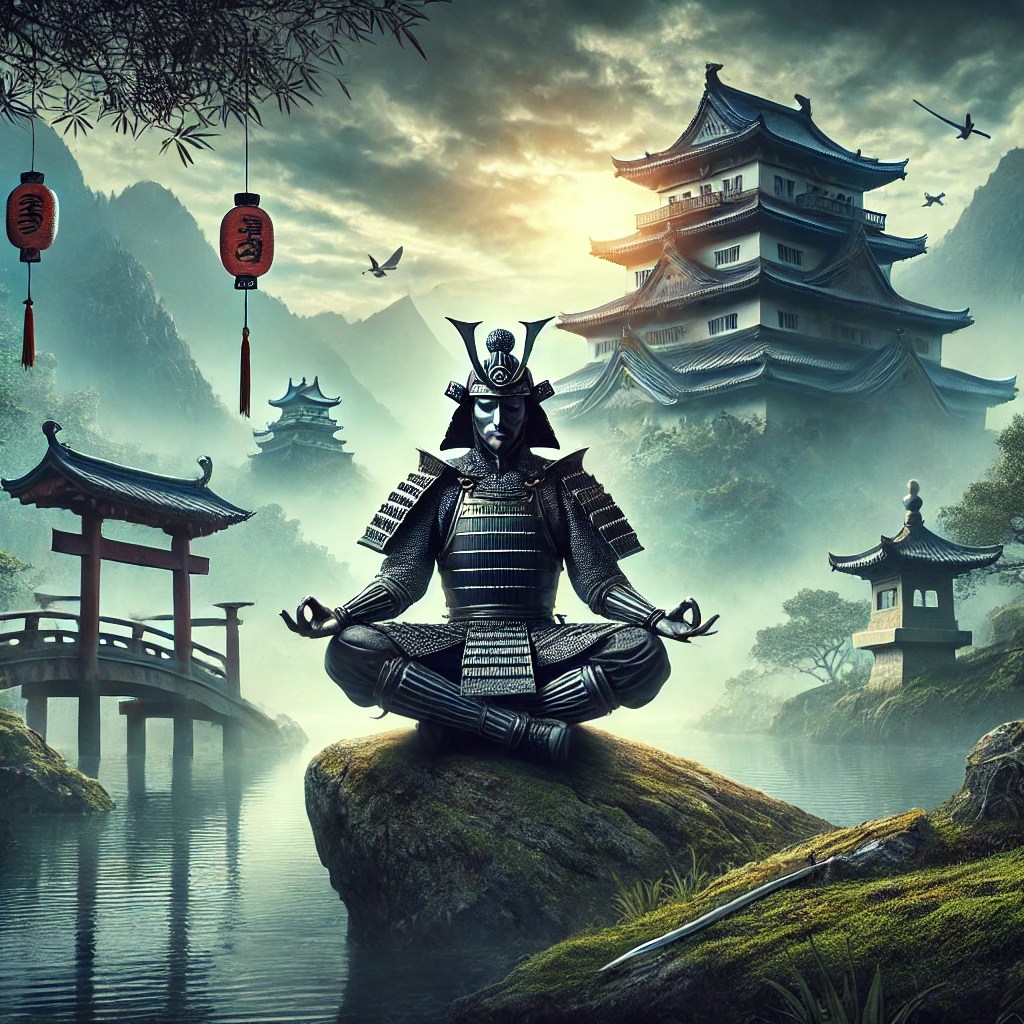
The Samurai warriors practiced Zen to gain an edge in battle, and at the heart of Zen lies yoga.
Yoga Asanas
When most people think of yoga, images of contorted bodies twisted into pretzel-like poses often come to mind.
While the physical asanas (postures) of yoga have gained tremendous popularity, especially in the West, they represent only one aspect of this ancient practice.
What many overlook is the meditation and mental training that is deeply embedded within the roots of yoga, which not only offers spiritual enlightenment but also plays a pivotal role in the Art of War and the cultivation of true inner strength.
The Deeper Roots of Yoga: Meditation Over Asanas
Yoga has long been recognized as a path to spiritual awakening, but it’s crucial to understand that the physical postures are just the surface of a much deeper tradition.
At its core, yoga is about stilling the mind—calming the endless chatter that often clouds our perception and hinders our ability to act decisively.
This meditation aspect of yoga is far more powerful than just performing physical poses.
It’s about transcending the ego and achieving a state of deep awareness, where one’s true self is realized and one can access a state of inner peace that is not shaken by external circumstances.
In fact, this meditation aspect is so powerful that it became the foundation for other profound traditions, such as Chan Buddhism (which later evolved into Zen) in China.
The story of Bodhidharma, the enlightened Indian guru who traveled to China, is a testament to how meditation in the form of yoga helped shape not only spirituality but warrior philosophies too.
Bodhidharma’s Influence: Yoga’s Link to the Warrior Spirit
Bodhidharma (Dà Mó), the founder of Chan Buddhism and the key figure in elevating Shaolin Kung Fu.
Bodhidharma’s journey from India to China is legendary.
He arrived at the Shaolin Temple, where he established Chan Buddhism, a fusion of meditation and martial arts.
This blend of mindfulness, discipline, chi (pranayama), and physical training would lay the foundation for what became the Shaolin monks’ renowned martial arts expertise, later influencing countless warriors around the world.
This ancient tradition directly links yoga and meditation to the art of war, demonstrating that the true power of yoga lies not in the ability to perform physical poses but in the mental clarity, discipline, energization (chi), and fearlessness it fosters.
The meditation-based aspects of yoga create a “no-mind” state—where actions flow effortlessly, free from hesitation, and without the clutter of doubt or distraction.
This mental fortitude, honed through yoga and meditation, would become the edge in battle, just as it has in life.
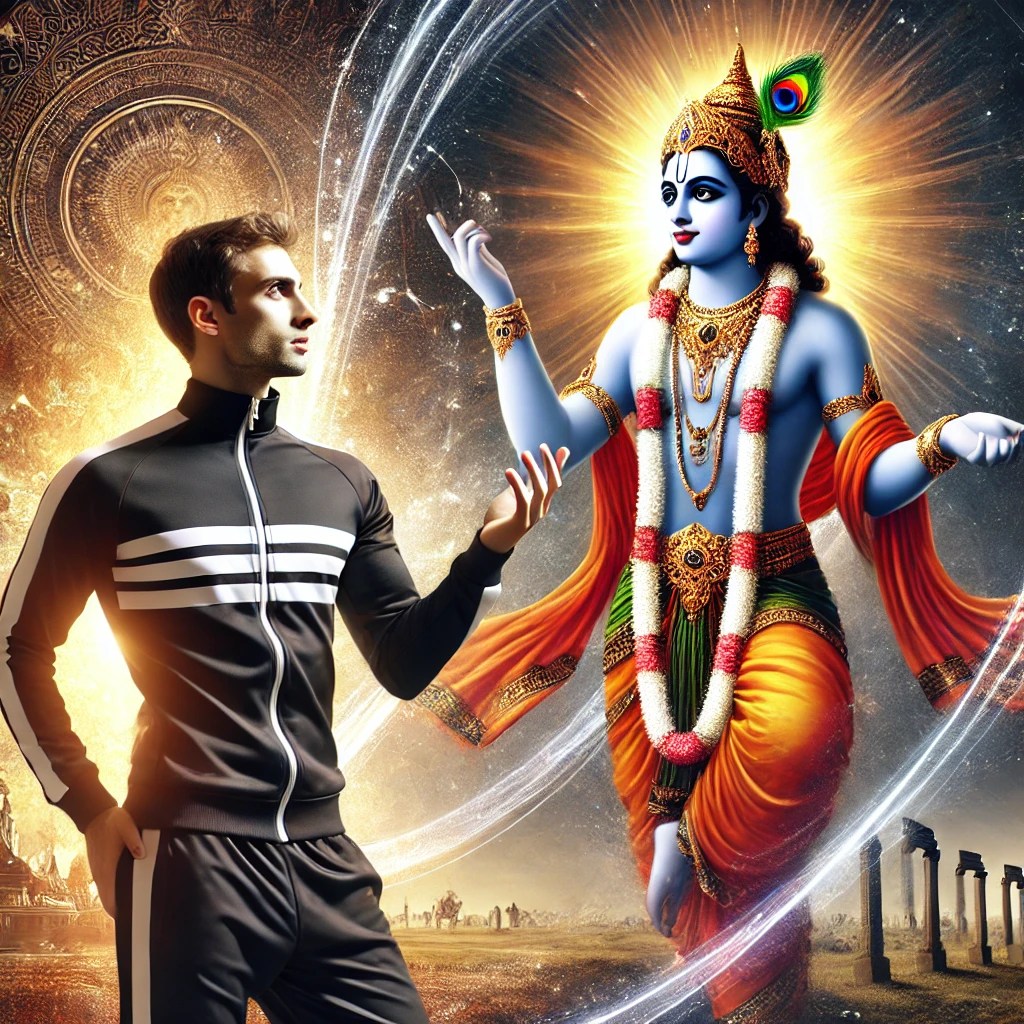
Lord Krishna instructing Arjuna
The Bhagavad Gita: A Battle Between the Mind and the Self
One of the most powerful texts that blends yoga, meditation, and warriorship is the Bhagavad Gita, the epic dialogue between Lord Krishna and the warrior prince Arjuna.
The Gita isn’t just a spiritual treatise; it’s an internal battlefield where Arjuna struggles with his mind, emotions, and sense of duty.
Through Krishna’s guidance, Arjuna learns to transcend his inner conflict and reach a state of clarity, allowing him to perform his duties without attachment or hesitation.
This is the essence of the yoga of action—Karma Yoga—where the practitioner performs their duty without attachment to outcomes, free from the limitations of fear, desire, or ego.
In this state, one is not swayed by external forces but remains anchored in the present moment, ready to take decisive action when necessary.
This same mental discipline is key for warriors, athletes, and anyone who seeks to live with unwavering focus and clarity.
The Warrior Caste and the Path of Zen
Yoga’s connection to warrior philosophy is not just confined to the spiritual practices of ancient India.
Buddha himself, who was born into the warrior caste, understood the discipline and mental training that warrior culture required.
Though his journey took him away from the battlefield, the underlying principles of warrior ethos—such as fearlessness, discipline, and acting in the moment—remain closely tied to the teachings of Buddhism and the path of meditation.
The Samurai of Japan, revered for their code of honor and exceptional skills, fully embraced Zen practice.
Through Zen meditation, they cultivated a deep mental focus, allowing them to enter battle without fear or hesitation, fully present and aware of every movement.
The Samurai’s Zen practice allowed them to move beyond themselves, acting as a vessel for the art of war.
The ultimate goal was to reach a state of “no-self” or “no-mind”, where the mind does not interfere with action and one acts purely out of intuition and experience.
No Mind, No Self: The Power of Yoga in Life and Battle
The concept of “no-mind” (or “mushin”) is integral to both Zen and yoga, and it is perhaps one of the most powerful aspects of the practice.
When we let go of the ego and the constant chatter of the mind, we open up to a state of pure presence, where our actions are aligned with the flow of life.
This state of non-attachment is essential not only in meditation but also in battle, business, sports, and every area of life that demands focused action.
In yoga, this concept is cultivated through deep meditation and mindful breathing, allowing the practitioner to reach a state where actions are effortless, clear, and precise.
The “no-self” principle helps us overcome the limitations of the ego and the fear that often holds us back in life.
Whether in war or in daily struggles, this mental discipline gives you the edge—the ability to act without hesitation, free from distractions, and aligned with your highest purpose.
Yoga: More Than Just Feel-Good Poses
So, the next time you think of yoga, remember: it’s not just about tying yourself in pretzel-like shapes or doing trendy stretches.
At its core, yoga is about transcending the physical, finding inner peace, and cultivating the mental strength to face any challenge—be it on the battlefield or in the daily struggles of life.
The meditation practices of yoga, developed over millennia, are the key to unlocking the true power within you.
Just as the great warriors of history relied on the mental clarity and fearlessness gained through meditation and yoga, so too can we all benefit from its profound teachings.
Yoga, when practiced in its fullest sense, is not just a physical exercise; it is a way to elevate your warriorship, to act with precision, and to live without fear or limitation.
Final Thoughts
Yoga is not just about the body.
It is the way to train your mind, to enter a state of no-mind, and to cultivate the clarity and fearlessness necessary to face life’s battles—whether physical, mental, or spiritual.
Just as the ancient warriors did, we too can embrace the meditation aspect of yoga and unlock the deeper power that lies within us all.
Sri Paramahansa Yogananda
BE CALMLY ACTIVE
AND ACTIVELY CALM
In short, don’t think all the time of just making money. Exercise, read, meditate, love God, and act peacefully, at all times. Learn to be calmly active and actively calm, carrying into your daily activities the calmness gained in the spiritual activity of meditation.
In the Gita, Bhagwan Krishna teaches: “Remaining immersed in yoga, perform all actions, forsaking attachment (to their fruits). Remain indifferent to success and failure (while performing all actions). The mental evenness during all states of activities (resulting in success or failure) is termed yoga.
In the grand epic of the Mahabharata, Arjuna stands as the embodiment of the ultimate warrior—not merely because of his unmatched skill in battle, but because of his mastery of mind, spirit, and action. His journey, as told in the Bhagavad Gita, mirrors the path of all those who seek mastery in life, whether in combat, personal development, or spiritual enlightenment.
This journey—one of discipline, resilience, and transformation—is also the essence of RAT Synthesis, a system that fuses ancient wisdom with modern strategies for total life mastery. Just as Arjuna underwent intense training, faced his deepest fears, and ultimately transcended his limitations, the RAT Synthesis warrior follows a path of rapid adaptation, strategic execution, and transcendental awareness to unlock their highest potential.
Arjuna’s Mastery: The RAT Synthesis Blueprint
1. Training with Relentless Focus – The Science of Skill
Arjuna’s training under Guru Drona is legendary. He was not just naturally talented——like Mike Tyson, a modern warrior, he outworked everyone. His ability to focus solely on the target (as seen in the story where he sees only the bird’s eye) is the essence of single-pointed awareness, a core principle in RAT Synthesis.
🔹 RAT Principle: Precision & Execution – In RAT Synthesis training, mastery comes from deliberate practice and relentless refinement of technique—whether in combat, strategy, or life. Like Arjuna, the RAT Synthesis practitioner hones their skills until execution becomes instinctual.
2. Facing the Dark Night of the Soul – Overcoming Internal Conflict
Before the great battle of Kurukshetra, Arjuna experiences doubt, fear, and hesitation. He questions his purpose, the morality of war, and the very nature of existence. This mirrors what every warrior—physical or spiritual—must face: the inner battle against fear, doubt, and limitation.
🔹 RAT Principle: Psychological Warfare & Mental Resilience – RAT Synthesis teaches that the greatest battle is fought within. Through witnessing-monitoring meditation, breath control, and deep introspection, the warrior develops an unshakable mindset, moving beyond hesitation into decisive action.
When Krishna (God) reveals the ultimate truth to Arjuna in the Bhagavad Gita, Arjuna transcends self-doubt and enters a state of pure, unattached action—the Zen concept of mushin (no-mind). In this state, action is effortless, precise, and unstoppable.
🔹 RAT Synthesis Principle: Adaptation & Fluidity – Just as Arjuna becomes a divine instrument of action, the RAT Synthesis warrior learns to adapt instantly, responding with precision, rather than overthinking. This applies in combat, business, relationships, and any domain requiring mastery.
4. Fighting Without Attachment – The Grandmaster’s Code
Krishna teaches Arjuna the path of Nishkam Karma—acting without attachment to results. The true warrior fights not just for victory, but for duty, embodying pure, detached action.
🔹 RAT Synthesis Principle: Effortless Mastery & Wu Wei – In RAT Synthesis, mastery is achieved through effortless action, where mind, body, and spirit align. The RAT warrior doesn’t struggle—they flow, making every move intentional yet free from ego-driven desire.
Karma Yoga:
“You have a right to perform your prescribed duties, but you are not entitled to the fruits of your actions. Never consider yourself the cause of the results of your activities, and never be attached to not doing your duty.” – BG 2.47: Chapter 2, Verse 47
Perform your duty with full dedication and heart.
Let go of attachment to results and surrender the ego.
You are not the Doer—God acts through you; you are His instrument.
Avoid laziness or spiritual bypassing—escapism is not true spirituality.
5. The Warrior’s Dharma – Aligning with Higher Purpose
A true warrior fights not for personal gain but for a higher cause. Arjuna’s dharma (duty) is to uphold righteousness, just as the RAT warrior’s path is one of continuous growth, service, and transcendence.
🔹 RAT Synthesis Principle: Transcendental Life Mastery – RAT Synthesis is not just about combat or success—it’s about transcendence. The ultimate goal is to rise above fear, ego, and limitation, merging skill with wisdom, power with humility.
Become the Arjuna of Your Own Life
Arjuna’s journey is the warrior’s journey—your journey. Whether you seek to master martial arts, business, relationships, or your own inner world, the path remains the same:
✅ Train with relentless focus ✅ Face and conquer your inner battles ✅ Enter the flow state—become effortless in action ✅ Detach from results—embrace the process ✅ Align with a higher purpose—transcend the ordinary
Through RAT Synthesis, this path is not just philosophy—it’s a living system. By training your body, sharpening your mind, and elevating your spirit, you unlock the warrior within—one who moves with power, wisdom, and ultimate freedom.
🔥 Arjuna was the ultimate warrior of his time. Will you be the ultimate warrior of yours? 🔥
“You must not let your life run in the ordinary way; do something that nobody else has done, something that will dazzle the world”– Yogananda
“Whatever you make up your mind to do, you can do. God is the sum total of everything, and His image is within you. He can do anything, and so can you, if you learn to identify yourself with His inexhaustible nature.” -Sri Sri Paramahansa Yogananda, “Man’s Eternal Quest”
Discover Paramahansa Yogananda’s powerful teachings on meditation, energy mastery, Divine love, and spiritual success. Learn how to transform your life with ancient wisdom and daily discipline.
Core Principles:
Self-realization as the ultimate goal – Unity consciousness, Divine Love.
Unity of all religions
Meditation and Kriya Yoga for spiritual growth
God is within every individual
Direct personal experience of God
Living a balanced life: harmony of body, mind, and spirit
Love and service as expressions of spirituality
The power of positive thinking and affirmation. Magnetism (Law of Attraction).
Detachment from materialism while living in the world
Spiritual freedom through mastery of the mind
Awake: The Life of Yogananda Official Trailer 1 (2014) – Documentary HD
Paramahansa Yogananda, the legendary yogi and spiritual teacher, offered humanity a profound blueprint for spiritual growth and self-discovery. His daily practices provide a practical yet transformative path for those seeking peace, vitality, and divine connection. This blog dives into Yogananda’s core teachings and their life-changing benefits, guiding you to incorporate them into your daily routine.
Yogananda’s teachings illuminated the deeper spiritual essence of Jesus Christ’s message, revealing Christ as an enlightened super Master—a divine spiritual superhero—like Buddha and Lao Tzu, who embodied and taught the universal principles of Dharma (gospel).
Dharma is the natural law, duty, or righteous path that aligns one with truth and harmony. It represents one’s purpose, ethical responsibilities, and the way to live in alignment with God and His cosmic order. In Hinduism, Buddhism, and Jainism, dharma is the foundation of spiritual and moral life, guiding individuals toward balance, fulfillment, and liberation.
Yogananda teaches that by strengthening our will through self-discipline and meditation, we align with our divine power, enabling us to master our fate. Ye are gods – Jesus
Yogananda’s Essential Teachings for Success in Spirituality
THE CORE PRACTICES
Meditation: Tuning into the Divine Meditation is at the heart of Yogananda’s teachings. He recommended meditating in the stillness of the early morning or evening to quiet the mind and connect with your inner divinity. Regular meditation not only brings serenity but also aligns you with the deeper truths of life, helping you navigate challenges with grace and clarity. Yogananda also taught that focusing on the spiritual eye—the point between the eyebrows—is a gateway to experiencing God.
Pranayama: The Breath of Life Yogananda emphasized the importance of controlling prana (life force energy, also known as qi) through breathwork. Techniques such as pranayama and energization exercises calm the nervous system, boost energy levels, and clear the mind. This practice is the key to accessing deeper states of meditation and spiritual awareness. “God is in the spine.” – Paramahansa Yogananda
Affirmations: Reprogramming the Subconscious With positive affirmations, Yogananda taught that you could transform your thoughts and align your subconscious with higher aspirations. Simple yet potent, affirmations instill self-confidence, optimism, and gratitude, fostering a mindset of abundance and joy. “I am the Infinite” – Paramahansa Yogananda
Devotion and Divine Love Devotional practices like chanting, prayer, and hymns open the heart to divine love and uplift the spirit. They dissolve ego barriers and cultivate an intimate connection with God, helping you to feel the boundless joy of divine presence.
Self-Reflection: The Mirror of Growth Yogananda encouraged daily self-analysis to uncover inner strengths and weaknesses. By reflecting on your actions, thoughts, and attitudes, you can identify areas for growth and overcome limiting patterns, paving the way for greater self-mastery.
Service to Others: The Spirit of Giving Selfless service is a cornerstone of Yogananda’s teachings. Through acts of kindness, charity, and compassion, you expand your heart and bring light into the lives of others. This practice purifies the soul and deepens your connection to the divine.
Study of Sacred Texts: Wisdom for the Soul Regular study of spiritual teachings, like the Bhagavad Gita or the Bible, provides timeless insights into the nature of existence. Yogananda encouraged his followers to draw strength and inspiration from sacred scriptures to stay rooted on their path.
Satsang: The Power of Spiritual Fellowship Yogananda highlighted the importance of connecting with like-minded individuals through spiritual gatherings, group meditation, and discussions. The shared energy and support of satsang foster greater focus and inspiration on the spiritual journey. “Environment is stronger than willpower”, said Yogananda.
The Transformative Benefits
Inner Peace and Clarity: Meditation and pranayama calm the mind and harmonize emotions, allowing you to experience profound peace.
Vitality and Resilience: Breath control and positive thinking strengthen your body, mind, and spirit, making you more adaptable to life’s challenges. 💫 “You have more strength than you’ll ever need to overcome any trial—because you’re a child of God.” — Paramahansa Yogananda
Divine Connection: Devotional practices and meditation open the door to experiencing divine love and guidance.
Self-Mastery: Self-reflection and sacred study nurture wisdom and self-awareness, empowering you to navigate life with purpose.
Joyful Living: Service to others and spiritual fellowship bring immense joy and a sense of unity with all beings.
A Daily Blueprint for Transformation
To embody Yogananda’s teachings, begin with small, consistent steps:
Dedicate time each morning to meditation and breathwork.
Use affirmations to reframe your thoughts during the day.
Set aside moments for introspection and sacred study in the evening.
Integrate devotional practices and acts of service into your routine.
With dedication and sincerity, these practices will lead you toward inner peace, divine joy, and ultimate self-realization.
Yogananda’s Essential Teachings for Success in Life
Beyond daily spiritual practices, Yogananda offered key insights into success—both in the material world and in self-realization. Here we extract the core principles that create the greatest impact with the least wasted effort:
1. Success Begins with Energy Mastery
Yogananda taught that energy is the foundation of success—not just physical energy, but mental, emotional, and spiritual energy. His Energization Exercises train the body to absorb cosmic energy, increasing vitality, focus, and resilience. Without high energy levels, success remains out of reach.
“The greater the will, the greater the flow of energy. The greater the flow of energy, the greater the magnetism (law of attraction).” — Paramahansa Yogananda
2. The Magnetic Power of Thoughts and Intentions (Law Of Attraction)
Thoughts are living forces—they attract circumstances and shape destiny. Yogananda emphasized conscious thought control, urging students to:
Visualize success with clarity.
Affirm goals with conviction.
Cultivate unwavering faith in the desired outcome.
This magnetic principle governs both spiritual realization and material prosperity.
Therefore I tell you, all things whatever you pray and ask for, believe that you have received them, and you shall have them. Mark 11:24
Jesus asked if people believed before performing miracles, as belief unlocks the flow of divine energy, while doubt blocks it.
“Between the eyebrows is the door to heaven. This center in the brain is the seat of will. When you concentrate deeply there and calmly will, whatever you are willing shall come about.” – Yogananda, Man’s Eternal Quest, p42
3. Deep Work and Concentration Over Struggle
Yogananda was a proponent of focused, deep work over exhausting struggle. He advised:
Single-minded focus on one goal at a time.
Eliminating distractions that drain willpower.
Engaging in work with joy and presence, as an act of divine service.
Efficiency in action, not just hard work, leads to the highest achievements.
4. The Science of Success: Willpower + Divine Guidance
Yogananda revealed that willpower, aligned with divine consciousness, is unstoppable. Success comes when you:
Strengthen your will through self-discipline.
Tune into inner guidance before making big decisions.
Act with faith, knowing the universe supports you.
He taught that “When you make up your mind to do something, God will send you the means.”
“When you make up your mind to do good things, you will accomplish them if you use dynamic will power to follow through. No matter what the circumstances are, if you go on trying, God will create the means by which your will shall find its proper reward.” – Yogananda
MAN IS KEPT HYPNOTIZED WITH DELUSION
You see, this world is a world of MAYA, delusion, and man is kept hypnotized with that delusion. Our mind has convinced us of so many limitations. Someone says, “I must have my coffee.” Another says,”I must have my juicy peak of steak,” and so on. It is a crazy world. I see it so clearly. But I follow the rules – as much as I want to, and then I say, “DOWN WITH RULES! IT IS THE MIND THAT RULES.” And it works.
Death was such a reality, life was such a reality, but they are no more real for me. Never was I born, though in my dreams of earth life I was born many times. And never have I died, though many times I dreamed the death of my body in this dream world. In this one incarnation I can sleep and dream that I am born in England as a powerful king. Then I die and dream I am born a devout man. And then I die again and am born as a successful lawyer. Again I die and am born as Yogananda. But they are all dreams. That is what I am saying. I used to find such pleasure in discovering my past incarnations. But that has lost its enchantment. They are just so many dreams. When I realized everything is mind stuff, and that it is God’s thought which is creating all these things, all these dreams all the time, then it had a different meaning for me. God can dissolve these dreams any time and bring them back again in better forms. But nothing is erased from the Infinite Mind; every dream is eternally imprinted there.
Delusion is so strong that it is pretty hard to believe it is delusion when you have needs and no money to meet them. It is difficult to believe that this world is MAYA when you are sick, and suffering. But when you constantly keep your mind in God, you will realize that this world is His dream.
This is why in India we don’t pay as much attention to physical healing as to the healing of the soul’s ignorance. To heal the soul of ignorance – that is, to remove the delusion that covers the soul – is the greatest of all healings, because that healing is lasting. And when you heal the soul, then you realize the body is nothing but a dream shell in which the soul resides.
~ SRI SRI PARAMAHANSA YOGANANDA,
HARMONIZING PHYSICAL, MENTAL, AND SPIRITUAL METHODS OF HEALING,
THE DIVINE ROMANCE, Pg 169
5. Right Association: The Fastest Way to Transform
“You are the sum of the company you keep.” Yogananda emphasized satsang (spiritual community) and avoiding negativity. He advised:
Surrounding yourself with uplifting, high-energy people.
Seeking mentors and spiritual teachers who embody wisdom.
Guarding against negative influences that weaken your mind and resolve.
Just as iron sharpens iron, greatness is contagious.
6. Detachment and Fearlessness: The Supreme Advantage
“Yoga teaches that where God is, there is no fear, no sorrow. The successful yogi can stand unshaken midst the crash of breaking worlds”
– Paramahansa Yogananda
Yogananda taught that attachment breeds suffering, while detachment leads to power. The most successful people:
Let go of fear, knowing the soul is eternal.
Detach from results, focusing only on the effort.
Embrace change, trusting that every shift is divine will.
By cultivating a fearless, unattached mindset, you become unshakable in any challenge.
Always follow conscience: Always choose conscience over selfishness. At times, it may demand sacrifice—even blood. But this is the path of the spiritual warrior.
7. Joy as the Measure of True Success
Yogananda’s ultimate teaching: Success without joy is failure. He urged his students to:
Pursue work that brings deep fulfillment.
Balance ambition with inner peace.
Cultivate divine joy daily—through meditation, gratitude, and service.
By applying these essential teachings, one can achieve life’s highest success—spiritually and materially. Yogananda’s path shows that true success is not just external achievement, but a life radiating energy, wisdom, and divine joy.
As Yogananda said, “Make your heart a temple of love, your mind a temple of peace, and your soul a temple of God.”
Start today and transform your life into a radiant expression of your highest self.
“God will not tell you that you should desire Him above all else, because He wants your love to be freely given, without “prompting.” That is the whole secret in the game of this universe. He who created us yearns for our love.
He wants us to give it spontaneously, without His asking. Our love is the one thing God does not possess, unless we choose to bestow it. So, you see, even the Lord has something to attain: our love. And we shall never be happy until we give it.”
-Sri Sri Paramahansa Yogananda,
“How You Can Talk With God”
Babaji, the deathless “Revered Father,” leads the sacred line of Kriya Yoga Gurus. The reincarnation of Krishna himself, Babaji and Jesus Christ are in divine partnership for the upliftment of humanity and the awakening of souls.
Spiritual Eye
MASTER YOGANANDA: THE ULTIMATE GURU. Metal Rock Epic soulful ballad
“NUMEROUS ARE THE SCARS I BEAR FOR DOING GOOD. And if they mattered I wouldn’t be here; I would be in the Himalayas.
But such scars are worthwhile, for they help you to grow spiritually. Only those who live the life of Christ and meet his tests find him. To them Christ comes. He would never have come to me if I had indulged in pride or anger, or if I had slapped back when others treated me unjustly.
People will treat you unjustly—that is the way of the world.”
SIFU MATT RUSSO IS A DEVOTED DISCIPLE OF THE GREAT MASTER SRI PARAMAHANSA YOGANANDA.
For over 20 years, Sifu Matt has been an active member of a devout yoga group dedicated to studying and living the teachings of Paramahansa Yogananda and Christ. His philosophy, along with Divine Love and the principles of Dharma, remains central to Sifu Matt’s existence. While Sifu Matt is not authorized to teach the sacred Kriya Yoga technique, he is authorized to teach the supporting practices and integrates these teachings into the RAT Synthesis Mind Range™ sessions.