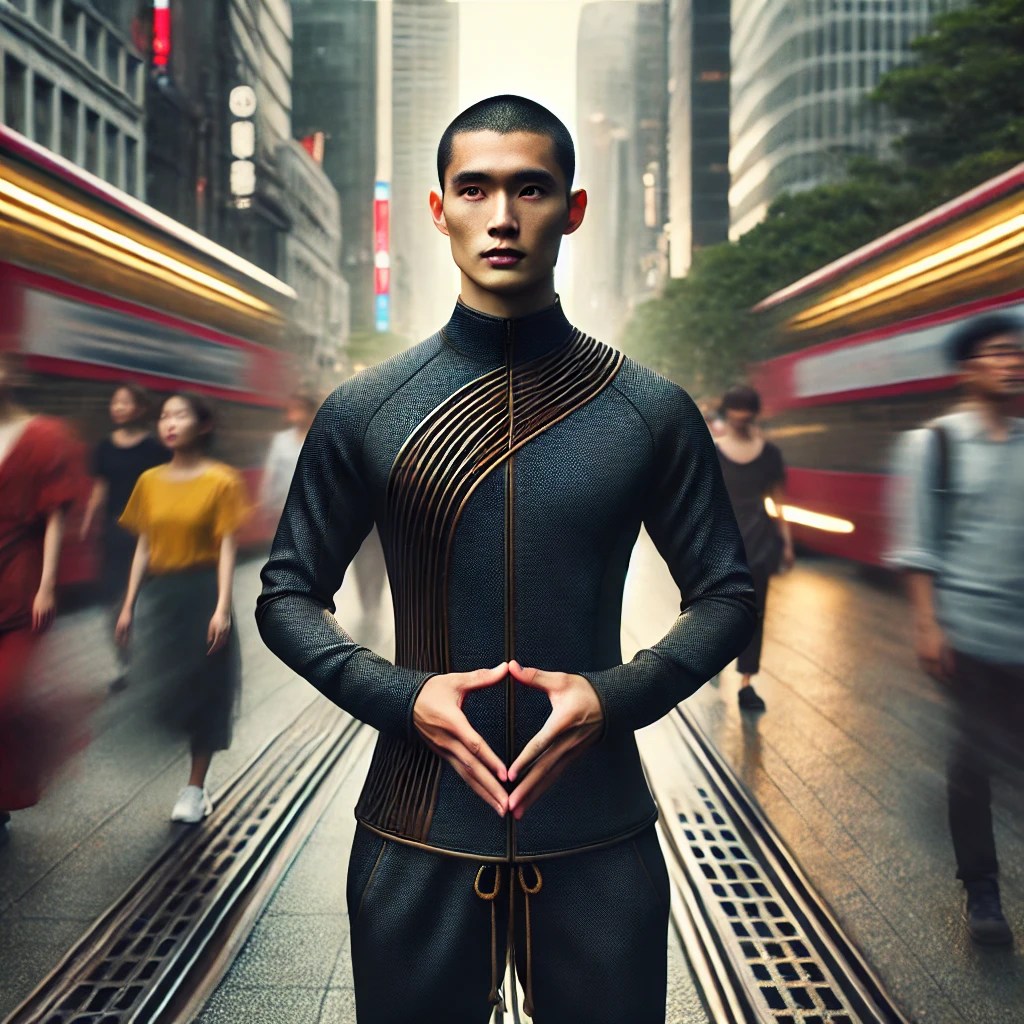
no-self

  • SHIKANTAZA, VIPASSANĀ, AND THE GREAT JOKE: IT’S ALL GOD ANYWAY

    People argue endlessly about meditation techniques.
    Zen versus Vipassanā.
    Objectless awareness versus noting.
    Just sitting versus insight practice.

    But when you strip away the robes, the terminology, and the lineage pride, something very simple remains:

    Reality is already awake.
    And every sincere practice eventually collides with that fact.

    What Is Shikantaza (“Just Sitting”)?

    Shikantaza literally means just sitting.
    It is the central practice of Sōtō Zen, articulated most clearly by Dōgen.

    No mantra.
    No breath counting.
    No visualization.
    No noting.
    No goal.

    You sit upright.
    Eyes open.
    Breathing naturally.
    Thoughts arise. Sensations arise. Emotions arise.

    And you do nothing with them.

    Not suppressing.
    Not indulging.
    Not analyzing.

    There is no attempt to reach enlightenment.
    Because in Zen, enlightenment is not something you get later—it is what sitting already is when nothing is added.

    Shikantaza is not meditation to become something.
    It is the expression of reality as it already is.

    What Is Vipassanā?

    Vipassanā means clear seeing or insight.

    In the form I teach—and in its most refined expressions—whatever is most prominent in the field of experience becomes the object of awareness:

    • A sound
    • A sensation
    • A thought
    • A feeling
    • The breath
    • The body

    Nothing is forced.
    Nothing is clung to.
    Experience reveals itself moment by moment.

    Vipassanā is devastatingly effective at dismantling:

    • Identification with thought
    • Identification with emotion
    • Identification with the body
    • The illusion of permanence

    It exposes impermanence, unsatisfactoriness, and non-self directly, not philosophically.

    Where They Overlap

    At advanced levels, Vipassanā and Shikantaza can look identical from the outside.

    In both:

    • There is no fixation on a single object
    • Experience unfolds naturally
    • Thoughts are not suppressed
    • Presence is open and alert

    Many Vipassanā practitioners naturally drift into Shikantaza without meaning to.
    Many Zen practitioners unknowingly practice a soft form of Vipassanā.

    The overlap is real.

    The Subtle Difference (Where Zen Gets Ruthless)

    The difference is not what appears.
    It is the stance toward experience.

    In Vipassanā, even very refined Vipassanā, there is usually:

    • A subtle observer
    • A sense of knowing experience
    • Awareness directed toward phenomena

    This is not a flaw—it is a powerful tool.

    In Shikantaza:

    • There is no observer
    • No object
    • No project of knowing
    • No stance outside experience

    Experience itself is the witness.

    Seeing does not need a seer.
    Hearing does not need a hearer.
    Thinking does not need a thinker.

    Awareness is not watching reality.
    Awareness is indistinguishable from reality.

    Zen calls this just sitting.
    No leverage point for the ego remains.

    The Punchline: It’s All God Anyway

    Here’s where the argument collapses.

    Whether you:

    • Watch experience arise (Vipassanā)
    • Or drop even the watcher (Shikantaza)

    What you eventually discover is the same thing:

    There is no separate self running the show.
    There is only Reality knowing itself.

    Call it:

    • God
    • Buddha-nature
    • Suchness
    • Awareness
    • The Absolute

    The name doesn’t matter.

    Vipassanā dissolves the gross sense of self.
    Shikantaza dissolves the subtle sense of self.
    Both end in the same place: no separation.

    Different Paths, Same Destination

    Vipassanā is a razor.
    Shikantaza is a void.

    Vipassanā says: See clearly.
    Shikantaza says: Stop standing outside what is.

    One emphasizes insight.
    The other emphasizes surrender.

    But the destination?

    No “you.”
    No “practice.”
    No “method.”

    Just God sitting as God, breathing as God, thinking as God, hearing as God.

    And realizing—perhaps with a quiet smile—that the entire spiritual struggle was unnecessary.

    Different techniques.
    Same destination.

    And the destination was never anywhere else.


  • Unyielding Life Mastery with Mind Range™: The Warrior’s Path to Mushin

    This blog post is a blueprint for transcending human limits and evolving into a superhuman. Through RAT Synthesis, Mind Range™, and Mushin, it trains mastery of mind, body, and destiny.

    By overcoming fear, hesitation, and ego, individuals unlock peak performance, ultimate awareness, and unshakable freedom—becoming unstoppable forces in life.


    Warrior of Stillness:

    No-self, No-mind.

    The enemy cannot penetrate—for who is there to be penetrated?

    Into a soul absolutely free
    From thoughts and emotion,
    Even the tiger finds no room
    To insert its fierce claws.

    One and the same breeze passes
    Over the pines on the mountain
    And the oak trees in the valley;
    And why do they give different notes?

    No thinking, no reflecting,
    Perfect emptiness;
    Yet therein something moves,
    Following its own course.

    The eye sees it,
    But no hands can take hold of it –
    The moon in the stream.

    Clouds and mists,
    They are midair transformations;
    Above them eternally shine the sun and the moon.

    Victory is for the one,
    Even before the combat,
    Who has no thought of himself,
    Abiding in the no-mind-ness of Great Origin.

    SOURCE: Bruce Lee The Tao of Gung Fu: A Study in the Way of Chinese Martial Art

    KAMON (FAMILY CREST): RAT SYNTHESIS WAY OF THE SAMURAI-YOGI


    Miyamoto Musashi once said, “The way of the warrior is the resolute acceptance of death.”

    Does this mean one should seek death? Should a warrior simply surrender to fate in battle?

    No. The meaning runs much deeper—it is not about dying physically but about letting go of self-centeredness. It is about removing the limitations of the ego, fear, and hesitation. This teaching, mirrored in both Eastern philosophy and Christianity’s concept of “dying to self,” is the key to mastering combat and life itself.

    The Power of Mushin: No Mind, No Fear

    The RAT Synthesis system of Mind Range™ instills Mushin—the state of “no-mind, no-self.” This is the warrior’s ultimate edge in combat and life. When in Mushin, the fighter is free from self-conscious thought, worry, and doubt. The mind does not dwell on success or failure—it simply acts with pure clarity and precision.

    Musashi also stated, “If you make your opponent flinch, you have already won.” Why is this so powerful?

    Because flinching means hesitation. Hesitation comes from self-centeredness—the fear of losing, the fear of pain, the fear of failure. Remember Mike Tyson in the ring and how he would intimidate his opponents? Bruce Lee was also a master of psychological warfare.

    When an enemy is preoccupied with their survival, their actions become reactive, not strategic. They are not meditating; they are panicking. Their responses become weak, erratic, and fear-driven.

    A warrior trained in Mushin, however, does not react—he responds. He plays chess in the middle of battle. His counterattacks are not egoistic, fear-based, or selfish; they are efficient, devastating, and inevitable.

    Mind Range™: The Key to Ultimate Awareness

    Mind Range™ in RAT Synthesis is the practice of expanding one’s awareness beyond the self. It trains a practitioner to:

    By mastering Mind Range™, the warrior is no longer trapped in the narrow perspective of “me vs. them.” Instead, they become one with the Moment and the opponent, intuit their intentions, and flow with the fight, becoming an unstoppable force.

    This principle extends beyond combat. In life, those who are attached to their fears and doubts hesitate. They operate within limited programming. They second-guess opportunities. They remain in the prison of their own limitations.

    But those who embody Mind Range™ and Mushin act decisively, embracing life with a warrior’s resolve.

    Mastering the Art of No-Self

    To truly win—whether in battle or in life—one must remove the distractions of self-importance. Arrogance, fear, hesitation, and overthinking are all obstacles. The path of the warrior is to transcend these limitations.

    Through RAT Synthesis and Mind Range™, you can achieve Mushin and cultivate a level of awareness that grants absolute control in any situation. Whether you are fighting an opponent, navigating a business deal, or making a life-changing decision, the principles remain the same:

    • Meditate and Let go of self-centeredness. Dissolve into the eternal Now.
    • Act without fear
    • Master your responses

    The moment is the nexus to all of reality (the matrix of Consciousness).

    The moment is the lever.

    By following this path, you embody the warrior’s ultimate truth: total freedom and unshakable mastery over yourself and your destiny.

    Are you ready to embrace Mushin and unlock your full potential? The path is before you. Step forward without hesitation.

    19 books FREE on Kindle Unlimited:  https://amzn.to/3FwuJ5h


  • The Samurai’s Secret: Harnessing Unstoppable Determination and the Law of Attraction

    Generally speaking, the Way of the warrior is resolute acceptance of death – Miyamoto Musashi

    Face insurmountable odds with unwavering purpose—like a samurai throwing away their scabbard.

    Act with force, focus, and absolute confidence in the outcome, harnessing the Law of Attraction.

    Set your intent, draw in the energy, step aside, and let God provide the tools.

    Your task? Accept and act.

    Rose Cross, symbol of the enlightenment
    Aligning with the structure of Yin/Yang/Tao brings harmony with reality and avoids partial outcomes.
    The Way Of The Samurai-Yogi: RAT Synthesis Transformational Leadership Coaching