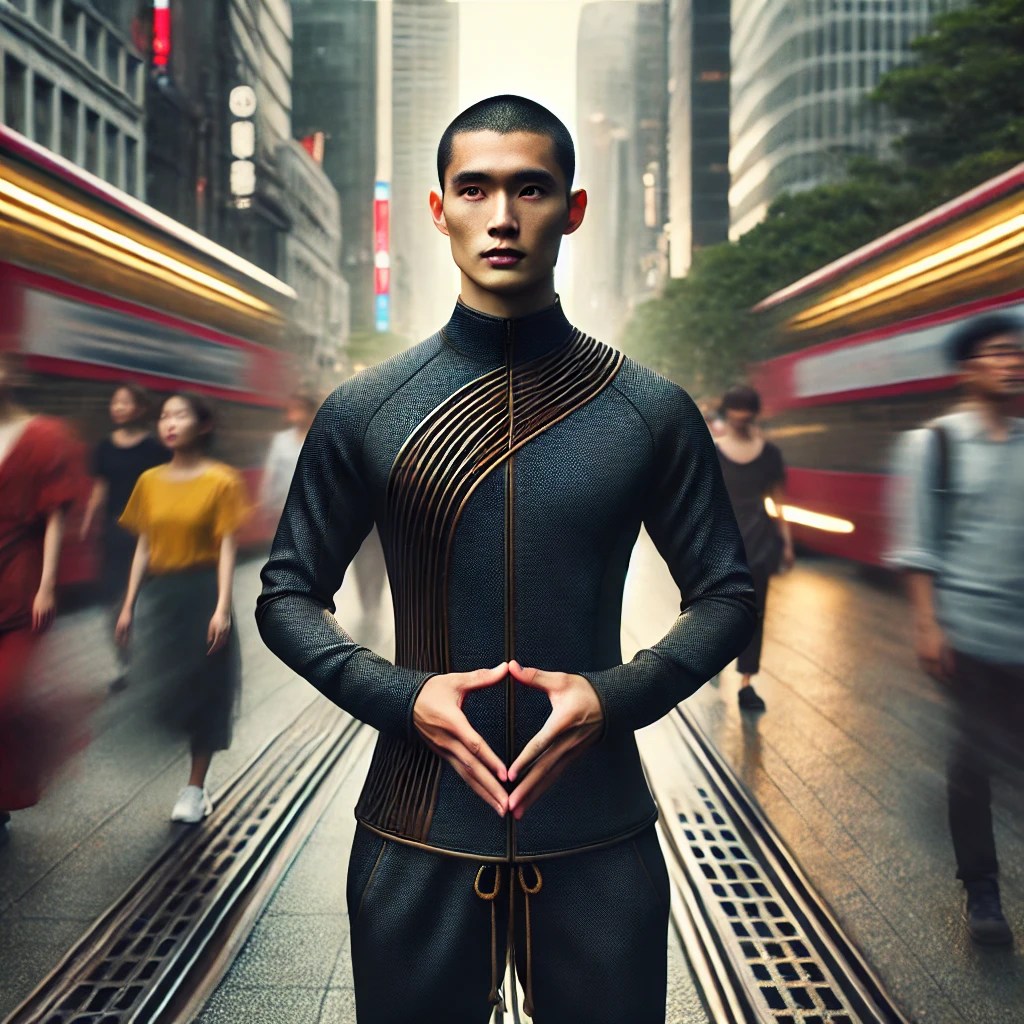
Most people think of chess as a game and martial arts as a method of combat. They certainly are—but both can become something much deeper. Like Jeet Kune Do, Kendo, Judo, Aikido, or the Tea Ceremony, they can be practiced as a Do—a Way of self-cultivation.
When approached in this manner, the objective shifts. Winning a chess game or defeating an opponent is no longer the highest goal. Instead, each practice session becomes an opportunity to refine the mind, body, and character.
In chess, every move demands concentration. Every position requires patience. Every mistake becomes a teacher rather than a source of frustration. In martial arts, every technique requires awareness. Every movement reveals weaknesses. Every challenge becomes an opportunity to develop discipline, humility, and perseverance.
Both disciplines train the practitioner to remain calm under pressure. Chess develops strategic thinking, foresight, and the ability to anticipate consequences. Martial arts develops timing, adaptability, body awareness, and the ability to respond without hesitation. Together, they cultivate restraint over impulsiveness and clarity over confusion.
The chessboard becomes a training ground for the mind. The dojo becomes a training ground for the body and spirit. In both, the true opponent is not the person across from you, but the limitations within yourself—fear, impatience, ego, and lack of discipline.
Practiced consistently, chess and martial arts cultivate qualities that extend far beyond the board and the training floor. The focus used to evaluate a position can be carried into work and relationships. The awareness developed through martial arts can be carried into everyday movement and decision-making. Observation, emotional control, and continuous learning become part of daily life.
This is the essence of Do—using a discipline not merely to acquire skill, but to transform the practitioner.
When chess and martial arts are practiced in this spirit, they cease to be merely activities. They become lifelong paths toward wisdom, discipline, self-mastery, and the realization of one’s highest potential.
There is a reason chess has fascinated humanity for over a thousand years. It is far more than a game of kings and queens. It is a mirror held up to the mind. Every move reveals not only the position on the board, but the condition of the player.
The chessboard is a miniature universe. Within sixty-four squares exists conflict and harmony, strategy and sacrifice, patience and urgency, victory and defeat. Though the battlefield is small, the lessons are immense. In this way, chess becomes a microcosm of life itself.
Every game begins the same. The pieces are arranged in perfect balance. No one has yet made a mistake. No one has won or lost. What follows is determined not by fate alone, but by awareness, judgment, discipline, and the ability to adapt.
Life unfolds the same way.
Many people imagine that success comes from making brilliant moves. Yet experienced chess players know something deeper. Most games are not won through flashes of genius but by avoiding unnecessary mistakes, remaining patient, and steadily improving one’s position. Likewise, a fulfilling life is often built through consistent, thoughtful choices rather than dramatic moments.
When I play chess meditatively, I discover that my true opponent is not the player sitting across from me or on the other side of the screen. My real opponent is distraction. It is impatience. It is fear after making a mistake. It is greed when I see an opportunity that isn’t really there. It is attachment to winning.
The board exposes every weakness of the mind.
Meditation seeks to do exactly the same.
In meditation I observe thoughts arise without clinging to them. During a chess game I observe impulses arise without obeying them. The urge to attack recklessly, to move too quickly, to force combinations that do not exist—all are invitations to lose awareness. The disciplined player waits. He breathes. He sees the position clearly before acting.
This is mindfulness expressed through sixty-four squares.
As I play, I strive to remain the witness. I observe thoughts, emotions, impulses, and the desire to move immediately without becoming identified with them. Before every move, I use the pause—that sacred space between stimulus and response. In that pause lies freedom. Rather than reacting automatically, I choose my next move consciously.
This is meditation in motion.
The discipline is identical to my meditation practice. During meditation I observe thoughts arise and pass without attachment. During chess I observe strategic ideas, emotions, hopes, fears, and temptations arise in exactly the same way. I neither suppress them nor blindly obey them. I simply witness them, allowing awareness rather than impulse to guide my next move.
The more faithfully I practice this process on the board, the more naturally it carries over into everyday life. Conversations become more thoughtful. Decisions become less reactive. Challenges become opportunities to remain centered rather than emotionally entangled. The chessboard becomes a laboratory where awareness is refined, one move at a time.
Chess teaches presence.
The last move cannot be changed.
The next move has not yet happened.
Only this move exists.
That is also the essence of life.
When we live in regret, we replay yesterday’s blunders. When we live in anxiety, we imagine tomorrow’s disasters. Wisdom lives neither in yesterday nor tomorrow. It lives in the present position.
Every move asks only one question:
“What is the best thing to do now?”
Martial arts teaches the very same lesson.
I have often said that martial arts is chess played at a million miles per hour with muscles. Every strike, block, angle, and movement is a decision made under pressure. The fighter who remains calm sees opportunities invisible to the emotional opponent.
The same is true on the chessboard.
The same is true in life.
The greatest victories belong not to those who never encounter difficulty, but to those who remain composed while difficulty unfolds.
Chess also teaches humility.
Even grandmasters lose games.
Every defeat contains instruction for those willing to study it. Every blunder reveals a blind spot. Every missed opportunity reminds us that growth never ends.
If approached correctly, there are no wasted games.
Only lessons.
Life offers the same generosity.
Failures become teachers.
Losses become training.
Obstacles become opportunities to develop patience, wisdom, and resilience.
Those who refuse to learn become bitter.
Those who embrace learning become stronger.
One of the greatest lessons chess offers is adaptability.
A player may enter the game with a beautiful opening prepared in advance, only to find that the opponent chooses a completely different path. Clinging stubbornly to the original plan invites disaster. The stronger player adjusts to reality.
Life rewards the same flexibility.
Circumstances change.
People change.
Health changes.
Finances change.
The world changes.
The wise person does not resist reality. He responds to it with clarity, courage, and faith.
The goal is not to control the game.
The goal is to play each position well.
Spiritually, this truth runs even deeper.
Every move can become a devotional offering.
We study carefully.
We think clearly.
We choose the best move we can perceive.
Then we release attachment to the result.
Whether we win or lose the game is no longer the measure of success.
Success is measured by the quality of our awareness, our integrity, and our effort.
This is freedom.
The purpose of playing chess is not merely to become a stronger chess player. It is to become a stronger human being. Every game is an opportunity to train the mind to remain calm under pressure, to see reality clearly, to respond rather than react, to learn from mistakes without self-condemnation, and to release attachment to outcomes. In this way, the discipline cultivated over sixty-four squares gradually extends into work, relationships, finances, adversity, and spiritual life. The board becomes a dojo for the mind, a monastery for the heart, and a rehearsal for living wisely. Master the process on the chessboard, and you begin to master the process of life itself.
The board eventually clears.
The kings are tipped.
The pieces return to the box.
Every game ends.
So too does every human life.
What remains is not the number of victories we accumulated but the character we developed while playing.
Patience.
Humility.
Presence.
Discipline.
Compassion.
Faith.
These are treasures that cannot be taken away.
Perhaps this is why chess continues to captivate the human spirit. It reminds us that every moment presents a choice. Every position contains possibility. Every apparent setback can become the beginning of a better plan.
The true master is not merely one who wins games.
The true master is one whose way of playing transforms the player himself.
Play every move with awareness.
Meet every challenge with equanimity.
Offer every action to God.
Accept every result with gratitude.
Then the game of chess becomes more than entertainment.
It becomes meditation.
It becomes martial arts.
It becomes spiritual practice.
It becomes a school for life.
And as we become better students of the game, we may also become wiser participants in the greatest game of all—the sacred privilege of living.
“Forewarned, forearmed; to be prepared is half the victory”. – Miguel de Cervantes
TRANSCRIPT:
In the city’s chaos, move like a shadow: not to hunt, but to survive and protect.
Observe first. Always. Scan people, posture, movement, exits. Awareness is armor; complacency is a coffin.
Avoidance is strategy. See a hostile group? Reroute. Cross the street. Don’t follow them into a store. Walk away when you can.
Equip yourself—legally and tactically. A kubotan or similar tool in trained hands gives you an edge. Train with it; don’t rely on it alone. Also learn a practical system of hand-to-hand combat like RAT Synthesis.
Use focused strikes to disable: chest, clavicle, forearms, back of the hands—then escape. Reserve lethal force only when there is no other choice.
Psychology wins fights. If confronted, stay calm and steady. Stand your ground without anger. If they bait you, answer with certainty—briefly—and let silence do the work. “Are you that scary dude?”. Answer, “Yes”
Enter Mushin. Don’t stare; look indirectly, widen and use your peripheral vision. No thought. No fear. Flow. Be ready without reacting.
Be vehicle-ready: keep defensive tools reachable. If someone reaches into your car—hit the arm with a kubotan, break the grab, drive.
Control the spiral. Know the terrain: exits, cameras, choke points. Train the mind before the body—meditate, visualize, rehearse.
If compelled to strike, do so decisively: first, last, and fast. Then vanish.
You are not prey. You are the mindful urban warrior—unseen, unshakable, unbroken.
This blog post is a blueprint for transcending human limits and evolving into a superhuman. Through RAT Synthesis, Mind Range™, and Mushin, it trains mastery of mind, body, and destiny.
By overcoming fear, hesitation, and ego, individuals unlock peak performance, ultimate awareness, and unshakable freedom—becoming unstoppable forces in life.
Warrior of Stillness:
No-self, No-mind.
The enemy cannot penetrate—for who is there to be penetrated?
Into a soul absolutely free From thoughts and emotion, Even the tiger finds no room To insert its fierce claws.
One and the same breeze passes Over the pines on the mountain And the oak trees in the valley; And why do they give different notes?
No thinking, no reflecting, Perfect emptiness; Yet therein something moves, Following its own course.
The eye sees it, But no hands can take hold of it – The moon in the stream.
Clouds and mists, They are midair transformations; Above them eternally shine the sun and the moon.
Victory is for the one, Even before the combat, Who has no thought of himself, Abiding in the no-mind-ness of Great Origin.
KAMON (FAMILY CREST): RAT SYNTHESIS WAY OF THE SAMURAI-YOGI
Miyamoto Musashi once said, “The way of the warrior is the resolute acceptance of death.”
Does this mean one should seek death? Should a warrior simply surrender to fate in battle?
No. The meaning runs much deeper—it is not about dying physically but about letting go of self-centeredness. It is about removing the limitations of the ego, fear, and hesitation. This teaching, mirrored in both Eastern philosophy and Christianity’s concept of “dying to self,” is the key to mastering combat and life itself.
The Power of Mushin: No Mind, No Fear
The RAT Synthesis system of Mind Range™ instills Mushin—the state of “no-mind, no-self.” This is the warrior’s ultimate edge in combat and life. When in Mushin, the fighter is free from self-conscious thought, worry, and doubt. The mind does not dwell on success or failure—it simply acts with pure clarity and precision.
Musashi also stated, “If you make your opponent flinch, you have already won.”Why is this so powerful?
Because flinching means hesitation. Hesitation comes from self-centeredness—the fear of losing, the fear of pain, the fear of failure. Remember Mike Tyson in the ring and how he would intimidate his opponents? Bruce Lee was also a master of psychological warfare.
When an enemy is preoccupied with their survival, their actions become reactive, not strategic. They are not meditating; they are panicking. Their responses become weak, erratic, and fear-driven.
A warrior trained in Mushin, however, does not react—he responds. He plays chess in the middle of battle. His counterattacks are not egoistic, fear-based, or selfish; they are efficient, devastating, and inevitable.
Mind Range™: The Key to Ultimate Awareness
Mind Range™ in RAT Synthesis is the practice of expanding one’s awareness beyond the self. It trains a practitioner to:
By mastering Mind Range™, the warrior is no longer trapped in the narrow perspective of “me vs. them.” Instead, they become one with the Moment and the opponent, intuit their intentions, and flow with the fight, becoming an unstoppable force.
This principle extends beyond combat. In life, those who are attached to their fears and doubts hesitate. They operate within limited programming. They second-guess opportunities. They remain in the prison of their own limitations.
But those who embody Mind Range™ and Mushin act decisively, embracing life with a warrior’s resolve.
Mastering the Art of No-Self
To truly win—whether in battle or in life—one must remove the distractions of self-importance. Arrogance, fear, hesitation, and overthinking are all obstacles. The path of the warrior is to transcend these limitations.
Through RAT Synthesis and Mind Range™, you can achieve Mushin and cultivate a level of awareness that grants absolute control in any situation. Whether you are fighting an opponent, navigating a business deal, or making a life-changing decision, the principles remain the same:
Meditate and Let go of self-centeredness. Dissolve into the eternal Now.
Act without fear
Master your responses
The moment is the nexus to all of reality(the matrix of Consciousness).
The moment is the lever.
By following this path, you embody the warrior’s ultimate truth: total freedom and unshakable mastery over yourself and your destiny.
Are you ready to embrace Mushin and unlock your full potential? The path is before you. Step forward without hesitation.