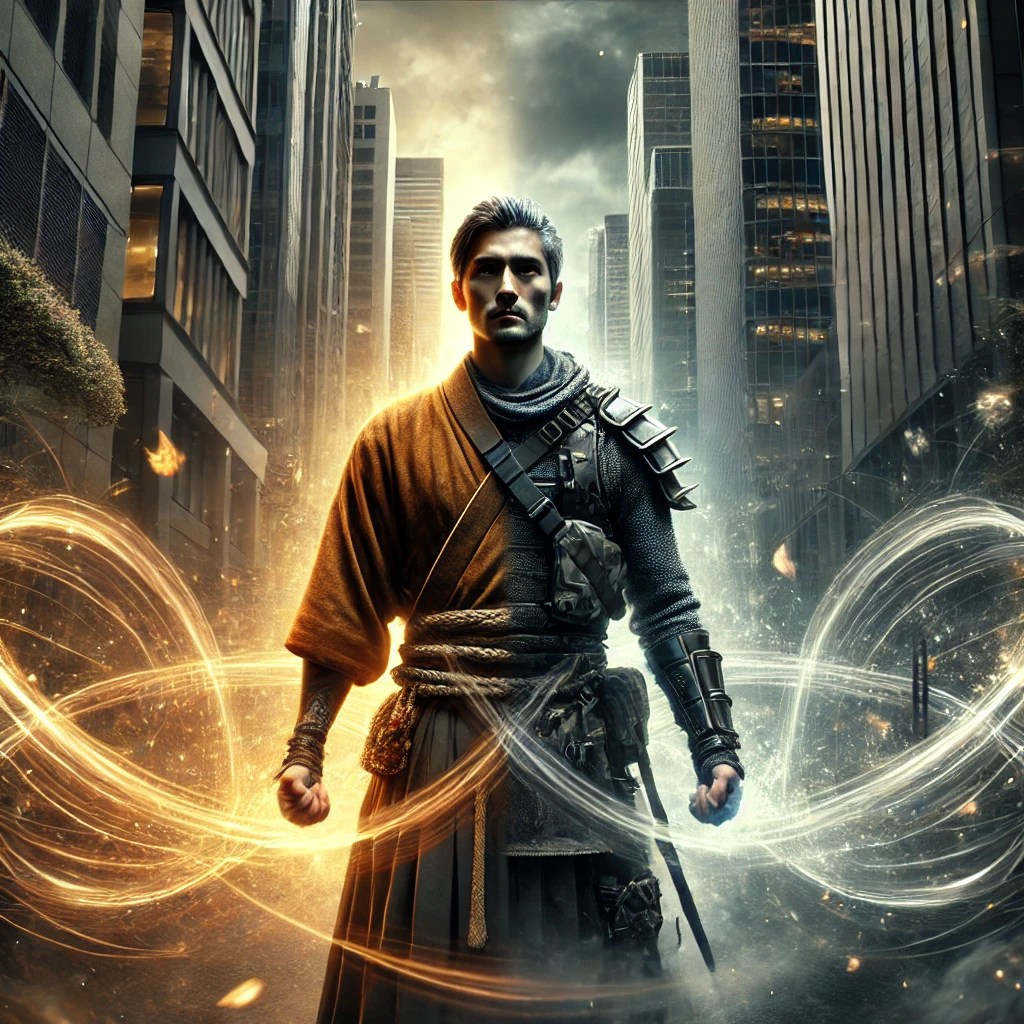
warrior mindset

  • THE GREATEST OPPONENT.

    Inspired by a student.

    “I have no enemies” – Thorfinn Karlsefni, Vinland Saga

    “My opponent is my teacher, my ego is my enemy” – Renzo Gracie

    What if my greatest opponent is not another man, not circumstance, not fate—but myself?

    What if the real battle is fought in silence, deep within the chambers of my own mind? Every impulsive decision. Every moment of hesitation. Every fear disguised as logic. Every distraction masquerading as comfort. Every act of self-sabotage hidden beneath excuses and rationalizations. The greatest enemy is often not standing across from us—it is living within us.

    A man can spend years preparing to defeat external enemies while remaining completely vulnerable to his inner chaos. He studies strategy, combat, business, philosophy, and discipline, yet still falls because he cannot govern himself. History is filled with talented people destroyed not by lack of ability, but by lack of mastery over their own minds.

    The undisciplined mind is a battlefield filled with hidden traps.

    Meditation and mindfulness become weapons of self-awareness. They allow you to observe your thoughts before they become actions and your actions before they become consequences. Through stillness, you begin to notice the subtle patterns that once controlled you unconsciously: anger rising before it explodes, fear disguising itself as procrastination, ego pushing you toward unnecessary conflict, desire tempting you away from your purpose.

    Most people react automatically. Mindfulness teaches you to witness yourself in real time.

    At first, you learn to catch your mistakes after they happen. Then you learn to catch them while they are happening. Eventually, with enough awareness, discipline, and inner silence, you begin to preempt them before they arise at all. You see the storm forming before the first drop of rain falls. This is a higher level of mastery—the ability to intercept self-destruction before it manifests into reality.

    The warrior who conquers others may be strong, but the warrior who conquers himself becomes nearly unstoppable.

    Yet no man sees himself completely. Every person has blind spots—weaknesses hidden behind pride, habits invisible through familiarity, illusions protected by ego. This is why a teacher, mentor, or trusted advisor is invaluable. A wise guide acts like a mirror, revealing what you cannot see alone. They expose flaws in your thinking, challenge your excuses, and force you to confront truths you would rather avoid.

    Humility is essential in this process because ego resists correction. Ego wants to appear strong, already knowledgeable, already complete. It fears criticism and avoids discomfort. But the humble person remains teachable. He understands that mastery is never final and that wisdom requires continuous refinement. Humility allows a person to become a lifelong student—always observing, learning, adapting, and improving rather than becoming trapped by arrogance.

    The moment a man believes he has nothing left to learn, his decline has already begun.

    A true teacher does not weaken you by making life easier. They strengthen you by making you more conscious.

    Self-mastery is not perfection. It is awareness. It is correction. It is the willingness to observe yourself honestly and refine yourself continuously. Every day becomes training. Every interaction becomes feedback. Every failure becomes intelligence instead of defeat.

    The ultimate goal is not merely success over the external world. It is internal sovereignty—the ability to remain centered, disciplined, calm, and intentional despite chaos.

    Because in the end, the greatest victory is not defeating another opponent.

    It is no longer being defeated by yourself.


  • THE DISCIPLINE OF UNSHAKEN JOY

    The Way of the warrior is not merely to endure life, but to master the manner in which one stands within it.

    Many men believe happiness is a gift handed down by circumstance. They think it is found in favorable events, kind words, wealth, victory, or the approval of others. Thus, their peace is forever hostage to forces outside themselves. When fortune smiles, they rejoice. When it turns its face away, they collapse into agitation. Such a person is not living; he is being pulled like a chained animal by the world’s endless conditions.

    This is weakness.

    To be truly happy is to decide upon happiness without condition.

    This is not the shallow happiness of pleasure, nor the temporary satisfaction of fulfilled desire. It is a deeper state—a quiet steadiness of being that does not rise and fall with the noise of the day. It is the calm center of the storm, untouched by the chaos that circles it.

    The warrior understands that life is forever changing. Gain becomes loss. Praise becomes criticism. Health becomes sickness. Companions depart. Seasons shift. To tie one’s peace to what is unstable is to build a temple upon water.

    Therefore, one must become detached.

    The highest form of detachment is not merely release from circumstance, but surrender of personal will itself. The ancient prayer teaches: “let not my will be done, but God’s will be done.” This is the final severing of the chain that binds man to suffering. For so long as one insists that life unfold according to his design, he remains vulnerable to frustration, resentment, and despair. But the one who yields himself to the greater order ceases his war against reality itself. He acts with full effort, yet releases his claim upon the result. In this surrender, there is no weakness. There is supreme strength, for he no longer battles reality itself.

    Detachment is often misunderstood by those who have not trained. They imagine it means coldness, indifference, or the absence of feeling.

    This is false.

    True detachment is not the rejection of life, but freedom within it. It is to fully engage with the world while refusing to be enslaved by its movements. To appreciate what comes without clinging to it. To face what departs without despair. To act with precision while remaining inwardly undisturbed.

    When insult comes, the detached man does not immediately react.
    When loss arrives, he does not collapse.
    When praise is offered, he does not become intoxicated.

    He remains centered.

    This centeredness is not granted by wishing for it.

    It is forged.

    The untrained mind is like a wild horse, startled by every sound, pulled by every impulse, charging wherever emotion commands. Most men spend their lives in this state, believing their reactions are their nature. They mistake reflex for truth.

    But the disciplined practitioner knows otherwise.

    Through meditation, one enters into battle with the restless self.

    To sit in stillness is to witness the ceaseless noise of the mind—the cravings, fears, resentments, fantasies, and compulsions that seek to command one’s actions. At first, the practitioner is defeated again and again, dragged into thought without awareness.

    Yet through daily practice, something changes.

    The mind begins to obey.

    A space appears between event and response.

    In that space, one finds freedom.
    In that freedom, one finds choice.

    This is the birthplace of true happiness.

    For happiness is not an emotion that descends upon the fortunate.

    It is a discipline of orientation.

    It is the practiced decision to remain anchored regardless of what appears.

    To live this way requires effort.

    One must practice releasing attachment when attachment feels natural.
    One must choose calm when reaction feels justified.
    One must return to center again and again, even after failure.

    This is the labor of self-mastery.

    And yet, no labor bears greater reward.

    For what is the alternative?

    To be ruled by every inconvenience.
    To have one’s mood dictated by the opinions of strangers.
    To rise and fall with every passing circumstance.
    To live as a puppet whose strings are pulled by the world.

    Such an existence is unworthy.

    The one who trains in meditation and detachment becomes difficult to disturb. His joy is no longer borrowed from events. His peace is not dependent on outcomes, for the outcome itself has been surrendered to God’s will. He walks through victory without arrogance and through hardship without defeat.

    He has become unconquerable where it matters most.

    This path requires practice, patience, and many returns after failure.

    But it is a life worth living.

    For to be centered is to be free.
    To be detached is to be strong.
    To be unreactive is to be sovereign over oneself. And to be happy without condition is perhaps the highest form of victory a person can attain.


  • GIVE 100 PERCENT, YET REMAIN UNATTACHED TO THE RESULTS — BHAGAVAD GITA

    In martial arts, this teaching is not philosophy for quiet contemplation—it is a combat principle. It is the difference between a fighter who breaks under pressure and a fighter who remains free inside the storm.

    At its surface, the quote appears paradoxical. How can one give “100 percent” and yet remain “unattached”? In ordinary thinking, total effort implies total investment in outcome. But the Bhagavad Gita draws a sharper distinction: effort belongs to you; outcome does not.

    In martial terms, this means the difference between commitment to action and bondage to result.

    A martial artist must commit fully in the moment. Hesitation is defeat. Partial intent is already loss. Whether striking, defending, or moving, the body must act without division. If the mind fractures into “What if I fail?” or “What if I win?”, speed and precision collapse. Technique becomes stiff. Timing becomes late. Fear enters the nervous system.

    This is why the Gita’s instruction is absolute: act completely. Not 70 percent. Not cautiously. Not self-protectively. Full engagement.

    But the second half is what makes the first sustainable.

    “Unattached to results” does not mean indifferent to victory or defeat. It means the fighter does not fracture identity based on outcome. If success defines you, then failure destroys you. That creates psychological instability under pressure. The moment the stakes rise, your ego becomes fragile, and fragility slows reaction.

    Detachment stabilizes the mind. It keeps attention locked on the only real battlefield: this instant of action.

    In combat sports, this is visible in elite fighters. The best athletes are not the ones who “hope to win.” They are the ones who execute without emotional interruption. They adjust after failure without collapse. They do not carry the last exchange into the next one. Each moment resets.

    This is the Gita in motion: action without residue.

    There is also a deeper strategic truth. Results are never fully in your control. Opponent skill, timing, environment, injury, chance—all exist outside individual will. To bind identity to outcome is to surrender sovereignty to variables you do not own.

    So the warrior trains a different axis of control:

    • Total control of effort, discipline, and attention
    • Zero control over outcome, therefore zero psychological dependence on it

    This creates a strange advantage: freedom under pressure. When fear of losing is removed, speed increases. When ego protection is gone, perception sharpens. When the mind is not negotiating with future consequences, it fully enters present action.

    In that state, technique becomes natural. Reaction becomes instant. The body acts before doubt can form.

    This is not softness. It is precision without interference.

    The highest expression of this principle in martial arts is what might be called unburdened aggression: full commitment without emotional clutter. The strike is complete, but the identity is untouched by whether it lands or misses.

    That is why the Gita frames action itself as duty, not outcome as reward. The warrior is responsible for integrity of action, not the verdict of results.

    In the end, this teaching is not about detachment from life—it is about detachment from internal collapse. It allows a fighter to remain steady whether standing victorious or recovering from defeat.

    Because in the deepest sense, mastery is not measured by what happens after the fight.It is measured by whether, in the fight, the mind stayed free.


  • THE SHADOW WARRIORS: “KATA” TRAINING IN RAT SYNTHESIS – FORGING THE UNSTOPPABLE FORCE THROUGH THE FIVE ETERNAL STEPS

    In the ancient crucible of combat, where steel meets sinew and will meets chaos, true mastery is not born from sparring alone. It is forged in the silent temple of the mind and body united. Enter RAT Synthesis—the Reality Attack Training system that distills the raw fury of survival into an unbreakable chain of violence. At its beating heart lies the kata: not the rigid, dance-like forms of old, but living, breathing shadow fighting. Here, warriors train in the air as if ghosts of enemies rise before them, chaining combinations that echo the thunder of real war. This is no mere exercise. This is the forge where legends are hammered into existence.

    The soul of every RAT Synthesis kata is the Five-Step Strategy: Pain → Pressure → Terminate → Follow Up → Finish. These are not steps on a checklist; they are the rhythm of conquest itself, the heartbeat of a predator who refuses to lose. Each sequence is practiced like a Western boxer’s shadow boxing—sometimes blistering fast to sear neural pathways, sometimes deliberate and slow to etch perfect mechanics, and sometimes in pure mental visualization, eyes closed, where the battlefield exists only in the warrior’s inner eye. This visualization is no modern gimmick. Chuck Norris called it his secret weapon, the invisible blade that let him dominate when flesh failed. Mike Stone, that granite-fisted legend of full-contact karate, swore by it. Olympic champions across disciplines have used it to claim gold before their bodies ever touched the arena. In RAT Synthesis, it becomes the ultimate weapon: you fight the ghost, so the real enemy never stands a chance.

    Picture the opening salvo. The kata begins in the void. You explode forward—Pain. A low sidekick crashes into the phantom knee with surgical cruelty, buckling the foundation before the enemy even knows war has arrived. Instantly the eye jab follows, fingers like spears seeking the windows to the soul. The ghost blocks—good. You flow seamlessly into pak sao, the Wing Chun trap that pins the arm like iron jaws, then drive the second eye jab home. Pain layered upon pain. The enemy’s world shrinks to agony. Their hands fly up in desperation, but you are already gone.

    Now Pressure. The Wing Chun straight blast erupts—a relentless chain of punches hammering the nose like a battering ram. Each strike drives the phantom backward, shattering balance, stealing base of operations. Their stance collapses. They become harmless, a ship without a rudder, drifting in the storm you created. The air itself seems to tremble as your fists blur, the kata alive with the wet snap of knuckles meeting imaginary cartilage. This is not sport. This is the moment the predator asserts dominance, turning a threat into prey.

    The ghost staggers but refuses to fall. Time for Terminate. You close the distance like a Muay Thai demon, locking the Muay Thai clinch—plum grip ironclad around the neck. Headbutts rain like meteors, knees explode upward into the groin with the force of piledrivers, elbows slice across the temples in crimson arcs. The kata pulses with primal rhythm: crash, drive, destroy. The air vibrates with the imagined crunch of bone and the roar of your own breath. In real combat this phase ends empires. In shadow training it forges the warrior who never hesitates when the moment demands total annihilation.

    Yet the true master prepares for the impossible. If the phantom still stands—Follow Up. Bagua palm strikes whip through the air like coiling serpents, redirecting force while delivering devastating power. Western boxing power punches follow in thunderous waves—hooks that could fell trees, crosses that split mountains. The kata flows without pause, each transition seamless, because in RAT Synthesis there is no “what if.” There is only “when.” Your body moves through the empty space as if the enemy’s broken form still blocks your path, training the mind to see victory where others see only struggle.

    Finally, the coup de grâce: Finish. Six lethal options await, chosen by instinct in the moment of truth. The front sweep or back sweep sends the phantom crashing to earth. The rear strangle coils like a python. A simple push or push-and-kick hurls them into oblivion. Or the ground-and-pound—dropping to one knee beside the fallen foe, raining hammer fists while deliberately avoiding the guard trap that has ensnared so many jiu-jitsu victims. You kneel at the perfect angle, safe, dominant, ending the fight on your terms. In the kata you practice each finish with surgical precision, the air becoming the mat, the mat becoming the battlefield, the battlefield becoming legend.

    This is how RAT Synthesis trains its warriors. In the lonely arena of shadow and will. Fast enough to outrun thought. Slow enough to perfect every angle. Invisible enough to rehearse in a crowded subway car or the quiet of your bedroom at 3 a.m., eyes closed, breathing the rhythm of conquest. The kata becomes meditation and mayhem fused—every repetition carving neural grooves deeper than diamond. When the real storm comes, the body remembers. The mind has already won.

    Chuck Norris visualized his way through tournament after tournament, seeing the knockout before it landed. Mike Stone used the same inner cinema to become a full-contact terror. Olympic athletes close their eyes and run perfect races in their skulls long before the gun fires. RAT Synthesis elevates this ancient truth into a complete combat system: shadow fighting that turns ordinary humans into something eternal.

    So step into the void, warrior. Throw that first low sidekick. Trap the block that hasn’t happened yet. Blast, clinch, finish. Feel the Five Steps burn through your veins. Train them in the air, in your mind, in the fire of your soul. Because when the day comes that the shadows step aside and flesh-and-blood evil stands before you… you will not be surprised.

    You will simply finish what you have already done a thousand times in the invisible war.

    You are RAT Synthesis. You are the storm. And the kata has already made you unstoppable.


  • The Holy Grail That Never Was: My Personal Synthesis of Martial Arts

    For years, I searched for the holy grail of martial arts—the single, ultimate system that would render all others obsolete. I eventually discovered what many before me had realized: it does not exist. There is no secret style, no mystical technique, and no perfect art that guarantees victory in every situation. What does exist, however, are the immutable laws of physics, the human body with its two arms, two legs, a head, and one torso, and countless doorways into the vast house of martial arts.

    Rather than chasing an illusion, I chose to build my own entrance. I call it RAT Synthesis—a practical, no-nonsense fighting method that uses a modified version of Rapid Assault Tactics (R.A.T.) as its core foundation. Rapid Assault Tactics, developed by Paul Vunak as part of Bruce Lee’s Jeet Kune Do lineage, is a streamlined, battle-tested combat system originally created for elite operators like Navy SEAL Team 6. It distills JKD principles into a devastatingly efficient “battle plan” focused on overwhelming an opponent quickly through pain, pressure, and termination. My RAT Synthesis expands and personalizes this framework by integrating additional elements from Mike Tyson’s devastating power punching and Denis Decker’s fighting-oriented Kung Fu.

    The result is not a new “style” in the traditional sense, but a functional synthesis guided by one overarching strategy: Pain → Pressure → Terminate → Follow-up → Finish.

    The Five-Phase Strategy

    Every confrontation is approached through these five progressive stages. The goal is simple: end the threat as efficiently and decisively as possible while minimizing risk to myself.

    1. Pain — The first objective is to immediately disrupt the opponent’s will and ability to fight by inflicting sharp, debilitating pain. This can be achieved offensively with targeted strikes such as an eye jab or a powerful sidekick to the lead knee. Defense also becomes offense through destructions—meeting incoming attacks with damaging counters. One example is spiking an incoming punch with an elbow. Through simultaneous block-and-strike actions and interceptions—striking into the opening created by the opponent’s own committed attack—the fighter seizes the initiative. Pain creates hesitation, breaks rhythm, and opens the door for the next phase.

    2. Pressure Once pain has been established, we do not give the opponent time to recover. We apply relentless forward pressure using the Wing Chun straight blast (also known as the chain punch or centerline blast). Delivered down the opponent’s centerline, this barrage forces them to backpedal, destroys their posture, and strips away their base of operations. A fighter who is constantly retreating and off-balance becomes temporarily harmless. The pressure phase turns a dangerous adversary into a reactive, disorganized target.

    3. Terminate With the opponent compromised, it is time to deploy the “big guns”—the most destructive tools the body possesses. Headbutts, knees, and elbows enter the fray. These close-range weapons can cause massive damage in the clinch or when the opponent is crowded. The objective here is to inflict overwhelming trauma that either ends the fight outright or forces submission. This is where raw power, borrowed heavily from Mike Tyson’s explosive punching mechanics and Decker’s practical Kung Fu adaptations, becomes critical.

    4. Follow-up If the termination phase does not produce a decisive result, we immediately transition into follow-up combinations. These can be classic boxing punch sequences, or flowing Kung Fu combinations such as Bagua palm strikes. The key is adaptability—using whatever tool is most appropriate for the changing dynamics of the engagement. Fluidity, a core principle from Bruce Lee, ensures we never become predictable or stuck in one pattern.

    5. Finish The final phase ensures the threat is completely neutralized. I have identified six reliable follow-up moves to conclude the encounter:

    • Rear strangle
    • Simple push
    • Push and kick
    • Rear takedown
    • Front takedown
    • Ground and pound from a kneeling position beside the opponent

    Notably, I avoid the full mount position. While effective for some, mounting an opponent can trap you in their guard and expose you to the superior ground game of a trained Brazilian Jiu-Jitsu practitioner. Since I am not a BJJ exponent, I prefer to stay mobile and dominant from a safer, more controlling posture—kneeling beside rather than on top—allowing me to strike freely while maintaining the ability to stand and disengage if needed.

    Why This Synthesis Works

    RAT Synthesis is not about collecting techniques for the sake of variety. It is about creating a logical, physics-based progression that flows naturally from one phase to the next. At its heart lies Paul Vunak’s Rapid Assault Tactics—a direct descendant of Bruce Lee’s fighting method—modified and enhanced with Tyson’s crushing power and Decker’s combat-proven Kung Fu applications. Bruce Lee taught us to be like water—adaptable, formless, and efficient. Mike Tyson showed the world what raw, committed power combined with relentless aggression can achieve. Denis Decker’s fighting Kung Fu provided practical, battle-tested applications of traditional principles stripped of ritual and made combat-ready.

    By combining these elements, the system respects the reality of violence: fights are chaotic, unpredictable, and often decided in seconds. There is no time for complex forms or waiting for the “perfect” moment. Pain creates the opening, pressure exploits it, termination maximizes damage, follow-up maintains momentum, and the finish removes the threat.

    The house of martial arts has many doors. Some lead to sport, some to tradition, some to self-defense, and some to personal growth. RAT Synthesis is simply the door I built for myself and interested others—one rooted in function, guided by physics, and tested against the harsh reality that there is no ultimate technique, only better questions and more honest answers.

    In the end, the search for the holy grail taught me the most valuable lesson of all: stop looking for perfection outside yourself. Instead, study the principles, train the body, sharpen the mind, and forge your own path. That is the true martial art.

  • The Warrior’s Formula for Overcoming Suffering

    Pain is not rare.
    It is not a storm that visits once in a lifetime.

    For many of us, pain is daily.
    It arrives in quiet forms—restlessness in the chest, tension in the mind, the familiar tightening of anxiety and depression.
    It appears in uncertainty, responsibility, fatigue, and the thousand invisible pressures of ordinary life.

    Some teachers say we must seek suffering to grow stronger.
    But many warriors do not need to seek it. Life already provides enough.

    Anxiety and depression are forms of fire.
    Stress is a form of pressure.
    Uncertainty is a form of darkness.

    These are not enemies. They are training partners.

    We do not minimize mental illness. We do not deny its weight or its danger.
    What we offer is a method—a natural, internal armor to stand inside suffering without being consumed by it.

    The question is not how to eliminate suffering.
    The question is how to stand inside it without being broken by it.
    This is where the warrior’s path begins—not with removing pain, but with mastering the mind that experiences it.


    When suffering appears, the first move of the untrained mind is resistance.

    It says:
    This should not be happening.
    I cannot handle this.
    Make it stop.

    Resistance multiplies suffering.
    It turns discomfort into torment.

    The warrior does something different.
    The warrior becomes the witness.

    Instead of drowning inside the experience, he steps back internally and watches.
    He notices the tightening in the chest.
    The racing thoughts.
    The pressure behind the eyes.
    But he does not become them.
    He observes them.

    The moment you become the witness, something powerful happens.
    You are no longer the storm.
    You are the one watching the storm.

    From this place comes the first layer of control—not control over the world, not control over events—but control over your response.


    From the witness arises detachment.

    Detachment does not mean numbness.
    It does not mean indifference.
    It means allowing the experience to exist without clinging to it or fighting it.

    Pain appears.
    Anxiety appears.
    Depression appears.
    Stress appears.

    And you say internally:
    This too is part of the path.

    This leads to acceptance.

    Acceptance is not surrender.
    It is clarity.
    You stop wasting energy fighting reality and instead conserve your strength for what matters: how you stand within it.


    Then comes discipline.

    Discipline means remaining steady even when the mind wants to panic.
    Breathing slowly.
    Thinking clearly.
    Acting deliberately.

    The warrior refuses to let emotion drive the vehicle.
    Emotion may ride in the passenger seat—but the warrior keeps his hands on the wheel.


    Beyond discipline lies titiksha—the practice of enduring pain, stress, and adversity with equanimity.

    Titiksha is not passive submission.
    It is the refined art of bearing discomfort without agitation, without complaint, without reaction, seeing each moment of suffering as part of the natural flow of life.

    Anxiety surges, depression casts its shadow, fatigue weighs heavy on the body, and yet the warrior practices titiksha: remaining present, steady, and unshaken.

    Through titiksha, the fire of pain becomes a forge, tempering courage and resilience.
    The mind learns to observe without judgment, to endure without attachment, and to act without being consumed.

    This practice aligns perfectly with the witness, detachment, and acceptance.
    It is the daily exercise of inner fortitude that transforms ordinary suffering into extraordinary strength.


    There is another truth many forget:

    Pain without meaning feels unbearable.
    Pain with meaning becomes purposeful hardship.

    A soldier endures suffering for the mission.
    A martial artist endures pain for mastery.
    Even anxiety and depression, when faced with courage and skill, can become a forge for inner strength.

    When suffering appears in your life, ask:
    What strength is this moment demanding from me?

    Suddenly the pain is no longer random.
    It becomes training.


    The warrior remembers a crucial truth:

    Everything passes.
    Anxiety surges and fades.
    Depression rises and ebbs.
    Pain crests and dissolves.

    The mind screams that the storm will last forever.
    But storms never do.

    The warrior stands firm until the sky clears.


    Finally, there is the step many overlook.

    When the storm ends, the warrior returns to stillness.
    He does not replay the battle endlessly in his mind.
    He does not carry the poison forward.
    He lets the moment pass through him, like thunder fading into silence.

    This is the final victory.
    Not just surviving suffering—
    but not becoming it.

    This is done through meditation.


    This is the structure of inner strength.

    The Warrior’s Formula for Overcoming Suffering:
    Witness
    Detachment
    Acceptance
    Discipline
    Titiksha
    Meaning
    Endurance
    Impermanence
    Return to Stillness

    Practice this, and suffering loses much of its power.

    Pain may still visit your life.
    Anxiety may still knock at the door.
    Depression may still cast its shadow.

    But it will no longer rule the house.

    Because the warrior inside you will be awake.
    Watching.
    Steady.
    Unbroken. ⚔️


  • Passing through the door of insanity

    There are moments in life when the rules of ordinary behavior no longer apply.

    A polite world teaches restraint, civility, hesitation. It teaches you to measure your words, soften your posture, and move through life with the quiet assumption that others will do the same. Most of the time, this works. Society functions because most people live inside these invisible boundaries.

    But danger does not.

    When chaos erupts—when a situation becomes violent, unpredictable, and unhinged—you are no longer dealing with reason. You are dealing with madness. And madness cannot be negotiated with calm logic alone.

    Watch what happens in a mental hospital when someone loses control. A single person in a frenzy cannot be calmly persuaded into stillness. It takes several trained orderlies to restrain them. Their strength multiplies, their inhibitions disappear, and their body moves with a reckless intensity that ordinary restraint cannot match.

    In those moments they are no longer bound by the small chains that normally hold human behavior in place.

    And that is a dangerous power.

    In a truly dark moment—when survival itself is on the line—something similar must sometimes be summoned. A temporary crossing of a threshold. A step through what might be called the door of insanity.

    Not permanent madness.

    Not loss of self.

    But the deliberate unleashing of the part of you that does not hesitate.

    The part that does not ask permission.

    The part that acts.

    For a brief moment, all inhibition burns away. Fear is replaced by ferocity. The body moves without the weight of doubt. There is no second-guessing, no social conditioning, no polite restraint. Only raw presence and decisive action.

    In that space, human potential can surge to its highest level.

    Speed increases. Strength rises. Focus narrows into a blade. You become exactly what the moment demands.

    But here lies the true test.

    Anyone can lose themselves in chaos.

    Anyone can surrender to rage and let it consume them.

    That is not mastery.

    The true victory is this—to meet the darkest moment with unwavering presence, to act without losing the center, and then, when the storm has passed, to return to stillness without carrying its poison.

    You pass through the door of insanity when the moment demands it.

    And when the deed is done, you pass back through the other side.

    The storm serves you, but it does not own you.

    Your mind returns to calm. Your spirit returns to clarity. Your heart carries no lingering madness, no addiction to violence, no echo of the chaos that was necessary only for a moment.

    This is the discipline of the spiritual warrior.

    Not weakness masquerading as peace.

    Not brutality masquerading as strength.

    But the rare ability to summon the storm… and then lay it down again.

    To unleash the wild force within you when the world becomes dangerous.

    And afterward, to walk away in silence—centered, composed, and free.

    After the storm, there is another task.

    The body remembers the chaos. The mind may replay it. If you are not careful, the storm that helped you survive can remain inside you as trauma.

    This is why the warrior meditates.

    You sit in silence and breathe until the nervous system releases what the battle created. You watch the thoughts and memories without clinging to them, and slowly they lose their power.

    The same mind that unleashed the storm now dissolves it.

    In this way you do not carry the poison of the moment with you. The darkness served its purpose, and through meditation you return fully to stillness.


  • IRON & FAITH

    Real Tough Guys Show Love & Mercy – Not Because They Must, But Because They Can.

    “Under heaven nothing is softer or weaker than water, yet for attacking the solid and strong, nothing can surpass it. The weak overcomes the strong, the soft overcomes the hard.” – Lao Tzu


    In a world obsessed with strength, power, and dominance, there’s a quiet, often overlooked truth: true toughness isn’t measured by how hard you hit, but by how deeply you love.

    It’s the courage to show mercy, the discipline to choose compassion, and the faith to act with integrity even in the heat of battle. That is the essence of Iron & Faith—a mantra, a movement, a call to warriors of heart and soul.

    Steel in the Hands, Heart Bowed Low

    The lyrics of Iron & Faith tell a story that transcends time and culture: warriors, saints, and leaders who wielded both iron and faith.

    From the courage of David and Joshua to Joan of Arc riding fearless into battle, the song reminds us that strength without purpose is hollow.

    Christ himself could have commanded legions of angels to destroy His enemies, yet He bore the cross—his ultimate act of courage and mercy. True toughness is not in the power to destroy, but in the choice to serve and protect.

    “Love stronger than fear, a story of old. Courage through sacrifice, fearless and bold.”

    It’s a lesson as relevant today as it was centuries ago. The bravest warriors are often those who choose love over hate, mercy over vengeance, and faith over despair.

    Mercy Is Power, Love Is the Blade

    Verse 2 of the song brings modern examples into focus—figures like Oskar Schindler, Ashoka, and Maximilian Kolbe. They wielded incredible influence, yet their greatest strength was the mercy they chose to extend.

    Schindler saved thousands, Kolbe sacrificed his life, and Ashoka’s compassion transformed empires.

    Contrast that with leaders who possessed might but lacked mercy, and the lesson is clear: power without love is a weapon that ultimately wounds the wielder.

    Kindness is armor. Compassion is a sword. These are not signs of weakness—they are marks of the strongest hearts.

    The Bridge Between Battlefields and Souls

    History is filled with warriors, conquerors, and generals who knew fear but mastered themselves.

    Charlemagne, Hannibal, Suvorov, and Richard the Lionheart exemplify courage in its purest form.

    Yet Iron & Faith emphasizes restraint, patience, and grace as the truest forms of power.

    The battlefield is not just outside—it’s inside. Every moment of self-control, every act of mercy, every choice to act with love is a victory far greater than any conquest.

    “Power is patience, restraint in the fight. Grace is the hammer that strikes the night.”

    Rise, Warrior, Spirit Unbound

    Iron & Faith is more than a song—it’s a call to action. The lyrics urge each of us to rise with spirit unbound, wield faith as our sword, and wear compassion as our crown.

    The world and God will test you. The fire will rage. But if you carry iron in your resolve and faith in your heart, you will endure.

    Strength is not cruelty. True courage is to love boldly, act with integrity, and defend what is right, no matter the cost.

    The toughest souls are the ones who remember: power without mercy fades, but mercy paired with courage endures forever.

    The Anthem of the True Warrior

    The final chorus of the song rings like a battle cry and a prayer combined:

    “Iron & Faith, in the heart of the fight. Real Tough guys love God, walk in His light. Mercy is power, love is the flame. The strongest of souls will remember His name.”

    This is the anthem of those who refuse to let life’s trials harden them into cold shells. It’s for warriors, leaders, and everyday heroes who choose love as a strategy, mercy as a strength, and faith as their guiding force.

    Strength Without Love Is Hollow

    In a culture that often glorifies aggression and dominance, Iron & Faith reminds us of the higher path.

    Strength without love is hollow. Power without mercy is fleeting.

    True toughness is measured not by the fear you inspire, but by the love and light you bring into a world that desperately needs both.

    So pick up your iron, bow your heart, and step into the fight—not to conquer, but to uplift, protect, and love. That is the real measure of a warrior. That is the legacy of Iron & Faith.


  • MYSTIC VALOR: MUSIC & EPIC DISCOURSES FOR THE SPIRITUAL WARRIOR  ✝ ॐ

    Mystic Valor is a powerful, uplifting soundtrack and epic discourse of the soul’s journey—where soaring riffs meet sacred echoes, and every rhythm calls you to rise above life’s battles.


    PLAYLISTS ON YOUTUBE.

    DISCOURSES:

    WARRIORS OF THE AWAKENING : A Brother Tran & Sifu Matt Russo Collaboration

    Change your thinking. Transform your life.

    Epic motivational and inspiring speeches by Brother Long Tran and Sifu Matt Russo, designed to empower your mind, body, and spirit. Let freedom ring.

    Brother Long Tran & Sifu Matt Russo – Warriors of Mind and Spirit

    Brother Long Tran, a Vietnam-born kung fu fighter, U.S. Army veteran, and one of Sifu Matt Russo’s martial arts teachers, brings a lifetime of discipline, courage, and relentless drive. His journey through combat, martial arts, and spiritual practice has shaped him into a thinker-warrior who challenges conventional ideas and inspires others to rise above limits.

    Sifu Matt Russo, martial artist, spiritual teacher, and founder of RAT Synthesis, has dedicated decades to mastering real-world combat, inner power, and strategic living. Guided by mentors like Brother Tran, and blending Kriya Yoga, the teachings of Paramahansa Yogananda, and martial strategy from legends such as Clausewitz, Denis Decker, Bruce Lee, Musashi, Mike Tyson, and Sun Tzu, he teaches mastery of both the physical and spiritual dimensions of life.

    Together, they fuse martial mastery with mindfulness, creating a path that sharpens the body, empowers the mind, and awakens the spirit—a story of transformation, strategy, and the pursuit of true freedom.

    RELEVATIONS: Spiritual Warrior ✝ ॐ DISCOURSES

    Illuminating and Epic Discourses, Lessons, Motivations, Strategies, Teachings, and Wisdom

    MUSIC:

    SPIRIT OF THE ETERNAL WARRIOR MIND: New Age, Ambient, Meditation

    Spiritual Warrior ✝ ॐ HIP HOP

    Spiritual Warrior ✝ ॐ ROCK


  • BETTER A WARRIOR IN A GARDEN: THE WAY OF THE SAMURAI-YOGI

    One weekend at a gathering, someone asked me if I practice Ahimsanon-violence. As a Yogi, I do. But let’s be real: the world is not yet ready for Ahimsa. Evil still walks the earth. There are those who would attack the harmless, manipulate the weak, steal from the defenseless—or worse. I know, because I’ve been there. I know what it’s like to suffer.

    That is why I train in martial arts. Not out of ego. Not to seek fights. But to stand as a shield against injustice. To protect myself.  To protect others. To prevent damage before it begins. And I teach others the same—so they too can defend themselves, protect the weak, uplift the fallen, and cultivate a strength guided by wisdom.

    Martial arts is not just kicking and punching—it is a way of navigating life. It’s how you face difficult people such as coworkers, demanding customers, and daily challenges with clarity, strategy, and emotional intelligence. Every day becomes a battlefield, a living Bhagavad Gita—Kurukshetra (कुरुक्षेत्र), the Cross—where the true fight is within. Martial arts trains not only the body, but the spirit.

    On the world stage, even leaders are sometimes forced to act—not for conquest, but to restore balance—as we saw with Trump and the Iran–Israel ceasefire. The truth is simple: the world is not yet ready for universal non-violence.

    So I remain the Warrior-Yogi.

    Better to be a warrior in a garden than a gardener caught in a war.

    True mastery requires knowing both shadow and light. We prepare for battle—but always aim for peace. This is the way of the modern spiritual warrior.

    This age is not yet ready for ahimsa (nonviolence). Therefore, be prepared to defend oneself, others, and country, not with ego, but with love.

    I fight like Christ—with love in my heart, never hatred.

    If you fight with anger and hatred you poison yourself and the enemy wins.

    “The true warrior does NOT fight for ego or vengeance, but for duty—with love in his heart, clarity in his mind, and divine purpose in his soul. He sees God even in his enemy, and strikes only to protect, never to hate.”