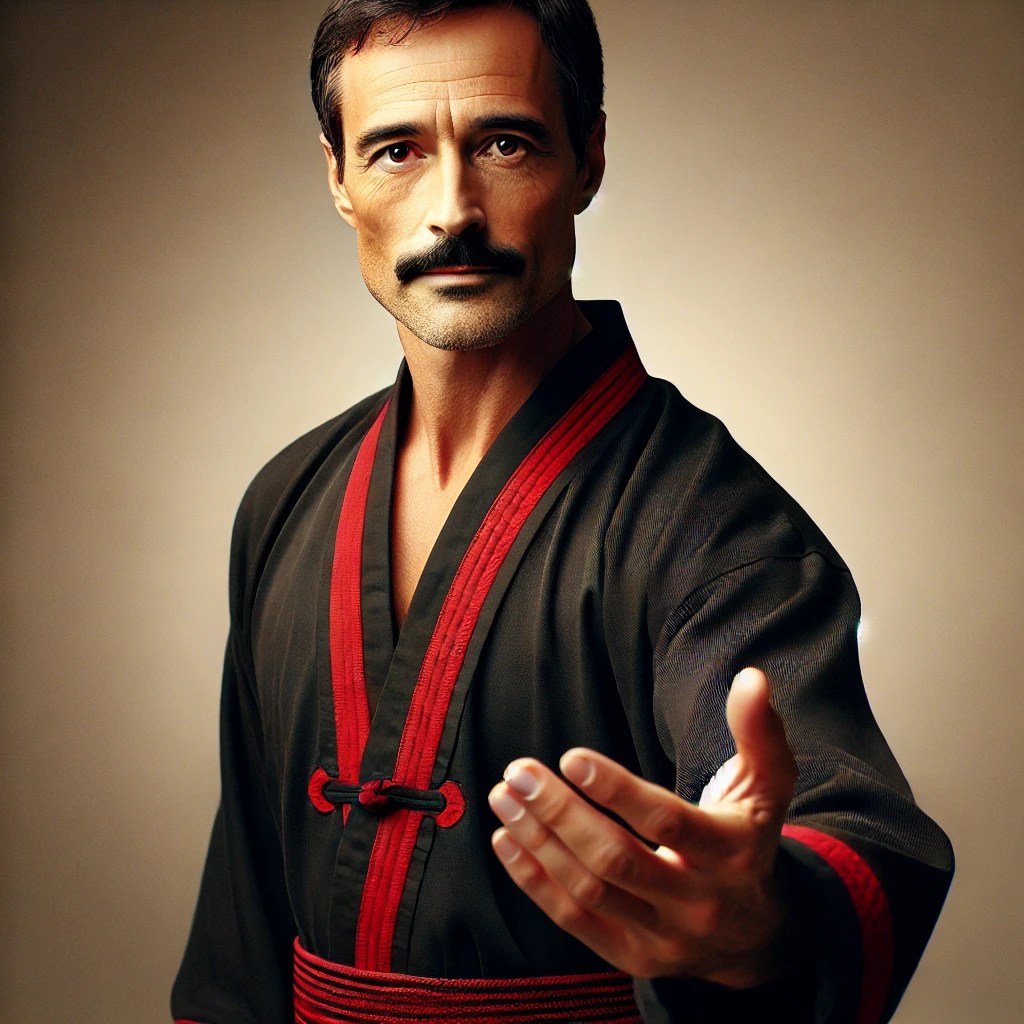
The body changes with age, but the warrior’s spirit does not. We do not quit training because we grow older—we adapt our training so we can continue the journey.
A sore shoulder? Strengthen it with resistance bands, rotator cuff exercises, and mobility work. A tweaked knee? Rehabilitate it patiently while training the rest of the body. Every obstacle becomes an opportunity to become wiser, not weaker.
The goal is not to prove how much punishment you can endure. The goal is consistency. Follow a workout schedule that fits your body, your season of life, and your recovery. Show up on the days you promised yourself you would. Small efforts, repeated for years, forge an unbreakable spirit.
Train your body. Train your mind. Train your character.
And every day, sit in meditation. In stillness, sharpen awareness. In silence, strengthen the will. A calm mind is the foundation upon which all great warriors stand.
Our mission is simple: keep moving, keep growing, keep adapting.
Train until you die—not because you fear death, but because you choose to live every day with strength, discipline, and purpose.
There is a reason chess has fascinated humanity for over a thousand years. It is far more than a game of kings and queens. It is a mirror held up to the mind. Every move reveals not only the position on the board, but the condition of the player.
The chessboard is a miniature universe. Within sixty-four squares exists conflict and harmony, strategy and sacrifice, patience and urgency, victory and defeat. Though the battlefield is small, the lessons are immense. In this way, chess becomes a microcosm of life itself.
Every game begins the same. The pieces are arranged in perfect balance. No one has yet made a mistake. No one has won or lost. What follows is determined not by fate alone, but by awareness, judgment, discipline, and the ability to adapt.
Life unfolds the same way.
Many people imagine that success comes from making brilliant moves. Yet experienced chess players know something deeper. Most games are not won through flashes of genius but by avoiding unnecessary mistakes, remaining patient, and steadily improving one’s position. Likewise, a fulfilling life is often built through consistent, thoughtful choices rather than dramatic moments.
When I play chess meditatively, I discover that my true opponent is not the player sitting across from me or on the other side of the screen. My real opponent is distraction. It is impatience. It is fear after making a mistake. It is greed when I see an opportunity that isn’t really there. It is attachment to winning.
The board exposes every weakness of the mind.
Meditation seeks to do exactly the same.
In meditation I observe thoughts arise without clinging to them. During a chess game I observe impulses arise without obeying them. The urge to attack recklessly, to move too quickly, to force combinations that do not exist—all are invitations to lose awareness. The disciplined player waits. He breathes. He sees the position clearly before acting.
This is mindfulness expressed through sixty-four squares.
As I play, I strive to remain the witness. I observe thoughts, emotions, impulses, and the desire to move immediately without becoming identified with them. Before every move, I use the pause—that sacred space between stimulus and response. In that pause lies freedom. Rather than reacting automatically, I choose my next move consciously.
This is meditation in motion.
The discipline is identical to my meditation practice. During meditation I observe thoughts arise and pass without attachment. During chess I observe strategic ideas, emotions, hopes, fears, and temptations arise in exactly the same way. I neither suppress them nor blindly obey them. I simply witness them, allowing awareness rather than impulse to guide my next move.
The more faithfully I practice this process on the board, the more naturally it carries over into everyday life. Conversations become more thoughtful. Decisions become less reactive. Challenges become opportunities to remain centered rather than emotionally entangled. The chessboard becomes a laboratory where awareness is refined, one move at a time.
Chess teaches presence.
The last move cannot be changed.
The next move has not yet happened.
Only this move exists.
That is also the essence of life.
When we live in regret, we replay yesterday’s blunders. When we live in anxiety, we imagine tomorrow’s disasters. Wisdom lives neither in yesterday nor tomorrow. It lives in the present position.
Every move asks only one question:
“What is the best thing to do now?”
Martial arts teaches the very same lesson.
I have often said that martial arts is chess played at a million miles per hour with muscles. Every strike, block, angle, and movement is a decision made under pressure. The fighter who remains calm sees opportunities invisible to the emotional opponent.
The same is true on the chessboard.
The same is true in life.
The greatest victories belong not to those who never encounter difficulty, but to those who remain composed while difficulty unfolds.
Chess also teaches humility.
Even grandmasters lose games.
Every defeat contains instruction for those willing to study it. Every blunder reveals a blind spot. Every missed opportunity reminds us that growth never ends.
If approached correctly, there are no wasted games.
Only lessons.
Life offers the same generosity.
Failures become teachers.
Losses become training.
Obstacles become opportunities to develop patience, wisdom, and resilience.
Those who refuse to learn become bitter.
Those who embrace learning become stronger.
One of the greatest lessons chess offers is adaptability.
A player may enter the game with a beautiful opening prepared in advance, only to find that the opponent chooses a completely different path. Clinging stubbornly to the original plan invites disaster. The stronger player adjusts to reality.
Life rewards the same flexibility.
Circumstances change.
People change.
Health changes.
Finances change.
The world changes.
The wise person does not resist reality. He responds to it with clarity, courage, and faith.
The goal is not to control the game.
The goal is to play each position well.
Spiritually, this truth runs even deeper.
Every move can become a devotional offering.
We study carefully.
We think clearly.
We choose the best move we can perceive.
Then we release attachment to the result.
Whether we win or lose the game is no longer the measure of success.
Success is measured by the quality of our awareness, our integrity, and our effort.
This is freedom.
The purpose of playing chess is not merely to become a stronger chess player. It is to become a stronger human being. Every game is an opportunity to train the mind to remain calm under pressure, to see reality clearly, to respond rather than react, to learn from mistakes without self-condemnation, and to release attachment to outcomes. In this way, the discipline cultivated over sixty-four squares gradually extends into work, relationships, finances, adversity, and spiritual life. The board becomes a dojo for the mind, a monastery for the heart, and a rehearsal for living wisely. Master the process on the chessboard, and you begin to master the process of life itself.
The board eventually clears.
The kings are tipped.
The pieces return to the box.
Every game ends.
So too does every human life.
What remains is not the number of victories we accumulated but the character we developed while playing.
Patience.
Humility.
Presence.
Discipline.
Compassion.
Faith.
These are treasures that cannot be taken away.
Perhaps this is why chess continues to captivate the human spirit. It reminds us that every moment presents a choice. Every position contains possibility. Every apparent setback can become the beginning of a better plan.
The true master is not merely one who wins games.
The true master is one whose way of playing transforms the player himself.
Play every move with awareness.
Meet every challenge with equanimity.
Offer every action to God.
Accept every result with gratitude.
Then the game of chess becomes more than entertainment.
It becomes meditation.
It becomes martial arts.
It becomes spiritual practice.
It becomes a school for life.
And as we become better students of the game, we may also become wiser participants in the greatest game of all—the sacred privilege of living.
“I have no enemies” – Thorfinn Karlsefni, Vinland Saga
“My opponent is my teacher, my ego is my enemy” – Renzo Gracie
What if my greatest opponent is not another man, not circumstance, not fate—but myself?
What if the real battle is fought in silence, deep within the chambers of my own mind? Every impulsive decision. Every moment of hesitation. Every fear disguised as logic. Every distraction masquerading as comfort. Every act of self-sabotage hidden beneath excuses and rationalizations. The greatest enemy is often not standing across from us—it is living within us.
A man can spend years preparing to defeat external enemies while remaining completely vulnerable to his inner chaos. He studies strategy, combat, business, philosophy, and discipline, yet still falls because he cannot govern himself. History is filled with talented people destroyed not by lack of ability, but by lack of mastery over their own minds.
The undisciplined mind is a battlefield filled with hidden traps.
Meditation and mindfulness become weapons of self-awareness. They allow you to observe your thoughts before they become actions and your actions before they become consequences. Through stillness, you begin to notice the subtle patterns that once controlled you unconsciously: anger rising before it explodes, fear disguising itself as procrastination, ego pushing you toward unnecessary conflict, desire tempting you away from your purpose.
Most people react automatically. Mindfulness teaches you to witness yourself in real time.
At first, you learn to catch your mistakes after they happen. Then you learn to catch them while they are happening. Eventually, with enough awareness, discipline, and inner silence, you begin to preempt them before they arise at all. You see the storm forming before the first drop of rain falls. This is a higher level of mastery—the ability to intercept self-destruction before it manifests into reality.
The warrior who conquers others may be strong, but the warrior who conquers himself becomes nearly unstoppable.
Yet no man sees himself completely. Every person has blind spots—weaknesses hidden behind pride, habits invisible through familiarity, illusions protected by ego. This is why a teacher, mentor, or trusted advisor is invaluable. A wise guide acts like a mirror, revealing what you cannot see alone. They expose flaws in your thinking, challenge your excuses, and force you to confront truths you would rather avoid.
Humility is essential in this process because ego resists correction. Ego wants to appear strong, already knowledgeable, already complete. It fears criticism and avoids discomfort. But the humble person remains teachable. He understands that mastery is never final and that wisdom requires continuous refinement. Humility allows a person to become a lifelong student—always observing, learning, adapting, and improving rather than becoming trapped by arrogance.
The moment a man believes he has nothing left to learn, his decline has already begun.
A true teacher does not weaken you by making life easier. They strengthen you by making you more conscious.
Self-mastery is not perfection. It is awareness. It is correction. It is the willingness to observe yourself honestly and refine yourself continuously. Every day becomes training. Every interaction becomes feedback. Every failure becomes intelligence instead of defeat.
The ultimate goal is not merely success over the external world. It is internalsovereignty—the ability to remain centered, disciplined, calm, and intentional despite chaos.
Because in the end, the greatest victory is not defeating another opponent.
Mystic Valor is a powerful, uplifting soundtrack and epic discourse of the soul’s journey—where soaring riffs meet sacred echoes, and every rhythm calls you to rise above life’s battles.
Epic motivational and inspiring speeches by Brother Long Tran and Sifu Matt Russo, designed to empower your mind, body, and spirit. Let freedom ring.
Brother Long Tran & Sifu Matt Russo – Warriors of Mind and Spirit
Brother Long Tran, a Vietnam-born kung fu fighter, U.S. Army veteran, and one of Sifu Matt Russo’s martial arts teachers, brings a lifetime of discipline, courage, and relentless drive. His journey through combat, martial arts, and spiritual practice has shaped him into a thinker-warrior who challenges conventional ideas and inspires others to rise above limits.
Sifu Matt Russo, martial artist, spiritual teacher, and founder of RAT Synthesis, has dedicated decades to mastering real-world combat, inner power, and strategic living. Guided by mentors like Brother Tran, and blending Kriya Yoga, the teachings of Paramahansa Yogananda, and martial strategy from legends such as Clausewitz, Denis Decker, Bruce Lee, Musashi, Mike Tyson, and Sun Tzu, he teaches mastery of both the physical and spiritual dimensions of life.
Together, they fuse martial mastery with mindfulness, creating a path that sharpens the body, empowers the mind, and awakens the spirit—a story of transformation, strategy, and the pursuit of true freedom.
There’s a seductive illusion in blame. It whispers, “It’s their fault.” It gives you a temporary high—like you’ve offloaded the weight of your problems onto someone else. But the truth? Blame is a poison disguised as power. It’s a weapon that always backfires.
In the real world—and in the warrior’s world—blame is weakness. And weakness gets you hurt, stuck, or forgotten.
If you want to rise—truly rise—you must cut blame at the root.
1. Neville Goddard: I AM the Cause
Neville didn’t mince words. “Everyone is you pushed out.” The circumstances of your life, the people you meet, the pain and the pleasure—it’s all an out-picturing of your consciousness.
Blame others, and you surrender your divine creative power.
Own it, and the power returns to your grip.
You are not a victim of fate, but a maker of it.
Your thoughts, your assumptions, your inner conversations—they create your world. If you change them, the world must follow.
2. Yogananda: Karma and Self-Responsibility
Paramahansa Yogananda taught that karma is not punishment—it’s education.
Life gives you what you put into it. Not always immediately. Not always obviously. But eventually, unmistakably.
You can’t escape the law of cause and effect. And that’s not a curse—it’s a gift.
Because it means that you hold the key to your liberation.
Take responsibility for your energy, your thoughts, your reactions, your actions, and your habits—and you begin rewriting the karma of lifetimes. No one is coming to save you. But the moment you stop waiting, you begin to save yourself.
3. Ramana Maharshi: There Are No Others
When a disciple once complained about others treating him poorly, Ramana responded with piercing simplicity: “There are no others.”
The world, in truth, is one Self. When you fight others, blame others, judge others—you’re at war with yourself.
So why does this matter?
Because until you dissolve the illusion of separateness, you’ll be stuck in reaction. Stuck in blame. Stuck in suffering.
But when you look within and realize the source of all drama, all disturbance, all desire is inside you—you reclaim the throne.
Get Busy: Your Destiny Doesn’t Wait
If you’ve been blaming your boss, your parents, your past, your ex, the economy, the algorithm—stop.
The truth is brutal and liberating:
No one is holding you back but you.
It’s time to get busy living. Not someday. Now.
Start small. Start scared. Start anyway.
Faith—real faith—is not passive. It’s not sitting in the lotus position hoping for a miracle. Faith is ferocious. It also means taking inspired action. As the saying states, “God helps those who help themselves.”
Faith with daily action? That’s unstoppable. That moves mountains. That bends reality.
RAT SYNTHESIS™: Where Inner Power Meets Outer Victory
At RAT SYNTHESIS™, we don’t do excuses.
Forged through 44+ years of martial mastery, 35 years of elite corporate strategy, and 20 years of deep spiritual discipline, Sifu Matt Russo’s RAT SYNTHESIS™ isn’t just a training system—it’s a revolution in how you live, fight, think, and succeed.
Born from the battlefield of reality and the silence of the soul, this system fuses: 🔥Live Warrior Training (Combat • Fitness • Mindset • Strategy) 📚 Books That Awaken– Rooted in truth, forged in experience 🧠 Silent Subliminal Mind Programming – Rewire from the inside-out 🌐 Online Training (Coming Soon) – Wherever you are, the path begins
Inspired by the raw efficiency of Rapid Assault Tactics™ (R.A.T.), RAT SYNTHESIS™ goes beyond. It’s a bold reimagining. A strategic evolution. A path of self-mastery.
We don’t blame. We train. We grow. We win—in combat, in business, in life.
So stop pointing fingers. Look in the mirror.
That’s where your enemy lives. That’s where your savior sleeps. That’s where your future waits to be shaped.
WAKE UP. RISE UP. STEP UP.
The time for blame is over. The time for RAT SYNTHESIS™ has come.
🛡️ Train like a warrior. Think like a strategist. Live like a sage. 🔥 www.RATSYNTHESIS.com
“You can only fight the way you train.” – Miyamoto Musashi, A Book of Five Rings
Let’s get real.
The UFC and modern MMA are a spectacle. Entertaining? Absolutely. Effective? To a point. But if you think what happens in the cage reflects the savage, unpredictable, and dirty nature of real violence—you’ve bought into the modern classical mess Bruce Lee warned us about.
Let’s break it down:
Weight Classes. Rules. Referees.
You don’t get those on the street.
In the octagon, you’ve got timed rounds, doctors, tap-outs, padded gloves, and strict rules that ban the very tools that end real fights in seconds: groin strikes, eye jabs, throat shots, ear slaps, bites, claws, leg fractures, and stomps. That’s not a knock on the athletes—some are phenomenal. But it is a knock on the idea that MMA as a sport is the end-all-be-all of combat training.
Street fighting is no-holds-barred. And if you’re not training for that reality, you’re not ready.
Horrendous EYE POKES That Lead to Fight Stoppages
RAT Synthesis™: MMA for the Street, Not the Cage
(Inspired by Rapid Assault Tactics™ R.A.T.)
RAT Synthesis™ was born from battle and built for victory. This isn’t theory. This isn’t art for art’s sake. This is a combat and mindset system forged from the raw truth of street altercations, military encounters, and years of refining what actually works under real pressure.
👉 Rapid-fire low-line kicks to shatter knees. 👉 Eye jabs that disorient or disable. 👉 Ear slaps that rupture eardrums and shut down balance. 👉 Carotid stuns that drop attackers like a sack of bricks. 👉 Groin destruction that ends the fight before it starts.
This is not “tough guy talk.” These are surgical, ballistic tools you deploy when your life, your loved ones, or your mission is on the line.
“If You Can’t Beat a Trained Fighter With Rules, How Can You Without Rules?”
This is a common misunderstanding.
In reality, removing the rules changes everything. It doesn’t level the playing field—it flips it entirely. The sport-trained fighter operates inside a framework. That framework conditions the fighter’s nervous system, instincts, and tactics. When those rules are stripped away, so is their operating system.
RAT Synthesis™ was built outside that system.
This is chess, not checkers.
While some train to score points or win on the judge’s card, we train to cause pain, break structure, and end the encounter instantly.
💥 Eye jab before they even know the fight started. 💥 Elbow spike into a punch to fracture the attacking limb. 💥 Lead sidekick into the knee as they step forward—fight over before it began. 💥 Intercept, destroy, terminate.
In RAT Synthesis™, defense isn’t passive. We don’t block—we break. We don’t wait—we intercept. We don’t counter—we destroy and finish.
Our method relies on the pain–pressure–termination sequence:
Pain (via destructions, nerve shocks, or sensory disruption like eye jabs), This steals the initiative
Pressure (overwhelming, nonstop forward barrage using a STRAIGHT BLAST that turns them into a pedestrian—backpedaling, panicked, and off-balance),
Termination (decisive, brutal end using headbutts, knees, elbows). If this doesn’t seal the deal, we have more.
This is not theory. It’s not for points. It’s not sparring. It’s survival.
So yes, a highly trained MMA fighter may dominate inside a controlled ruleset—but when the rules are gone, so is their edge.
The way you train is the way you fight.
Another example: when two fighters are tangled on the ground, each scrambling for position with endless counters—why play that game? Instead of trading move for move, a direct attack to a vital target—like seizing the groin—ends the fight immediately. Why memorize a hundred counters when a few ruthless, well-placed moves let you dominate?
RAT Synthesis™ turns chaos into strategy. We operate in the shadows of the rulebook—where speed, ruthlessness, and targeting vital structures matter more than endurance, points, or submission games.
The Missing Link: The Warrior Mind
What’s even more dangerous than technique? Mindset.
The modern martial arts world is missing its heart—the warrior spirit. What gave the Zen Samurai their edge wasn’t just their sword. It was their mind. Calm under chaos. Focused. Fierce. Fully present. Stillness in motion. And killer instinct.
At RAT Synthesis™, we train that. Through warrior meditation and strategic mental conditioning, we forge fighters who are as mentally sharp as they are physically deadly. Because when fear hits, when adrenaline spikes, when the chaos surges—you fall back on your training.
And if your training was built for sport, you lose.
UFC = Entertainment.
RAT Synthesis™ = Survival.
The modern MMA world may laugh now—but in a real violent encounter, they’ll wish they trained for what we train for.
This isn’t a game. This isn’t about belts or titles. This is about walking away alive—every time.
Lastly, as you get older, you don’t have time to play and roll around. You need to end it quickly.
Learn the system that cuts through the noise. Train in the art that ends fights in seconds, not rounds. Forge the mindset that wins before the battle begins.
Bruce Lee wasn’t just a movie icon — he was a nearly unbeatable street fighter in both the U.S. and Hong Kong, the heart of Chinese Kung Fu.
Legends like Chuck Norris, Joe Lewis, Bolo Yeung, Jim Kelly, and Mike Stone (91 straight wins in full-contact karate) all recognized one thing: Bruce had a deadly edge that conventional martial arts never captured. But the complete, real-world system of domination? It was never released. Almost lost forever. Until now.
After decades of relentless study, brutal training, and real-world testing, Sifu Matt Russo has cracked the Bruce Lee code— and now it’s yours. Forget flashy kicks and cage rules. This isn’t for sport. Not for show. This is raw, brutal street fighting — built for one thing: Dominate. Survive. Walk away alive.
Inside this book, you’ll discover:
The hidden blueprint of Bruce Lee’s street-fighting genius — decoded and made battle-ready
Why traditional martial arts and conventional MMA fall short in real-life violence — and what actually works when your life depends on it
The radical simplicity of Jeet Kune Do.
Master the art of striking first and applying offensive defense — with battle-tested tactics to control the fight and end it fast
How Bruce’s vision inspired elite fighters to break from tradition and master the true art of survival
This isn’t a history lesson — it’s a revolution in real-world self-defense.
“Life is really simple, but we insist on making it complicated.” — Confucius The pieces were scattered— but I’ve assembled the puzzle for you. This is your street fighting blueprint: distilled from Rapid Assault Tactics™ (R.A.T.) and the Joe Lewis Fighting System™ — both rooted in Jeet Kune Do — and sharpened through 44 years of training and deep study of Bruce Lee. While Joe Lewis’s system was designed for sport, what I share here is forged specifically to dominate on the street. This recipe gives you clear, decisive advantages in real-world combat, even against larger experienced fighters.
You could study every JKD style, concept, and system, read every JKD book, watch every JKD video, train in multiple arts, and even learn from JKD legends like I did — and still miss the mark. That was me. Lost in the trees. Couldn’t see the forest. Until I found this recipe — and now you can too.
Avoid years of confusion, frustration, or worse—believing you know it all when you don’t. Get this book. Because in the end, truth is simple: “Jeet Kune Do is simply to simplify.” — Bruce Lee
About the Author: Sifu Matt Russo is a warrior, teacher, and seeker with 44+ years of martial arts mastery across Kung Fu, Kickboxing, Kali, and Jeet Kune Do — including years of study with a Bruce Lee lineage instructor, multiple seminars with JKD legends, and training in Chi Ling Pai® under Grandmaster Denis Decker. A spiritual mentor grounded in Raja Yoga and the teachings of Paramahansa Yogananda, Matt blends physical mastery with mental clarity — plus 35 years of corporate strategy experience — to decode Bruce Lee’s ultimate system for survival and success.
When chaos erupts, you won’t rise to the occasion — you’ll fall to your training. If you’re done with illusions… If you want power, precision, and survival skills that work in the real world… Click the link below and unleash Bruce Lee’s complete street-fighting system — finally decoded and battle-ready. The street doesn’t wait. Neither should you.
TABLE OF CONTENTS
INTRODUCTION
UNLEASHING THE STRATEGIC GENIUS OF BRUCE LEE
CONCLUSION: THE RETURN OF THE DRAGON’S CODE
PROGRESSIVE TRAINING SYSTEM
APPENDIX / RESOURCES
ABOUT THE AUTHOR
If you’re done playing games—and ready to unlock real-world fighting power—click HERE
UNLOCK THE SECRET TO UNSTOPPABLE POWER Transcend Fear, Doubt, and Confusion. Awaken the Warrior Within.
What if you could move through life with laser precision, unwavering clarity, and unstoppable effectiveness? What if every decision, every action, every moment was infused with calm power and strategic mastery?
This isn’t a fantasy. This is Mushin.
MUSHIN: THE WARRIOR’S SECRET TO UNSTOPPABLE POWER isn’t just a book—it’s a breakthrough. A battlefield-tested guide forged from ancient Eastern wisdom, elite martial arts, and modern performance science. This is the manual for those who refuse to live an average life.
Mushin means “no-mind, no-self”—a state where fear disappears, doubt vanishes, and action flows effortlessly from a place of higher awareness. It’s how the samurai dominated the battlefield. It’s how world-class CEOs and Hollywood icons stay centered, sharp, and powerful under pressure. And now, it’s how you will rise.
Through this transformational guide, you’ll learn how to:
Eliminate fear and inner resistance
Cultivate unshakable equanimity and calm under chaos
Develop killer instinct—the ability to act decisively and without hesitation under pressure
Develop razor-sharp intuition and lightning-fast clarity
Master perfect timing, distance, and strategic precision
Move with speed, grace, and explosive power
Enhance every aspect of your life—from combat to career
Achieve success faster—and with purpose
This is more than self-help. This is self-mastery.
If you’re ready to break limits, silence the noise, and embody the mindset of warriors and masters—this is your moment.
Don’t just read about greatness. Become it. Get your copy of MUSHIN: THE WARRIOR’S SECRET TO UNSTOPPABLE POWERnow—and begin the journey to supreme mastery. Click HERE to rise!
“The art of war teaches us to rely not on the likelihood of the enemy’s not coming, but on our own readiness to receive him; not on the chance of his not attacking, but rather on the fact that we have made our position unassailable.” ― Sun Tzu
RAT SYNTHESIS: THE ART OF STRATEGIC DOMINANCE
For over 2,500 years, Sun Tzu’s The Art of War has stood as the ultimate guide to strategy, influencing leaders, warriors, entrepreneurs, athletes, and spiritual seekers alike.
But this book is not just about war—it’s about winning at life.
It teaches that the highest form of victory is to win without fighting, and the key to mastery lies not in brute strength, but in wisdom, timing, preparation, and understanding the deeper nature of conflict.
🔥 Why The Art of War Still Matters
Life is full of battles—inner and outer. Whether you’re launching a business, navigating relationships, mastering martial arts, or transcending your own limitations, Sun Tzu gives you the mental blueprint to outthink, outmaneuver, and overcome.
🧩 The Five Constant Factors: Sun Tzu’s Strategic Code
“The general who wins a battle makes many calculations in his temple before the battle is fought. The general who loses a battle makes but few calculations.” ― Sun Tzu, The Art of War
Before any campaign, Sun Tzu taught that you must assess “The Five Constant Factors.” These are universal truths that determine success or failure in any venture.
1. 🕊️ Tao (The Moral Law)
Unity of purpose. Harmony between leader and people. A just cause that inspires loyalty, courage, and devotion. Without Tao, there is no cohesion.
2. 🌤️ Heaven
Timing. Seasons. Weather. Cycles of change. Understanding and leveraging time, conditions, and natural rhythms.
3. 🌍 Earth
Terrain, geography, distance, safety and danger. The strategic landscape you operate in—physical or metaphorical.
4. 🧠 The Commander
Wisdom, sincerity, courage, discipline, and humanity. The personal character and skill of the leader determine the outcome.
5. ⚙️ Method and Discipline
Organization, logistics, structure, and systems. Effective execution and order are essential to sustain any mission.
🧠 The Seven Strategic Considerations: Who Will Win?
Sun Tzu gives us a powerful checklist to predict the outcome of any competition or conflict. Ask these 7 questions:
Which leader has the stronger moral authority (Tao)?
Which commander is more capable and virtuous?
Which side has better timing and terrain?
Which side is more disciplined and organized?
Which side is physically stronger?
Whose people are better trained?
Who has the clearer cause and strategy?
✅ If you know the answers, the outcome is already decided.
🎯 The 80/20 of Sun Tzu: The Core Principles That Win Battles and Build Empires
Let’s now distill The Art of War into the 10 most powerful principles—the 20% of ideas that produce 80% of the results.
1. Know Yourself, Know the Enemy
“If you know the enemy and know yourself, you need not fear the result of a hundred battles.” 🧠 Self-awareness and intelligence are your greatest weapons.
2. Win Without Fighting
“To subdue the enemy without fighting is the acme of skill.” 💡 Influence, diplomacy, positioning, and persuasion over brute force.
3. All Warfare is Based on Deception
“Appear weak when you are strong, and strong when you are weak.” 🎭 Master the art of misdirection.
4. Victory Belongs to the Prepared
“Victorious warriors win first, then go to war.” 📜 Planning and foresight are your insurance policies.
5. Be Formless, Be Fluid
“Just as water retains no constant shape…” 🌊 Adaptability is your superpower.
6. Attack Weakness, Avoid Strength
“Attack him where he is unprepared…” 🎯 Go for the soft spots. Outsmart, don’t outmuscle.
7. Avoid Prolonged Engagements
“There is no instance of a nation benefiting from prolonged warfare.” 🕰️ Conserve energy. Don’t drag out battles—win quickly and efficiently.
8. Discipline Determines Destiny
“When the general is weak and without authority… the result is chaos.” 🏛️ Leadership, discipline, and moral authority = unity and strength.
9. Master the Moment
“He who is prudent and lies in wait for an enemy who is not, will be victorious.” 🕊️ Wait for the perfect moment. Strike when your enemy is exposed.
10. Control the Mind of Your Opponent
“By disturbing his plans, we keep him uneasy…” 🧠 Psychological warfare is often more powerful than physical.
🌟 Become the Strategic Sage
Sun Tzu was not just a general—he was a strategic mystic, a philosopher of war and life. His teachings are a call to develop clarity, calmness, adaptability, and inner power.
Whether you’re navigating your career, building an empire, or mastering your inner world, The Art of War invites you to become a Grandmaster of Life—one who wins not by force, but through insight, patience, and superior strategy.
💥 “The greatest victory is that which requires no battle.”
⚔️ Real-Life Applications of Sun Tzu’s Strategic Wisdom
To truly absorb the essence of The Art of War, let’s see how these principles play out in the real world—not on ancient battlefields, but in modern life where strategy is still everything.
🥋 Martial Arts Example: Win Without Fighting
A skilled martial artist avoids unnecessary combat. He reads his opponent’s energy, adapts like water, and uses timing and positioning over brute force. In sparring, he waits for the perfect moment when his opponent overextends, then strikes with precision—ending the conflict swiftly.
💡 Sun Tzu Principle: “To subdue the enemy without fighting is the acme of skill.”
💼 Work Example: Outmaneuvering a Corporate Rival
In a competitive workplace, one employee consistently studies company dynamics, reads market conditions, and anticipates upcoming shifts. Instead of politicking or pushing, she positions herself ahead of time, builds key alliances, and aligns with upper management’s unspoken goals. She becomes indispensable—promoted before others realize what happened.
💡 Sun Tzu Principle: “Victorious warriors win first and then go to war.”
❤️ Relationship Example: Navigating Conflict with Emotional Intelligence
In a heated argument with a partner, instead of reacting emotionally, one partner listens deeply, remains centered, and responds with compassion. By avoiding direct confrontation and creating space, they diffuse the tension. They turn a potential breakup into a breakthrough in understanding.
💡 Principle: “If your partner is angry, irritate her not. Seize the advantage by maintaining calm.”
💰 Wealth Example: Strategic Investing
An investor doesn’t chase trends or gamble on hype. He studies market cycles (Heaven), knows his risk tolerance (self-awareness), and waits patiently for undervalued assets. When others panic during downturns, he moves decisively. Years later, he’s wealthy—not because he was lucky, but because he was strategic.
💡 Sun Tzu Principle: “He who is prudent and lies in wait for an enemy who is not, will be victorious.”
🧘♂️ Health Example: Mastering Discipline and Consistency
Rather than crash diets or extreme workouts, a wise practitioner creates a sustainable daily rhythm. He trains consistently, eats mindfully, and listens to his body. He avoids injury and burnout by adapting like water—intense when needed, soft when required. Over years, he builds a body that’s strong, calm, and resilient.
💡 Sun Tzu Principle: “Water shapes its course according to the nature of the terrain… so should you shape your strategy to circumstances.”
🕊️ Spiritual Mastery Example: Becoming the Observer
A spiritual seeker no longer fights against thoughts or emotions. Although they do resist any negativity within. Instead, he or she becomes the witness—the awareness behind all activity. When challenges arise, they don’t react with fear or desire. They align with Tao (the Divine), the natural flow, and allow clarity to guide their actions. As they transcend ego and judgment, they find peace, power, and divine connection.
💡 Sun Tzu Principle: “Know yourself and you will win all battles.”
🔥 Sun Tzu’s Secret? It’s this:
“True power lies not in fighting the battle… but in making it unnecessary.”
Sun Tzu’s ultimate secret isn’t about brute force, clever traps, or battlefield tricks—though he mastered those too. His deepest insight is about mastery of the unseen: the mind, timing, positioning, energy, and perception.
🧠 The True Core of Sun Tzu’s Strategy:
Know yourself deeply – true awareness is invincible.
Understand your environment – timing, terrain, and energy flows matter more than sheer power.
Master the mind—yours and others’ – wars are won in the mental realm before swords are drawn.
Win without fighting – influence, harmony, and positioning are greater than direct confrontation.
Be fluid like water – adaptable, formless, and untouchable.
Preparation is everything – the battle is won before it begins.
“If your opponent is of choleric temper, seek to irritate him.” “If he is secure at all points, be prepared for him.” “If he is in superior strength, evade him.” — Sun Tzu
💎 Bottom Line:
Sun Tzu’s secret is that life is a game of energy and perception. Victory belongs not to the strongest—but to the most aware, aligned, and strategic.
🔮 Want to Go Deeper?
Leaders are Readers
For 21 earth-shattering books diving deep into these concepts and more, please check them out on Amazon. Free on Kindle Unlimited. Click HERE
Sifu Russo’s works are a collaboration between AI tools such as ChatGPT and himself.
“The good fighters of old first put themselves beyond the possibility of defeat, and then waited for an opportunity of defeating the enemy.” — Sun Tzu
Preparation. Defense. Mental Toughness. Mastery.
The wisdom of Sun Tzu echoes through the ages, resonating deeply not only in warfare but in martial arts, sports, business, and life.
The secret lies not in mere aggression but in positioning yourself so flawlessly that defeat becomes impossible, while you wait patiently—strategically—for the perfect moment to strike.
This is more than brute strength.
This is more than skill.
This is calculated inevitability.
The Matrix (1999): The sound of inevitability
The Pillars of Invincibility
Solid Defense: The Yang Element
Mental Toughness: The Yin Element
Tactical Openings: Drawing the Enemy Out
1. Solid Defense and Openings: The Yang Element
Solid Defense and Openings
In combat, whether on the street or the battlefield, your stance, guard, and positioning dictate the fight.
Your body language.
Like a chess opening.
A set up.
Put yourself beyond the possibility of defeat.
You know the pattern and the what if’s so well you can dictate and control the game.
Take Floyd Mayweather’s Philly Shell defense—a masterpiece of efficiency and control.
Observe closely:
Lead shoulder up, chin tucked, rear hand guarding the body.
Head exposed just enough to bait.
Body language calm, relaxed, untouchable.
THE PHILLY SHELL: Floyd Mayweather Jr vs Everybody Else
Bruce Lee, the Little Dragon, adopting the Philly Shell
Bruce Lee adapted the same principle.
He opens a line—the head—inviting the opponent in.
The moment they commit, he intercepts.
Pain.
Then follow with a straight blast.
This is called Attack by Drawing(ABD).
It’s the chess equivalent of sacrificing a pawn to trap the queen.
Denis Decker, the creative genius of Gung Fu
Denis Decker, the Gung Fu Grandmaster used Attack by Drawing also.
He called it Possum.
Possum
Your body language is the chessboard.
Your stance, your guard—like an opening in chess—forces your opponent to play your game.
2. Mental Toughness: The Yin Element
Suki (opening): Japanese Kendo
No stance is unbreakable if the mind behind it is weak.
In Japanese Kendo, there’s a concept called Suki: An opening—not just in your physical guard, but in your mind.
“Comparison is the seed of defeat; presence is the root of victory.”
A friend once asked me if I thought I could beat a certain legendary martial artist.
The question wasn’t innocent—they implied I couldn’t, and they had already decided the same for themselves.
Honestly? I don’t know.
What I do know is this: I’m far from who I was in my youth.
I’ve dedicated over 44 years to martial arts.
I’ve forged the RAT Synthesis System—a culmination of Bruce Lee’s no-nonsense street-tested fighting methods, honed in the crucible of Hong Kong’s roughest streets and America’s wildest neighborhoods.
It’s a strategy proven against icons like Chuck Norris, Joe Lewis, Bolo Yeung, Bob Wall, and countless others.
Added to that is kickboxing inspired by Mike Tyson and Denis Decker’s Chinese Gung Fu Fighting / Bagua.
And it’s streamlined for even greater results and power.
I’ve trained relentlessly, drilling these techniques into my muscle memory until they became second nature.
But martial prowess alone isn’t the key.
I’ve also immersed myself in the deeper arts—spirituality, meditation, mind training.
My mind is not the same as it once was.
It’s sharper, calmer, more resolute.
It’s the mind of no-mind, self of no-self for most of the day.
And that gives advantages.
Yet, even after all this, whether I could “beat” someone is irrelevant.
Because comparison itself is the invitation to defeat.
The Fatal Flaw of Comparison
The moment you compare yourself, you’ve already placed yourself in a mental hierarchy.
You’ve seeded doubt.
And once defeat grows in the mind, it manifests in reality.
Legendary karate champion Mike Stone knew this.
Winner of 91 consecutive karate tournaments, Stone had one simple mental rule:
“I’m never going to lose.”
He visualized an unbeatable opponent—an enormous, unstoppable warrior no one could defeat.
And in his mind, Stone attacked relentlessly, moving, striking, flowing without hesitation, until that giant crumbled.
So when real opponents stood before him, they seemed small, manageable.
This is why in RAT Synthesis training, we close every session with our unique Mind Range™ sessions which includes visualizations—not just for combat readiness, but for life mastery itself.
The battlefield is in the mind.
The Samurai Secret: No-Mind, No-Self
“The Way of the warrior is resolute acceptance of death.”
– Miyamoto Musashi
So die to self—and finally, truly live.
The samurai understood this centuries ago.
Victory wasn’t determined by technique alone, but by the mastery of the mind.
They trained rigorously in Zen meditation, cultivating Mushin—the mind of no-mind, the self of no-self.
In this state, hesitation vanishes. Fear dissolves. The self disappears. You are not thinking about yourself.
What remains ispure awareness, a boundless intelligence beyond thought.
Bruce Lee described it perfectly:
“When the opponent expands, I contract. When he contracts, I expand. And when there is an opportunity, I do not hit—IT hits all by itself.”
What is “IT”?
It’s the universe itself.
Bruce wasn’t fighting—awareness was.
The conditioned self steps aside, and something far more powerful takes over.
The True Answer
So, if asked today whether I could beat that legend, my answer is simple:
I don’t compare.
Comparison is ego’s game.
And ego fights a losing battle.
I simply enter the Mushin state—no-mind, no-self.
It’s my natural state, cultivated through 24×7 meditation.
And then, what happens, happens.
IT fights for me.
Where “Matt Russo” may fail, pure awareness will not.
The good fighters of old first put themselves beyond the possibility of defeat, and then waited for an opportunity of defeating the enemy – Sun Tzu
Key Takeaways:
Never compare yourself to others—comparison seeds doubt and invites defeat.
Master your mind first. Victory begins internally.
Visualization is a powerful weapon—mentally conquer before you ever face the battle.
Cultivate no-mind, no-self. Drop the ego, eliminate fear, and let universal intelligence flow through you.
Train until your techniques are instinct, but strengthen the mind until hesitation disappears.