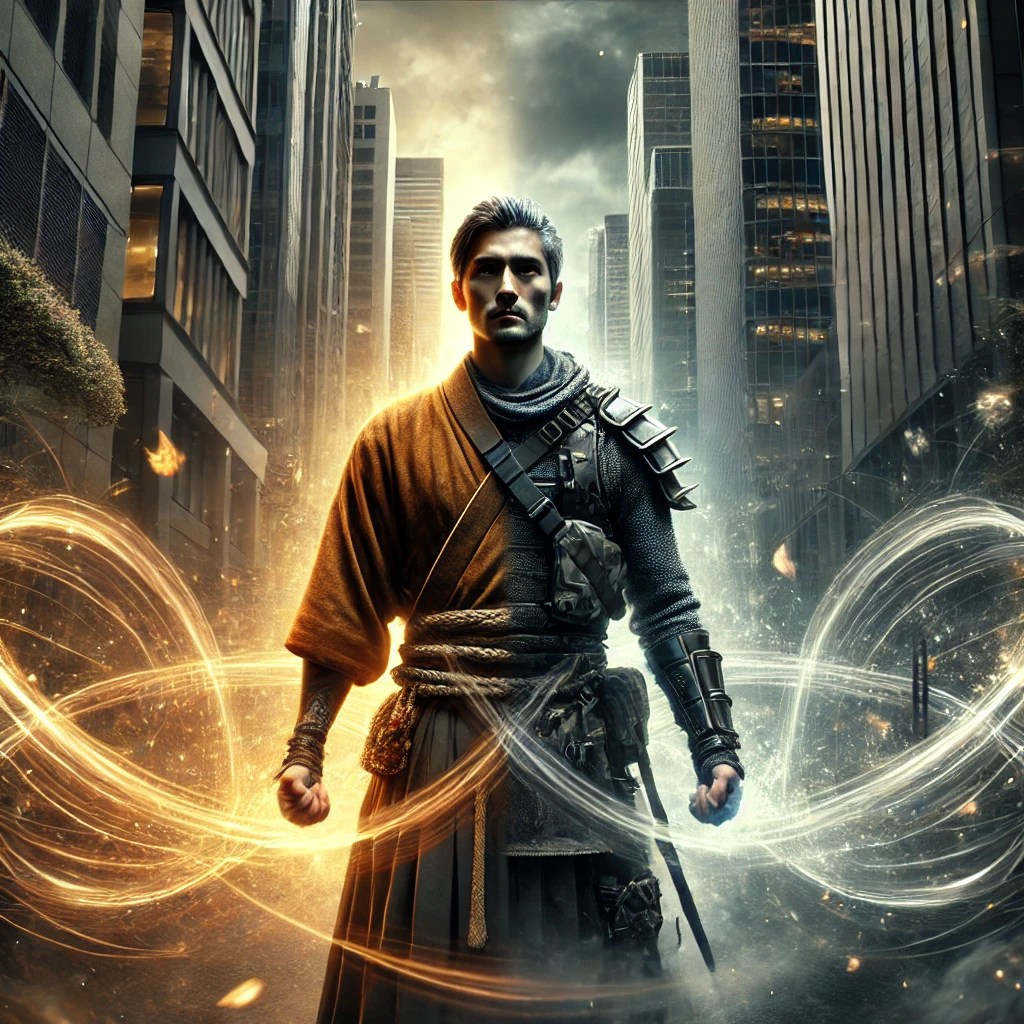
Mushin mindset

  • THE WARRIOR’S BOARD: CHESS, MUSHIN, AND THE 80/20 PATH OF MASTERY

    The spiritual warrior does not drown in options. He cuts through them.

    He understands an ancient and ruthless truth: power comes from concentration, not accumulation. Whether standing in the dojo, facing an adversary in the street, navigating the chaos of life—or seated before the silent battlefield of the chessboard—the law remains unchanged.

    Chess, rightly practiced, is not a game.
    It is a forge for consciousness.

    When the warrior sits before the sixty-four squares, the world narrows. Breath slows. The mind gathers. The hands are steady. Thought no longer chatters—it observes. This is mushin: no-mind, no-self. Not blankness, but clarity without interference. Action arises from presence, not panic. Calculation flows without strain.

    Every move is a meditation.
    Every position is a mirror.

    Chess trains strategic consciousness—the ability to see cause before effect, pressure before collapse, victory before violence. You learn patience, the courage to wait. You learn restraint, the wisdom to improve position rather than chase glory. You learn accountability—once a piece is moved, fate advances.

    These are warrior virtues.

    But the deepest lesson lies not merely in playing chess—it lies in how one studies it.

    The undisciplined mind hoards knowledge. It chases hundreds of openings, thousands of variations, endless novelty. It believes more equals better. This is illusion. It is the same illusion that weak fighters cling to—too many techniques, too little mastery.

    The spiritual warrior knows the Pareto Principle.

    Eighty percent of results come from twenty percent of causes.
    In truth, mastery often comes from even less.

    In chess, a handful of openings produce the vast majority of decisive positions. A few core structures generate endless variation. Learn those deeply—and you dominate the rest. The warrior does not need every opening. He needs understanding.

    This is why in RAT Synthesis™, we do not chase infinity. We refine forty techniques. Not because reality is small, but because depth multiplies power. Those forty techniques intersect with all others. They generate reactions, openings, collapses. Through mastery of the few, the many are already contained.

    Chess mirrors this perfectly.

    Choose one opening. Maybe two. Enter it repeatedly. Study its bones. Know its tensions. Understand where it breathes, where it breaks, where it strikes. Live inside that pattern until it is no longer memorized—but embodied.

    Bruce Lee spoke this law across all disciplines:

    “I fear not the man who has practiced 10,000 kicks once,
    but I fear the man who has practiced one kick 10,000 times.”

    This is the Pareto Principle spoken through the mouth of a warrior.

    Through one opening, you learn the whole board.
    Through one pattern, you understand all patterns.
    Through one path, you see all paths.

    What is true in chess is true in personal combat.

    A seasoned fighter does not need endless techniques. He needs a small arsenal refined under pressure. He uses initial actions to generate predictable reactions—and exploits them. This is chess. This is combat. This is life.

    The attributes cultivated on the board transfer everywhere:

    • Simplicity — cutting away the nonessential
    • Focus — directing force without waste
    • Repetition — forging instinct under pressure
    • Strategic patience — winning before striking
    • Constant learning — refinement without ego

    This path is not about addition.
    It is about subtraction.

    Bruce Lee revealed the sculptor’s truth:

    “In building a statue, a sculptor doesn’t add clay.
    He chisels away the nonessentials until the truth is revealed.”

    The spiritual warrior chisels his chess.
    He chisels his combat.
    He chisels his life.

    He removes excess openings. Excess techniques. Excess thought. Excess fear. What remains is clean. What remains is effective. What remains is unstoppable.

    When you can sit before the chessboard in silence—seeing clearly, choosing simply, acting decisively—you are no longer merely playing.

    You are training the same mind that survives chaos.
    You are sharpening the awareness that ends conflict before it begins.
    You are walking the same path that governs RAT Synthesis™, martial mastery, and the spiritual ascent itself.

    Few moves.
    Few techniques.
    One mind.

    Master the essential—and the universe yields.

    For an epic manual on how to use meditation and chess principles to master life, please see Sifu Russo’s book RAT SYNTHESIS LIFE STRATEGY: BECOME THE GRANDMASTER OF YOUR DESTINY!


  • The Witnessing-Monitoring™ Meditation Method of RAT Synthesis: The Path to Limitless Awareness, Mastery, and Strategic Power!

    The Path to Limitless Awareness and Mastery

    “When you focus on being a blessing, God makes sure that you are always blessed in abundance.” — Joel Osteen

    Imagine moving through life with the clarity of a Zen master, the intuition of a grandmaster, and the adaptability of a warrior. The Witnessing-Monitoring™ Meditation Method of RAT Synthesis is your gateway to this state—a form of meditation that is stillness within activity and woven seamlessly into the fabric of daily life.

    Similar to Vipassana meditation but taken beyond the cushion, this is meditation in motion. You are not sitting in a lotus position, isolating yourself from the world. Instead, you remain engaged, fully immersed in the battlefield of life while dwelling in the stillness of pure awareness. Having removed yourself from the equation, all that is left is the Universe.

    The Observer Within: You Are Not Your Thoughts

    At the core of this method is the realization that you are not your thoughts, your senses, your emotions, or even your body. You are the Witness—the Awareness behind all phenomena. Your essence is the individualized reflection of God, the Soul, watching the ebb and flow of existence without attachment.

    From this inner distance of detachment, observe your senses and thoughts. Notice their movements, but do not become entangled. Like the sky remains untouched by passing clouds, your awareness remains unshaken by transient emotions and thoughts.

    The Source of Your Reality

    Every moment, you are choosing between two polarities:

    • Delusion (Satan/Mara): Fear, hatred, repulsion, aggression, hostility, anger, confusion, doubt, attachment, selfishness—losing yourself in illusion and suffering. Non-peace.
    • Divine Consciousness (God, the Masters, and the Saints): Bliss, love, faith, hope, compassion, wisdom, clarity, surrender, selflessness, equanimity—rising into truth, freedom, and divine light. Peace.

    Which will you align with?

    Your thoughts are magnetic. If you focus on problems, you attract more problems. If you focus on blessings, you invite abundance. Every thought, every emotion, is a move on the chessboard of life. Will you play strategically, or be a pawn to circumstance?

    Karma vs. The New Mind

    Your current reality is the result of past programming—karma. Also, what you have focused on in the past-The Law Of Attraction. But you have the power to choose a new path. God gives us free will. Using your will, reject the negative, embrace the positive, and at the very least, remain neutral.

    This conscious act reshapes your destiny. Practice the Law Of Attraction in the present moment by living in the end and assuming you already have what you want.

    The Power of Non-Intention: Effortless Action in Motion

    Bruce Lee understood this principle deeply. He taught that true mastery comes not just from speed, but from Non-Intention. This is different from non-telegraphing, which simply avoids giving away an attack. Non-Intention means striking without the conscious intention to strike, allowing for explosive speed, unpredictability, and supreme efficiency.

    “When the opponent expands, I contract. When he contracts, I expand. And, when there is an opportunity, I do not hit – IT hits all by itself.”

    – Bruce Lee.

    What is this IT? The Universe.

    Adopting Non-Intention into your meditation practice means flowing through life without hesitation, without fear, without inner resistance. When you move from a state of No-Mind, No-Self (Mushin), your actions arise spontaneously from a place of absolute clarity and intuition.

    Your self dissolves into the moment the eternal Now. The Pure Awareness. Having removed yourself from the equation, all that is left is the universe.

    Living in the Mushin Mindset 24/7

    The Samurai trained to maintain this mindset constantly, allowing them to respond to a sword flying toward their jugular with instantaneous precision. Likewise, top executives and strategists around the world study Samurai principles to gain an edge in business and life.

    To take your Life Chess Game to the next level, you must engage in meditation in motion throughout your day. When you remain centered in Awareness, you eliminate fear and hesitation, unlock your full intelligence, and move beyond the conditioned self.

    The Still Center: The Key to Mastery

    When you react, you are controlled by the environment, your senses, your past programming. You are playing a low-level game of chess.

    But when you dwell in the Still Center, you become the grandmaster of your own destiny. From this place, you:

    • Eliminate fear and internal resistance.
    • Tap into pure intuition and rapid decision-making.
    • Move faster, think sharper, and respond with superhuman intelligence.
    • Master life instead of being controlled by it.

    Embrace the Art of Strategic Living

    Witnessing-Monitoring™ Meditation is more than a practice—it is a way of life. A method for operating at peak levels of awareness, flow, and strategy, ensuring you are no longer a victim of external circumstances but an unstoppable force of mastery and precision.

    “To be caught up in fear, anger, greed, or any violent or impulsive emotion is to forget God. If your senses, which govern your emotions, are under your control, you are a saint. No one knows better than yourself whether you are a master of your senses or a slave to them. Remember, anything that overrules your self-control leads your nervous system to destruction. The greedy man eats, and the man of self-control eats. One eats for the well-being of his body, and the other overeats for sensual gratification. If one’s love is concentrated more on God and less on the senses, then all sensory abuse will be overcome. When tempted, pray to the Lord, “Make Thyself more tempting than temptation. No matter how You test me, Lord, I shall cling to You. When your nervous system is filled with peaceful, loving thoughts of God, your nerves become recharged with His power.

    Movie stars and other professional entertainers are considered the beautiful people of America. But why are their personal lives so often in a shambles of unhappiness and multiple divorces? Most of them live too much on nervous energy concentrated in the senses. Overeating, promiscuous sex, the intoxication of wine and drugs-all produce a pseudo happiness. In God alone one finds fulfillment of all desires.”

    Sri Sri Paramahansa Yogananda.

    Journey To Self-realization. P.87.

    [Probing the core of nervousness]

    For deeper insights into meditation in motion, life strategy, and playing the ultimate game of chess with life, explore RAT Synthesis Life Strategy and step into your highest potential.

    Non-Intention Source: https://www.cityonfire.com/unknown/interviews/ps/index.htm

    ALSO SEE,

    BECOME ONE WITH THE MOMENT AND LEVERAGE THE ENTIRE UNIVERSE!


  • THE ART OF WINNING: MASTERING COMBAT, STRATEGY, AND SUPREME EXCELLENCE IN THE PERSONAL ART OF WAR!

    RAT Synthesis: The Art Of Real World Combat and Personal Development

    “To fight and conquer in all battles is not supreme excellence; supreme excellence consists in breaking the enemy’s resistance without fighting ( to avoid the fight or fight without struggle).”

    — Sun Tzu

    True mastery is not found in endless repetition or rigid techniques—it is forged in the fire of strategy, adaptability, and pure combat intelligence. Inspired by the timeless wisdom of Sun Tzu, RAT Synthesis pushes warriors beyond form, into the realm of tactical supremacy. It is the art of seizing control, exploiting weakness, and striking with precision before the enemy even knows they’ve lost.

    In the chaos of real-world combat, where unpredictability reigns and rules crumble, RAT Synthesis commands a relentless offense—preemptive strikes, absolute control, and victory with minimal effort and maximum devastation. This is not just fighting; this is warfare perfected.


    RIGHT FOCUS?

    Are you practicing the basics? Doing forms, kata, drills, exercises, and polishing your technique?

    But is that all you’re doing?

    Or most of what you are doing?

    A good plan violently executed now is better than a perfect plan executed next week.

    – George S. Patton

    Are you mastering the chess pieces—the movements, the ranks and files of the board—without an opening strategy or a plan to win?

    Do you know all the what-ifs and how to handle them?

    Do you know how to attack not just defend?

    Can you seize opportunities as they arise?

    Adapt to unexpected changes?

    Are you considering all six ranges of combat?

    Fighters who are bigger and more skillful?

    Weaponized?

    Multiple opponents?

    Many traditional martial artists fall into this trap.

    Polishing, polishing, polishing.

    They overemphasize things like:

    • Breaking wood and bricks.
    • Repetitive forms.
    • Two-man forms.
    • Horse stance training and basic drills.
    • Historical reenactments.
    • Cultural rituals, such as lion dancing.
    • Mimicking the founder of a system instead of discovering themselves.

    There’s only so much time in the day.

    The body can only take so much.

    It also needs time to recover and strengthen.

    You also have a life.

    Are you focusing on the most important aspects?

    Like strategy, tactics, and a comprehensive street fighting method?

    The 80-20 rule?

    Or other aspects?

    These practitioners look great in their rehearsed routines, but are they mastering the art of domination and winning?

    The art of chess with muscles?

    Not just playing the game, but excelling at it—winning in three or four moves.

    Or fewer.

    Setting traps.

    Creating advantages.

    Avoiding disadvantages.

    “To win one hundred victories in one hundred battles is not the acme of skill. To subdue the enemy without fighting (to avoid the fight or fight without undue effort) is the acme of skill.”

    Sun Tzu

    PLAYING BY THE RULES?

    MMA fighters and combat sport fighters understand strategy.

    But their battlefield is a sport, confined by rules.

    When there are no rules and your opponent fights differently, your rule based technology could be wiped out.

    For instance, MMA fighters and Muay Thai fighters adopt a wide stance for greater power. This leaves their groin open to attack.

    As another example, when someone is mounted it is illegal to grab the groin, poke them in the eyes, or bite.

    Another example is you are fighting within a weight class.

    You do not confront a larger opponent.

    Or multiple opponents that nullify ground fighting.

    Or weapons.

    No one is dying in the cage.

    Combat sport opponents are usually still standing after minutes of fighting.

    On the streets, seconds count.

    Gangbangers

    TRAINING FOR REAL WORLD SCENARIOS?

    The enemy might be bigger than you—300 pounds of steroid-fueled aggression.

    They might be more skilled.

    They might have friends.

    Weapons.

    A car full of backup, armed with baseball bats.

    Knives.

    Guns.

    If you’re alone, you can run.

    If you’re with family or friends, you have to fight.

    You need a strategy to win fast—and then disappear.

    Or if you’re in your home, they break down the door, and three guys enter, you need to neutralize the threat.

    Forget about calling the cops. You won’t have time for that, necessarilly.

    And by the time they arrive, the deed is done.

    Close-quarters combat leaves no room for flashy moves.

    If you go to the ground and they have friends, you’re dead.

    Then your family is at their mercy—facing torture, rape, worse.

    This is war.

    And war isn’t just about winning—it’s about winning with ease, as Sun Tzu taught.

    How?

    By playing chess with muscles.

    Strategically and efficiently.

    Strategy = You have the advantage. The enemy has the disadvantage.

    We do this through interceptions, destructions, and a relentless offense.

    Like Bruce Lee’s Five Ways of Attack.

    If you wait for the enemy to strike first, you will be on the defensive. Act quickly and take the initiative.

    In Wing Chun, the attack—for example, a well-placed eye jab—is called the Asking Hand.

    It asks a question of the enemy.

    And they must answer.

    They might block.

    Step back.

    Counter.

    Shoot for a takedown.

    Rush in with punches.

    Kick.

    And you already have the perfect response for every possible reaction or response.

    One that keeps you in control.

    One that is efficient—no wasted movement, no wasted time.

    Throwing Money

    DON’T WASTE RESOURCES (TIME, ENERGY, MOTION).

    In business, people throw money at problems, hoping they’ll go away.

    Sometimes it works.

    Most of the time, it’s just wasted resources.

    That’s undue effort.

    That’s not supreme excellence.

    That’s not Sun Tzu.

    Same with combat.

    You don’t just throw strikes and kicks hoping it will work.

    You don’t just shoot in and take them down hoping it will work.

    In chess, “hope chess” refers to making moves without thoroughly analyzing your opponent’s potential responses, especially checks, captures, and threats, and hoping you can handle them on your next move. 

    Hope works in the spiritual realm.

    Hope doesn’t necessarily work in a physical fight.

    BE PREPARED.

    “Victorious warriors win first and then go to war, while defeated warriors go to war first and then seek to win. The general who wins a battle makes many calculations in his temple before the battle is fought. The general who loses a battle makes but few calculations.”

    – Sun Tzu

    The analysis should have already taken place in the kwoon (training hall).

    You should be prepared and already know what to do before the fight.

    This should already be ingrained in your muscle memory.

    There is no time to think.

    The Mushin mindset takes over and the game plan happens instinctively, automatically, strategically, efficiently.

    The RAT Synthesis Mind Range™ training enables this.

    Like the fearless Samurai studied Zen to prepare their minds for battle.

    They knew if the mind was correct they would win without fear or hesitation.

    They knew if their mind was correct intuition would be their wise guide.

    In split seconds of time.

    Stillness is true power.

    END IT QUICKLY OR RISK LOSING YOUR LIFE.

    The longer a fight drags on, the more likely you are to lose.

    The more chances they have to recover.

    The more time for their buddies to join in.

    The more time for them to pull a weapon.

    Seconds count.

    “There is no instance of a country having benefited from prolonged warfare.”The Art of War

    BREAK THE RULES AND EVEN THE ODDS. WIN.

    In RAT Synthesis, we don’t play by the rules.

    RAT Synthesis is MMA for the streets and home invasions.

    We do the things no one wants to talk about.

    We attack vital points.

    Eye jabs.

    Shin destructions.

    Smashing their fists on our elbows.

    Groin kicks.

    Carotid sinus strikes.

    Ear slaps.

    And throat strikes – if required.

    We break their balance.

    Their structure.

    Their will.

    Pain neutralizes size and strength disparities.

    Then, we apply pressure: Straight blast.

    Headbutt.

    Knee.

    Elbow.

    Terminate.

    Follow up.

    Finish.

    If necessary—coup de grâce.

    Then, we leave.

    And once we’re safe, we meditate—to purge the PTSD, the adrenaline, the stress, the emotion.

    We return to normal—because we’ve trained our minds to operate in that range. But the battle leaves residue. The subconscious needs clearing. Our meditation takes care of it, quickly.

    RAT Synthesis.

    No steroids required.

    No illegal weapons.

    We may pull a kubotan.

    No flashy high kicks and routine.

    Just strategy and lean functional muscles.

    You become the weapon.

    The Master Warrior.

    You turn the hunter into the hunted.

    Train RAT Synthesis twice a week or more, and you’ll develop real skill—efficient, adaptable, and deadly.

    “To win any battle, you must fight as if you are already dead.” — Musashi

    CHOOSE.

    If you want to play sports and get a trophy or a championship belt, go to a MMA gym.

    If you want to mimic traditions, there are plenty of dojos for that.

    But if you want to master warfare—the real art of life and death combat—come to me.

    You’ll reach peak fitness.

    Master real world meditation and strategy.

    Train the mind and the body for survival.

    Because martial arts is life.

    Its the art of winning.

    It is also spiritual training.

    Like the fearless Samurai, who studied Zen and pursued transformation.

    “The true science of martial arts means practicing them in such a way that they will be useful at any time, and teaching them in such a way that they will be useful in all things.” — Musashi

    Are you ready?


  • RAT SYNTHESIS: THE ART OF RELENTLESS OFFENSE!

    The best defense is a good offense.

    Disclaimer: the information contained on my videos and webpages and within its programs, forms, and documents, is purely for entertainment and informational purposes only. This post does not constitute legal advice.


    INTRODUCTION.

    Most traditional martial arts overemphasize defense, neglecting the development of a powerful offense. But what happens when a loved one is accosted on the street? In that moment, you’re not playing the block-counter game or engaging in a push-hands drill. You need a no-nonsense game plan to close the distance, ASSAULT and dominate—fast, fierce, and decisive.

    And why wait for them to throw the first punch? If it’s going down, your best move might be to strike first. In warfare and combat strategy, striking first often secures the advantage by disrupting the enemy’s plans, seizing the initiative, and instilling psychological dominance.

    While MMA offers a solid offensive approach, it’s designed for sport—not the high-stakes, life-or-death realities of the street. After years of blood, sweat, tears, and relentless investigation, I’ve pieced together a game-changing offensive strategy.

    This is comprehensive knowledge that isn’t found anywhere else. You might find some pieces of the puzzle scattered around, but you won’t find the completed picture. This article is my gift to you.

    THE WAY OF STRATEGY

    “Using No Way as Way, Having No Limitation as Limitation, utilizing all ways and being bound by none.” – Bruce Lee


    Mushin no shin (無心の心) mindset. Pure awareness. Wide angle vision.

    When still, we are relaxed yet ready.

    When attacking, we use intense explosive motion to overwhelm our opponent and throw them off balance.

    “When you decide to attack, keep calm and dash in quickly, forestalling the enemy…attack with a feeling of constantly crushing the enemy, from first to last.”
    ― Miyamoto Musashi


    BATTLE PLAN: PAIN-PRESSURE-TERMINATE-FOLLOW UP-FINISH!

    Pain: Strike a vital point.

    Pressure: Straight Blast.

    Terminate: Headbutt, knees, and elbows.

    Follow up: See ABC below

    Finish: See ABC below

    The RAT Synthesis battle plan is built upon the foundations of Bruce Lee’s fighting system, enhanced with Denis Decker’s Gung Fu and kickboxing techniques inspired by the devastating power of Mike Tyson. The offensive strategy is derived from the Joe Lewis Fighting System, which Lewis developed based on strategies he learned from Bruce Lee.

    At its core, it draws from the Rapid Assault Tactics (RAT) system, developed by Sigung Paul Vunak, combining explosive offense with unparalleled strategic precision. This is the synthesis of battle-tested strategies from some of the most legendary street fighters in history.


    THE FIVE WAYS OF ATTACK!

    When creating pain, we may face obstacles placed by the opponent in our path. The five ways of attack offer proven methods to overcome these barriers and successfully land the strike.


    1. DIRECT ATTACK AND SINGLE ANGULAR ATTACK

    Direct Attack and Single Angular Attack are not included here, as they are fundamental and already ingrained in our training. They require no further detailed instruction.


    2. ATTACK BY COMBINATION (ABC)

    Punches in bunches” – Boxing Maxim

    Involves combining two or more techniques to overwhelm opponents.

    CREATE PAIN – Strike a vital point. Pain neutralizes size and skill differences and gives you the initiative.

    “The primary thing when you take a sword in your hands is your intention to cut the enemy, whatever the means.” – Miyamoto Musashi

    Initiate with one of these techniques:

    1. Eye Jab
    2. Ear Slap
    3. Carotid Stun
    4. Groin Kick
    5. (If life or death) Throat Strike (Leopard Fist)
    6. Thai Kick to Thigh (inside or outside)
    7. Front Kick (Target: Groin, Shins, Thighs, or Under the Knee Cap)
    8. Sidekick (Target: lead leg or groin)

    PRESSURE

    • Straight Blast (traditional)
    • Blast Combinations (non-traditional)
    • Use Palms, Leopard Fist, Phoenix Eye Fist, Black Feather, and Golden Peacock Strikes.

    TERMINATE

    • Double Thumb Eye Gouge
    • Headbutt
    • Knees
    • Elbows
    • Double palms / Double Chops

    FOLLOW-UP

    • Powerful boxing punches inspired by Mike Tyson
    • Devastating PaGua palm strikes
    • Chops to the throat and neck
    • Ridge Hand Strikes (throat and back of the neck)
    • Doubles
    • Palm strikes to the side of the head

    FINISH

    • Push them away
    • Push them away, then kick
    • White Snake Spits Out Tongue (Tai Chi)
    • Chin Lift and Rear Takedown
    • Rear Strangle
    • Arm Bar

    Direct Entries

    • Eye Jab
    • Sidekick → Eye Jab
    • Sidekick → Leopard Strike (Throat) (If life or death)
    • Sidekick → Ear Slap
    • Sidekick → Carotid Stun
    • Groin Kick
    • Front Kick (groin) → Rear Thai Kick
    • Oblique Kick
    • Front Heel Kick
    • Low Kick (Adjust if they raise their knee)
    • Low Sidekick → Eye Jab → Blast: Disrupt balance, impair vision, and apply relentless pressure.
    • Fencing with the Feet: Rapid low line kicks create pain, control range, then trap and hit vital points.
    • Low Front Kick → Eye Jab → Blast: Collapse their stance and blind their vision.
    • Lead Front Kick to lead leg→ Rear Front Kick (Groin) → Eye Jab → Blast: Systematically break their base and overwhelm them.
    • Ear Slap Entry: Instant stun and disorientation.
    • Carotid Stun: Outside Chop. Inside Chop. Overload their nervous system.
    • Leopard Fist to Eye & Throat: Two devastating high-value targets. (If life or death)
    • Phoenix Eye Fist to Eye & Throat: Piercing strike for maximum damage.
    • Oblique Kick Entry: Disrupt forward movement and create attack openings.

    Three Offensive Patterns

    A) Long-Range Attack Pattern (Combination Attack)

    • Use low-line leg kicks to close the gap.
    • Low Sidekick to kneecap (forces opponent to lower their hands).
    • Front Kick to Groin.
    • Kicks to Thighs, Shins.
    • Eye Jab.
    • Punch to Groin.
    • Ear Slap.
    • Chops to Carotid Sinus.
    • (If life or death) Chop to Throat or Leopard Fist Strike.
    • Enter with a Straight Blast → Headbutt → Knees → Elbows → Follow-ups.

    B) Immobilization Attack

    • Low-Line Leg Kicks to close the gap.
    • Trap both hands.
    • Eye Jab → Blast → Headbutt → Knees → Elbows → Follow-ups.

    C) Close-Range Attack Combination

    • Eye Jab → Straight Blast → Headbutt → Knees → Elbows → Follow-ups.

    The following provides additional tools and strategies, enhancing our versatility:


    RAT SYNTHESIS STREET BOXING

    Key Strategy: ABC Pressure keeps them busy → ABC Set-ups split their guard → strikes vital points, straight blast, terminate, follow-up, and finish.

    🔥 PRESSURE COMBINATIONS (ABC – Keep Them Busy & Occupied)

    Purpose:

    • Establish control, range, rhythm.
    • Keep opponent defensive and reactive.
    • Apply relentless pressure to open up defenses.
    • Also, angling

    Core Pressure Combos (ABC) – 8 Total:

    1. Jab → Jab (Repeated Jabs 2,3,4+)
      Establishes control, range, and rhythm. Punches in bunches prevent counter.
    2. Jab → Cross
      Basic but fundamental combination.
    3. Jab → Cross (Repeatedly)
      Applies pressure and overwhelms the opponent.
    4. Jab → Jab → Cross
      Adds second jab for deception before cross.
    5. Jab → Jab → Uppercut
      Sets up the uppercut after jabs to break through guard.
    6. Double Blinding Jab → Overhand
      Distracts with jab before landing powerful overhand.
    7. Hook → Hook
      Basic but effective for generating power at close range.
    8. Jab → Jab → Angle Step → Low Hook to Back → Low Hook to Front


    🌟 SET-UPS (Strategic Opening Creation – Split Their Guard)

    Purpose:

    • Use the cross pattern to create openings.
    • Split the opponent’s defense horizontally and vertically.
    • Lead directly to vital point strikes.
    • 11 total combinations

    Straight & Round Shots (Horizontal Patterns):

    1. Lead Hook → Cross / Overhand / Uppercut
      Hook sets up powerful follow-up strike.
    2. Rear Hook → Jab
      Reverse rhythm, forces awkward defense.
    3. Low Hook → Uppercut (Same Hand)
      Short-range power, body to chin (Low → High).
    4. Uppercut → Low Hook (Same Hand)
      Reverse of previous, chin to body (High → Low).
    5. Hook Body (One Side) → Hook Body (Other Side) → Uppercut Middle
      Works both sides, finishes up the center line.

    Up & Down Shots (Vertical Patterns):

    1. Low Hook → High Hook (Same Hand)
      Changing levels to confuse defense (Low → High).

    2. Blinding Jab → Low Cross
    Change levels, high distraction to low attack (High → Low).

    3. Low Jab → High Cross
    Changes levels for deception (Low → High).

    4. Low Jab → Overhand
    Draws guard down before overhand power shot (Low → High).

    5. Cross Twice to Body → Drop → Rear Overhand
    Body attack leads to power headshot (Body → Head disruption).

    6. High Hook → Low Hook (Same Hand)
    Changing levels to break through defense (High → Low).

    NOTE: A jab can be executed as a finger strike, targeting the eyes or throat, or adapted into a leopard fist or phoenix eye fist. The same applies to a cross. A hook can easily be converted into an ear slap. Additionally, a low jab to the groin can be delivered with a leopard fist, providing an extra inch or two of reach.


    BAGUA POWER PALMS

    (more to come)


    3. ATTACK BY DRAWING (ABD)

    “In the midst of chaos, there is also opportunity.” – Sun Tzu

    Draws opponents into reactions or responses that you capitalize on using attacks, fakes, baits, or footwork.

    Your front hand transforms into a probing whip that swiftly shifts direction—up, down, and sideways—to dynamically adapt to your opponent’s reactions and exploit any vulnerabilities in their defense. Likewise, your rear hand provides reinforcement as needed.

    “Be like water making its way through cracks. Do not be assertive, but adjust to the object, and you shall find a way around or through it.” – Bruce Lee

    • Cross Pattern: Vertical & Horizontal Movement.
    • Low to High and High to Low Attacks.
    • Side-to-Side Head Strikes: Disrupt guard rhythm.
    • Eye Jab Outside → Disengage and move Inside → Cross Parries, Wedge → Throat/Solar Plexus/Groin. Traps.
    • Eye Jab Outside → Jao Sao → Ear Slap → Trap.
    • Low Groin Punch → Trap → High-Line Attack (Eye).
    • Low Groin Punch → Trap → High-Line Attack (Ear).
    • Ear Slap → Disengage Inside → Combination Strikes.
    • Shoulder fake to low kick
    • Hip fake to strike high

    RAT Synthesis ABD integrates trapping for maximum efficiency.


    4. IMMOBILIZATION ATTACK (IA) (TRAPPING)

    Involves trapping or immobilizing opponents’ limbs or body parts to neutralize their defenses.

    Also includes destructions.

    • Cross Pattern: Vertical & Horizontal Movement.
    • Eye Jab → Pak Sao/Lop Sao.
    • Pak Sao → Stiff Response → Zone & Eye Jab.
    • Pak Sao →Centerline parries, rear strike, trap and strike.
    • Pak Sao / Lop Sao →Cross parries, wedge.
    • Pak Sao / Lop Sao →Cross parries, lop sao and strike.
    • Pak Sao / Lop Sao → Disengage to inside & Eye Jab.
    • Pak Sao / Lop Sao → Jao Sao & Ear Slap.
    • Pak Sao / Lop Sao → Jao Sao & Groin Slap.
    • Tie him up: Criss-cross their arms with either a double pak or a double lop and eye jab or groin shot
    • You can also criss cross their arms and then pak and hit
    • Yank tying him up criss-cross
    • Jut Sao and Double Jut sao and eye jab (Monkey)
    • From Cross-Hand Position → Groin Strike → Trap → Jao Sao to Ear Slap → Trap.
    • Punch to Groin Entry or Leopard Fist to groin for added distance.
    • Strike Biceps

    What If’s.

    1. If the opponent moves back out of range to avoid being trapped, use counters for runners, see below.
    2. If the opponent sidesteps and hook punches, outside block and eye jab.
    3. If the opponent shoots in and grapples to avoid being trapped, use the counter for grapplers, see below.

    These three what if’s and their counters apply to each of the five ways of attack.


    5. BROKEN RHYTHM

    When you appreciate the power of nature, knowing the rhythm of any situation, you will be able to hit the enemy naturally and strike naturally – Miyamoto Musashi

    Utilizes changes in speed, direction, or timing to disrupt opponents’ rhythm and create openings.

    • U-Pattern Attacks.
    • Eye Jab → Groin Strike (and vice versa): Sudden directional change.
    • Ear Slap → Groin Strike (and vice versa): Sudden directional change.
    • Leopard Fist to Throat → Groin Strike (and vice versa): Sudden directional change. (If life or death)
    • Eye Jab (Fast) → Stop Midway → Slow Finish: Alters timing to disrupt defenses.
    • Eye Jab (Slow) → Stop Midway → Fast Finish: Unexpected acceleration for devastating impact.
    • Slow-Fast / Fast-Slow. Instead of moving in predictable beats (1-2-3), disrupt timing by changing speeds (e.g., slow approach, sudden burst forward). This makes it harder for them to counter. Example: Step forward subtly, pause for a fraction of a second, then explode in with a strike.
    • DISENGAGEMENT AND DOUBLE DISENGAGEMENT: Example: Leopard fist strike throat, they block, disengage, other hand blocks, disengage again (double disengage) criss-cross their hands and thrust. You can also rear trap to reinforce the criss-cross.

    SEVEN COUNTERS TO THE STRAIGHT BLAST—AND HOW TO OVERCOME THEM

    1. Opponent raises front hand: Trap to neutralize guard. Or use a front kick to the groin.
    2. Opponent attempts double-leg takedown: Use Pa Gua tactics; if taken down, apply RAT counter-grappling.
    3. Opponent plants rear leg or leans back: Target their lead thigh with a Thai Kick.
    4. Opponent backs up into a square stance: Execute a front kick to the groin.
    5. Opponent pushes you away: Counter with an arm wrench.
    6. Opponent retreats and attempts a kick: Intercept or destroy their attack.
    7. Opponent retreats and throws a hook punch or overhand punch: Simultaneously block and eye jab.

    COUNTERS TO THE THREE TYPES OF FIGHTERS

    All fighter types fall into these three categories and present unique obstacles to be overcome.

    Recognize the three types of fighters by their footwork.

    1. Against a Jammer (moves in aggressively, think Mike Tyson).

    • Rotate center and take an angle (triangle).
    • Sidestep and counter.
    • Counter fight: move back, side-to-side, and counter. Think Muhammad Ali.
    • Jam the jammer.
    • If they shoot in (grappler), use a forearm across the neck with Bagua internals to prevent it. If you end up on the bottom, use RAT counter ground fighting.

    2. Against a Blocker (just stands there holding position. May move slightly back).

    Most martial artists are blockers.

    • Use all five attack methods, especially ABD + IA.
    • If penetration fails, destroy—attack arms using leopard, kick legs and groin to force an opening (IA).

    3. Against a Runner (think Muhammad Ali).

    Moves back out of range and/or side to side evasively.

    “Float like a butterfly, sting like a bee.” – Muhammad Ali

    Many martial artists also retreat and evade while blocking and countering.

    • Pursue with relentless pressure using low-line kicks, sweeps, and takedowns.
    • Grab and strike. Reverse fa jing (Bagua).
    • If they counter while retreating, counter their counter. Intercept, destroy, simultaneous block and hit.

    The Three Types of Fighters Extrapolate into Six Types of Fighters:

    • Jammer (Haymakers/Straight Punches/Grapplers)
    • Blocker
    • Runner
    • Kicker

    Train relentlessly. Control the fight. End it decisively. Win.


    via Imago. Mike Tyson and Arnold Schwarzenegger competing in chess

    Martial arts is chess with muscles.

    Disclaimer: the information contained on my videos and webpages and within its programs, forms, and documents, is purely for entertainment and informational purposes only. This post does not constitute legal advice.

  • How to Think Like a Military Strategist – A Masterclass in Strategic Thinking

    “The general who wins the battle makes many calculations in his temple before the battle is fought. The general who loses makes but few calculations beforehand.”
    Sun Tzu, The Art of War


    In a world filled with competition—whether in business, personal development, or even everyday decision-making—thinking strategically is a game-changer. That’s why How to Think Like a Military Strategist caught my attention. This book is a deep dive into historical battles, leadership principles, and strategic frameworks that can be applied far beyond the battlefield.

    At RATSynthesis.com, we focus on transcendental life mastery, personal growth, and strategic thinking. This book aligns perfectly with our mission—teaching individuals how to master their moves and win big in life. Whether you’re navigating business challenges, personal struggles, or high-stakes situations, the lessons from this book are invaluable.

    Why This Book Stands Out

    Unlike generic leadership books, How to Think Like a Military Strategist pulls from historical military strategy—from Sun Tzu’s Art of War to Clausewitz’s On War—to show how thinking like a general can give you an advantage in modern life.

    It’s not about war. It’s about mastery, efficiency, and achieving success with minimal resistance. Let’s break down some key lessons.


    Chapter Breakdown and Key Takeaways

    1. The Art of Strategy – Thinking Like a Mastermind

    The book opens by comparing two legendary military theorists:

    • Sun Tzu, who teaches that the best victory is won without fighting—through positioning, deception, and strategy (yin).
    • Clausewitz, who argues that sometimes force is necessary, and those who hesitate will lose (yang).

    Who’s right? Both. The best strategists know when to outmaneuver and when to strike. This is a core principle in RAT Synthesis—utilizing both force (yang) and flow (yin), the art of blending strategy, timing, and direct action to achieve life mastery.

    2. Sharpen Your Strategic Vision – Seeing Beyond the Chaos

    Sun Tzu’s famous quote applies here:

    If you know the enemy and know yourself, you need not fear the result of a hundred battles.

    Having clarity about your goals, strengths, and weaknesses gives you an edge in any competitive scenario. This is why the Transcendental Life Mastery system at RATSynthesis.com focuses on self-awareness as the foundation of success.

    3. Achieve Your Objectives – Strength vs. Strategy

    Instead of clashing head-on with challenges, the best strategists:
    ✔ Identify weak points and attack there.
    ✔ Avoid grinding battles of attrition.
    ✔ Concentrate resources on one decisive move that shifts everything.

    Historical examples like Hannibal at Cannae and Napoleon’s maneuver warfare prove that one smart decision can topple even the strongest opposition.

    4. Maintain Tactical Flexibility – Adapt or Die

    No matter how good your plan is, reality will throw surprises at you. The best leaders, fighters, and entrepreneurs adapt on the fly. The book covers:

    • The Fog of War – Uncertainty will always exist.
    • Mission-Type Orders – Give people clear intent, but allow them to adapt execution.
    • The “In Order To” Rule – Every action should serve a higher purpose.

    At RATSynthesis.com, we call this the Mushin Principle—”mind of no mind.” It’s about moving fluidly and efficiently, not being stuck in rigid plans.

    5. Unify Your Team – Leadership That Inspires

    The greatest commanders win not just because of strategy—but because they inspire loyalty and trust. The book highlights how General Matthew Ridgway turned a demoralized army in Korea into a winning force through:
    ✔ Leading from the front.
    ✔ Setting a clear, compelling vision.
    ✔ Building unbreakable trust with his soldiers.

    Whether in business, personal growth, or competitive strategy, the ability to rally others around a vision is one of the most powerful skills you can develop. Sun Tzu called this “The Moral Law”—the principle that a leader must create unity, trust, and alignment so that people follow with absolute commitment.

    While The Moral Law encompasses more than just leadership—also including righteousness, societal harmony, and legitimacy—rallying others around a clear purpose is a vital part of it. A leader who masters this principle not only commands loyalty but also ensures long-term success by aligning their vision with the greater good.


    Final Verdict – Is This Book Worth Reading?

    If you’re looking for deep, strategic insights that go beyond surface-level self-help books, How to Think Like a Military Strategist is a must-read. It will teach you how to:
    Think several moves ahead.
    Win without wasting energy.
    Make smart, calculated decisions.
    Lead with clarity and confidence.

    At RATSynthesis.com, we believe in transcendental mastery—combining mindfulness, strategy, and power moves to create the life you want. This book reinforces everything we teach.

    Would I Recommend It?

    Absolutely. Whether you’re a leader, entrepreneur, martial artist, or someone simply looking to become a grandmaster in life, this book offers timeless wisdom that will elevate your game.

    Check out more strategic mastery tools and insights at RATSynthesis.com and start thinking like a true strategist today.

    For more information, see