
Attack by Combination

  • DENIS DECKER’S FIGHTING GUNG FU – RAT SYNTHESIS TIER 3

    Possum.

    This is the RAT Synthesis expression of Grandmaster Denis Decker’s Gung Fu and Pagua (Bagua).

    Grandmaster Decker was both feared and loved by many martial artists he encountered. His skill was undeniable—he could end fights with advanced practitioners in seconds. But as he aged and evolved, a deeper gentleness emerged. He became more generous, more compassionate—and in the end, he was loved even more than he was feared.


    Overview

    Tier 3 of RAT Synthesis focuses on the combat-tested teachings of Grandmaster Denis Decker. Many can perform flowery forms, but few can scientifically fight and end a confrontation in seconds. Grandmaster Denis Decker mastered both.

    Simply mastering the forms and some drills does not teach how Grandmaster Decker actually fought.

    While we do not include the traditional components of Decker’s system—such as horse training, forms, or other classical practices (many of which were truly poetry in motion)—we have fully integrated his functional, street-proven Gung Fu and Bagua methods.

    This streamlines the Gung Fu component of RAT Synthesis, eliminating unnecessary complexity and overhead.

    An efficient system minimizes its impact on the rest of your life, giving you the freedom to focus on other priorities. 

    Jeet Kune Do is simply to simplify – Bruce Lee


    How Do We Train and get Results Without Forms and other Classical drills?

    Zhan Zhuang

    Instead of relying on forms (kata) or traditional drills, our training focuses on principle-based internal development through Decker’s proven fighting methods:

    • Zhan Zhuang (Standing Meditation that develops strong internal power and proper body structure)
    • Circle Walking
    • Circle Sparring – Similar to the cross-hands position in Enter the Dragon, but integrated with circle-walking.
    • Fight Drills (incorporating patterns of attack and defense)

    These methods develop:

    • Intuition and lightning fast reflexes beyond thought (see Mushin)
    • Mobile rooted structure
    • Fighting centers
    • Internal power
    • Flow

    All key to the Decker methodology.


    Formless Yet Formidable: The Yi Quan Connection

    “Empty your mind, be formless, shapeless – like water.”Bruce Lee

    Our approach aligns with Yi Quan (意拳) – “Mind Boxing”, a modern internal art that also discards forms in favor of:

    • Internal principles
    • Intention (Yi)
    • Standing meditation (Zhan Zhuang)
    • Spontaneous movement

    Tactical Adjustment and Awareness

    Training is hands-on and refined in real-time by the Sifu (teacher) correcting during attack/defense drills and sparring. This is our version of Chi Sao or Push Hands, but more streamlined and complete—similar to how Bruce Lee trained the formidable karate champion Joe Lewis using fight drills.

    It’s like playing chess by mastering a few strong strategies—without needing to memorize every move. Chess isn’t about knowing everything; it’s about consistently knowing how to win. The same applies to martial arts. Martial arts is chess with muscles. The Sifu guides the student through sparring and drills, correcting them like a coach in a chess game. This also lets the Sifu create specific learning experiences to help the student grow.

    Each adjustment sharpens:

    • Structure
    • Internals
    • Timing
    • Spatial awareness

    You learn to dominate with strategy—not brute strength.


    Core Combat Principles

    • Take Command and Control from the Start.
    • Internal Power over Brute Force
    • Circular, Flowing Motion
    • Fight Centers and disrupt their balance
    • Use Triangles and the Pyramid
    • Feet in parallel lines
    • The Octagon
    • Employ Four-Sided Fighting (Pagua)
    • Keep Your Strong Side Forward (Decker was left handed and many copy this)
    • Be Deceptive (Possum)
    • Never give a sucker an even break

    Additional Combat Concepts

    • Attack from flanks and blind sides (Tier 1 of RAT Synthesis emphasized the middle or straight blast. Tier 3 also adds the sides. This is similar to the role of Filipino Kali in Jeet Kune Do).
    • Apply Fajing for explosive short-range power. We develop this by training power strikes on mitts and shields.

    THE GUNG FU CHESSBOARD.

    The gates diagram  is a chessboard or map that teaches warriors how to analyze, protect, and exploit the vulnerable areas of an opponent’s body. The body is divided by thirds, vertically and horizontally, revealing the vertical lanes of engagement: the left outer lane, the middle line (which holds the legendary Wing Chun centerline), and the right outer lane. Add angles (triangles) and circles for attack and defense. Master this, and you master the geometry of battle.

    Bagua Integration

    • Eight Palms
    • Eight Chi Gungs (Zhan Zhuang)
    • Circle Walking
    • Inside Change / Outside Change
    • Side Step and step with Hook Stance to take the sides

    Additional Techniques

    • Black Feather
    • Chinese Hook Punch
    • Golden Peacock
    • Rising Fist
    • Upset Punch
    • Ridge Hand
    • Bear Palm
    • Chop (Shuto)
    • Reverse Fajing (similar to Lop Sao)

    Adaptable Battle Plan: RAT Synthesis 5-Point Attack Strategy (Bagua Style)

    1. Pain – palm strike. Eye jab is ‘number 2’ palm.
    2. Pressure – Use ABC (Attack by Combination) to keep the heat on. E.g. multiple palm strikes executed using fajing.
    3. Terminate – Power strikes: headbutts, elbows, knees, forearms.
    4. Follow-Up (optional) – Continue pressure at close range. Power shots.
    5. Finish – End the fight with one of five options:
      • Rear strangle
      • Push
      • Push-and-kick
      • Takedown variations
      • Ground control & strikes

    On the ground, ground and pound using palm strikes, headbutts, knees, and elbows. Stay to the side or crouched—avoid mounting, as it limits mobility and exposes you to reversal. Then you are prepared for multiple opponents.


    Defensive Strategy: The Six Responses

    1. Accept – Receive their energy and absorb it into the ground, or redirect it to use against them.
    2. Pass – Turn your waist and shift your position so their attack moves past you harmlessly.
    3. Destroy – Attack the opponent’s attacking limb with precision strikes. Here we add the “Bagua Hammer“.
    4. Cancel – Target their structural alignment to break the power behind their attack.
    5. Neutralize – Nullify the incoming force with balance and timing (50/50 approach).
    6. Stop – Use shoulder, bicep, forearm, or fist stops to interrupt their movement.

    Offensive Strategy: The Five Ways of Attack

    Single Direct Attack/Angular Attack, Attack by Combination, Immobilization Attack, Attack By Drawing, Broken Rhythm.


    Attack by Drawing (Possum)

    One of Master Decker’s signature tactics, Attack by Drawing—known as “Possum”—uses calculated deception to bait an attack.

    The advantage? When the opponent takes the bait and commits to an attack, they walk directly into your counter. Their forward momentum amplifies the force of your strike, effectively doubling the impact.

    Like Muhammad Ali but without the dancing, Decker would lure opponents into false confidence—then counter with devastating precision.


    How to Set the Trap

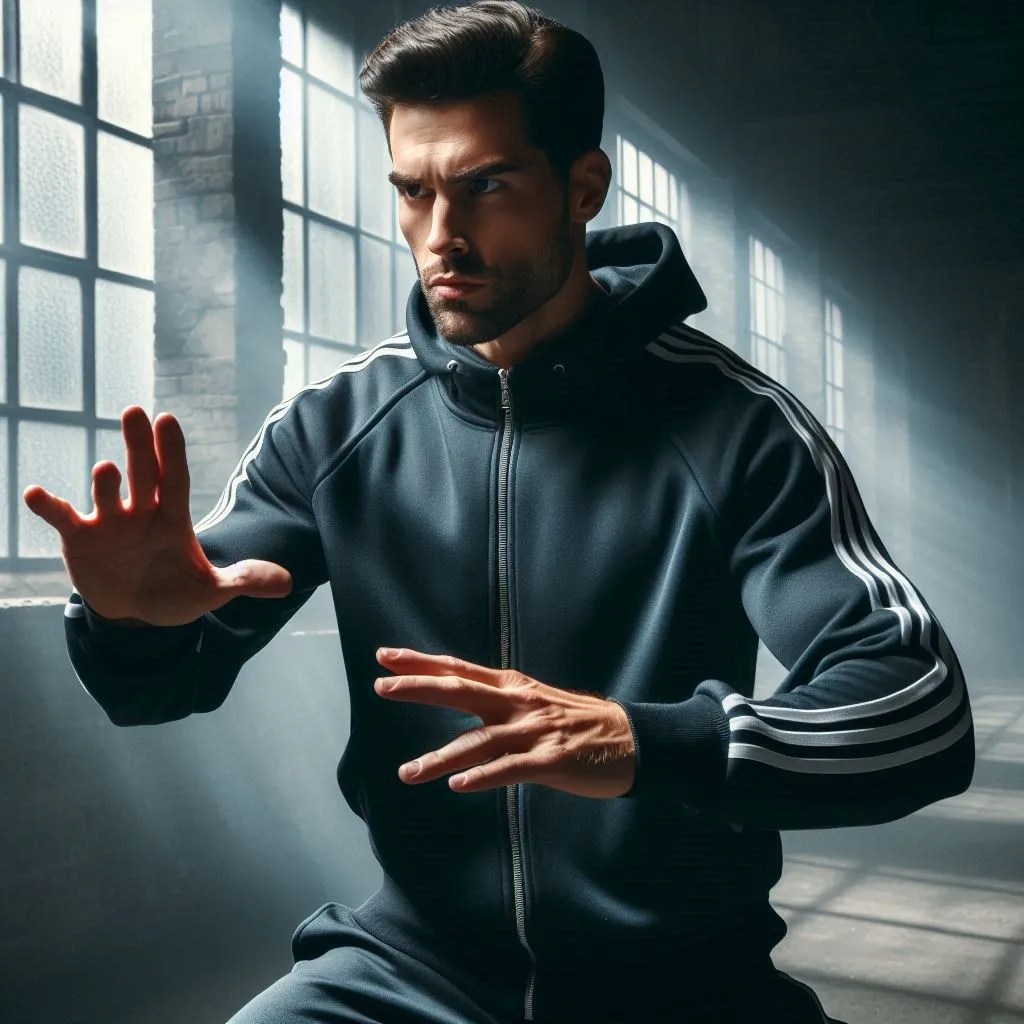
    • Expose a Target using the “W” Guard: Example, lead palm held high to the side, rear palm low and centered—exposing a tempting middle or side lane. Decker would also crane his head forward to present a tempting target—a bold tactic that can be highly effective but is extremely dangerous without advanced timing, precision, and refined attributes.
    • Bait and Counter: Block the first shot, then Stop-Hit the second shot. You could also stop hit on their first shot if you prefer or are able to do so.
    • Reposition and Repeat: Reset the trap and draw again.
    • Power Strike: Land a decisive blow (e.g., rear-hand punch to solar plexus) when the moment opens.
    • ABC (Attack by Combination): Chain strikes to overwhelm and confuse—forcing the opponent further into what Bruce Lee called “the wounded crane” as they retreat under pressure or collapse from the impact.

    MORE INFORMATION:

    Grandmaster Denis Decker: The Gung Fu Genius—A Legacy of Strategic Mastery and Inner Power

    BAGUA CIRCLE SPARRING CHANGES

    Disclaimer: RAT Synthesis™ is an independent system created by Sifu Matt Russo. While Sifu Russo is certified in Rapid Assault Tactics, RAT Synthesis™ is a modified and expanded system that is not affiliated with, authorized by, or endorsed by Paul Vunak or the original RAT organization. The information contained in my videos, webpages, programs, forms, and documents is provided for entertainment and informational purposes only and does not constitute legal, financial, or professional advice.


  • RAT SYNTHESIS: THE ART OF RELENTLESS OFFENSE!

    The best defense is a good offense.

    Disclaimer: the information contained on my videos and webpages and within its programs, forms, and documents, is purely for entertainment and informational purposes only. This post does not constitute legal advice.


    INTRODUCTION.

    Most traditional martial arts overemphasize defense, neglecting the development of a powerful offense. But what happens when a loved one is accosted on the street? In that moment, you’re not playing the block-counter game or engaging in a push-hands drill. You need a no-nonsense game plan to close the distance, ASSAULT and dominate—fast, fierce, and decisive.

    And why wait for them to throw the first punch? If it’s going down, your best move might be to strike first. In warfare and combat strategy, striking first often secures the advantage by disrupting the enemy’s plans, seizing the initiative, and instilling psychological dominance.

    While MMA offers a solid offensive approach, it’s designed for sport—not the high-stakes, life-or-death realities of the street. After years of blood, sweat, tears, and relentless investigation, I’ve pieced together a game-changing offensive strategy.

    This is comprehensive knowledge that isn’t found anywhere else. You might find some pieces of the puzzle scattered around, but you won’t find the completed picture. This article is my gift to you.

    THE WAY OF STRATEGY

    “Using No Way as Way, Having No Limitation as Limitation, utilizing all ways and being bound by none.” – Bruce Lee


    Mushin no shin (無心の心) mindset. Pure awareness. Wide angle vision.

    When still, we are relaxed yet ready.

    When attacking, we use intense explosive motion to overwhelm our opponent and throw them off balance.

    “When you decide to attack, keep calm and dash in quickly, forestalling the enemy…attack with a feeling of constantly crushing the enemy, from first to last.”
    ― Miyamoto Musashi


    BATTLE PLAN: PAIN-PRESSURE-TERMINATE-FOLLOW UP-FINISH!

    Pain: Strike a vital point.

    Pressure: Straight Blast.

    Terminate: Headbutt, knees, and elbows.

    Follow up: See ABC below

    Finish: See ABC below

    The RAT Synthesis battle plan is built upon the foundations of Bruce Lee’s fighting system, enhanced with Denis Decker’s Gung Fu and kickboxing techniques inspired by the devastating power of Mike Tyson. The offensive strategy is derived from the Joe Lewis Fighting System, which Lewis developed based on strategies he learned from Bruce Lee.

    At its core, it draws from the Rapid Assault Tactics (RAT) system, developed by Sigung Paul Vunak, combining explosive offense with unparalleled strategic precision. This is the synthesis of battle-tested strategies from some of the most legendary street fighters in history.


    THE FIVE WAYS OF ATTACK!

    When creating pain, we may face obstacles placed by the opponent in our path. The five ways of attack offer proven methods to overcome these barriers and successfully land the strike.


    1. DIRECT ATTACK AND SINGLE ANGULAR ATTACK

    Direct Attack and Single Angular Attack are not included here, as they are fundamental and already ingrained in our training. They require no further detailed instruction.


    2. ATTACK BY COMBINATION (ABC)

    Punches in bunches” – Boxing Maxim

    Involves combining two or more techniques to overwhelm opponents.

    CREATE PAIN – Strike a vital point. Pain neutralizes size and skill differences and gives you the initiative.

    “The primary thing when you take a sword in your hands is your intention to cut the enemy, whatever the means.” – Miyamoto Musashi

    Initiate with one of these techniques:

    1. Eye Jab
    2. Ear Slap
    3. Carotid Stun
    4. Groin Kick
    5. (If life or death) Throat Strike (Leopard Fist)
    6. Thai Kick to Thigh (inside or outside)
    7. Front Kick (Target: Groin, Shins, Thighs, or Under the Knee Cap)
    8. Sidekick (Target: lead leg or groin)

    PRESSURE

    • Straight Blast (traditional)
    • Blast Combinations (non-traditional)
    • Use Palms, Leopard Fist, Phoenix Eye Fist, Black Feather, and Golden Peacock Strikes.

    TERMINATE

    • Double Thumb Eye Gouge
    • Headbutt
    • Knees
    • Elbows
    • Double palms / Double Chops

    FOLLOW-UP

    • Powerful boxing punches inspired by Mike Tyson
    • Devastating PaGua palm strikes
    • Chops to the throat and neck
    • Ridge Hand Strikes (throat and back of the neck)
    • Doubles
    • Palm strikes to the side of the head

    FINISH

    • Push them away
    • Push them away, then kick
    • White Snake Spits Out Tongue (Tai Chi)
    • Chin Lift and Rear Takedown
    • Rear Strangle
    • Arm Bar

    Direct Entries

    • Eye Jab
    • Sidekick → Eye Jab
    • Sidekick → Leopard Strike (Throat) (If life or death)
    • Sidekick → Ear Slap
    • Sidekick → Carotid Stun
    • Groin Kick
    • Front Kick (groin) → Rear Thai Kick
    • Oblique Kick
    • Front Heel Kick
    • Low Kick (Adjust if they raise their knee)
    • Low Sidekick → Eye Jab → Blast: Disrupt balance, impair vision, and apply relentless pressure.
    • Fencing with the Feet: Rapid low line kicks create pain, control range, then trap and hit vital points.
    • Low Front Kick → Eye Jab → Blast: Collapse their stance and blind their vision.
    • Lead Front Kick to lead leg→ Rear Front Kick (Groin) → Eye Jab → Blast: Systematically break their base and overwhelm them.
    • Ear Slap Entry: Instant stun and disorientation.
    • Carotid Stun: Outside Chop. Inside Chop. Overload their nervous system.
    • Leopard Fist to Eye & Throat: Two devastating high-value targets. (If life or death)
    • Phoenix Eye Fist to Eye & Throat: Piercing strike for maximum damage.
    • Oblique Kick Entry: Disrupt forward movement and create attack openings.

    Three Offensive Patterns

    A) Long-Range Attack Pattern (Combination Attack)

    • Use low-line leg kicks to close the gap.
    • Low Sidekick to kneecap (forces opponent to lower their hands).
    • Front Kick to Groin.
    • Kicks to Thighs, Shins.
    • Eye Jab.
    • Punch to Groin.
    • Ear Slap.
    • Chops to Carotid Sinus.
    • (If life or death) Chop to Throat or Leopard Fist Strike.
    • Enter with a Straight Blast → Headbutt → Knees → Elbows → Follow-ups.

    B) Immobilization Attack

    • Low-Line Leg Kicks to close the gap.
    • Trap both hands.
    • Eye Jab → Blast → Headbutt → Knees → Elbows → Follow-ups.

    C) Close-Range Attack Combination

    • Eye Jab → Straight Blast → Headbutt → Knees → Elbows → Follow-ups.

    The following provides additional tools and strategies, enhancing our versatility:


    RAT SYNTHESIS STREET BOXING

    Key Strategy: ABC Pressure keeps them busy → ABC Set-ups split their guard → strikes vital points, straight blast, terminate, follow-up, and finish.

    🔥 PRESSURE COMBINATIONS (ABC – Keep Them Busy & Occupied)

    Purpose:

    • Establish control, range, rhythm.
    • Keep opponent defensive and reactive.
    • Apply relentless pressure to open up defenses.
    • Also, angling

    Core Pressure Combos (ABC) – 8 Total:

    1. Jab → Jab (Repeated Jabs 2,3,4+)
      Establishes control, range, and rhythm. Punches in bunches prevent counter.
    2. Jab → Cross
      Basic but fundamental combination.
    3. Jab → Cross (Repeatedly)
      Applies pressure and overwhelms the opponent.
    4. Jab → Jab → Cross
      Adds second jab for deception before cross.
    5. Jab → Jab → Uppercut
      Sets up the uppercut after jabs to break through guard.
    6. Double Blinding Jab → Overhand
      Distracts with jab before landing powerful overhand.
    7. Hook → Hook
      Basic but effective for generating power at close range.
    8. Jab → Jab → Angle Step → Low Hook to Back → Low Hook to Front


    🌟 SET-UPS (Strategic Opening Creation – Split Their Guard)

    Purpose:

    • Use the cross pattern to create openings.
    • Split the opponent’s defense horizontally and vertically.
    • Lead directly to vital point strikes.
    • 11 total combinations

    Straight & Round Shots (Horizontal Patterns):

    1. Lead Hook → Cross / Overhand / Uppercut
      Hook sets up powerful follow-up strike.
    2. Rear Hook → Jab
      Reverse rhythm, forces awkward defense.
    3. Low Hook → Uppercut (Same Hand)
      Short-range power, body to chin (Low → High).
    4. Uppercut → Low Hook (Same Hand)
      Reverse of previous, chin to body (High → Low).
    5. Hook Body (One Side) → Hook Body (Other Side) → Uppercut Middle
      Works both sides, finishes up the center line.

    Up & Down Shots (Vertical Patterns):

    1. Low Hook → High Hook (Same Hand)
      Changing levels to confuse defense (Low → High).

    2. Blinding Jab → Low Cross
    Change levels, high distraction to low attack (High → Low).

    3. Low Jab → High Cross
    Changes levels for deception (Low → High).

    4. Low Jab → Overhand
    Draws guard down before overhand power shot (Low → High).

    5. Cross Twice to Body → Drop → Rear Overhand
    Body attack leads to power headshot (Body → Head disruption).

    6. High Hook → Low Hook (Same Hand)
    Changing levels to break through defense (High → Low).

    NOTE: A jab can be executed as a finger strike, targeting the eyes or throat, or adapted into a leopard fist or phoenix eye fist. The same applies to a cross. A hook can easily be converted into an ear slap. Additionally, a low jab to the groin can be delivered with a leopard fist, providing an extra inch or two of reach.


    BAGUA POWER PALMS

    (more to come)


    3. ATTACK BY DRAWING (ABD)

    “In the midst of chaos, there is also opportunity.” – Sun Tzu

    Draws opponents into reactions or responses that you capitalize on using attacks, fakes, baits, or footwork.

    Your front hand transforms into a probing whip that swiftly shifts direction—up, down, and sideways—to dynamically adapt to your opponent’s reactions and exploit any vulnerabilities in their defense. Likewise, your rear hand provides reinforcement as needed.

    “Be like water making its way through cracks. Do not be assertive, but adjust to the object, and you shall find a way around or through it.” – Bruce Lee

    • Cross Pattern: Vertical & Horizontal Movement.
    • Low to High and High to Low Attacks.
    • Side-to-Side Head Strikes: Disrupt guard rhythm.
    • Eye Jab Outside → Disengage and move Inside → Cross Parries, Wedge → Throat/Solar Plexus/Groin. Traps.
    • Eye Jab Outside → Jao Sao → Ear Slap → Trap.
    • Low Groin Punch → Trap → High-Line Attack (Eye).
    • Low Groin Punch → Trap → High-Line Attack (Ear).
    • Ear Slap → Disengage Inside → Combination Strikes.
    • Shoulder fake to low kick
    • Hip fake to strike high

    RAT Synthesis ABD integrates trapping for maximum efficiency.


    4. IMMOBILIZATION ATTACK (IA) (TRAPPING)

    Involves trapping or immobilizing opponents’ limbs or body parts to neutralize their defenses.

    Also includes destructions.

    • Cross Pattern: Vertical & Horizontal Movement.
    • Eye Jab → Pak Sao/Lop Sao.
    • Pak Sao → Stiff Response → Zone & Eye Jab.
    • Pak Sao →Centerline parries, rear strike, trap and strike.
    • Pak Sao / Lop Sao →Cross parries, wedge.
    • Pak Sao / Lop Sao →Cross parries, lop sao and strike.
    • Pak Sao / Lop Sao → Disengage to inside & Eye Jab.
    • Pak Sao / Lop Sao → Jao Sao & Ear Slap.
    • Pak Sao / Lop Sao → Jao Sao & Groin Slap.
    • Tie him up: Criss-cross their arms with either a double pak or a double lop and eye jab or groin shot
    • You can also criss cross their arms and then pak and hit
    • Yank tying him up criss-cross
    • Jut Sao and Double Jut sao and eye jab (Monkey)
    • From Cross-Hand Position → Groin Strike → Trap → Jao Sao to Ear Slap → Trap.
    • Punch to Groin Entry or Leopard Fist to groin for added distance.
    • Strike Biceps

    What If’s.

    1. If the opponent moves back out of range to avoid being trapped, use counters for runners, see below.
    2. If the opponent sidesteps and hook punches, outside block and eye jab.
    3. If the opponent shoots in and grapples to avoid being trapped, use the counter for grapplers, see below.

    These three what if’s and their counters apply to each of the five ways of attack.


    5. BROKEN RHYTHM

    When you appreciate the power of nature, knowing the rhythm of any situation, you will be able to hit the enemy naturally and strike naturally – Miyamoto Musashi

    Utilizes changes in speed, direction, or timing to disrupt opponents’ rhythm and create openings.

    • U-Pattern Attacks.
    • Eye Jab → Groin Strike (and vice versa): Sudden directional change.
    • Ear Slap → Groin Strike (and vice versa): Sudden directional change.
    • Leopard Fist to Throat → Groin Strike (and vice versa): Sudden directional change. (If life or death)
    • Eye Jab (Fast) → Stop Midway → Slow Finish: Alters timing to disrupt defenses.
    • Eye Jab (Slow) → Stop Midway → Fast Finish: Unexpected acceleration for devastating impact.
    • Slow-Fast / Fast-Slow. Instead of moving in predictable beats (1-2-3), disrupt timing by changing speeds (e.g., slow approach, sudden burst forward). This makes it harder for them to counter. Example: Step forward subtly, pause for a fraction of a second, then explode in with a strike.
    • DISENGAGEMENT AND DOUBLE DISENGAGEMENT: Example: Leopard fist strike throat, they block, disengage, other hand blocks, disengage again (double disengage) criss-cross their hands and thrust. You can also rear trap to reinforce the criss-cross.

    SEVEN COUNTERS TO THE STRAIGHT BLAST—AND HOW TO OVERCOME THEM

    1. Opponent raises front hand: Trap to neutralize guard. Or use a front kick to the groin.
    2. Opponent attempts double-leg takedown: Use Pa Gua tactics; if taken down, apply RAT counter-grappling.
    3. Opponent plants rear leg or leans back: Target their lead thigh with a Thai Kick.
    4. Opponent backs up into a square stance: Execute a front kick to the groin.
    5. Opponent pushes you away: Counter with an arm wrench.
    6. Opponent retreats and attempts a kick: Intercept or destroy their attack.
    7. Opponent retreats and throws a hook punch or overhand punch: Simultaneously block and eye jab.

    COUNTERS TO THE THREE TYPES OF FIGHTERS

    All fighter types fall into these three categories and present unique obstacles to be overcome.

    Recognize the three types of fighters by their footwork.

    1. Against a Jammer (moves in aggressively, think Mike Tyson).

    • Rotate center and take an angle (triangle).
    • Sidestep and counter.
    • Counter fight: move back, side-to-side, and counter. Think Muhammad Ali.
    • Jam the jammer.
    • If they shoot in (grappler), use a forearm across the neck with Bagua internals to prevent it. If you end up on the bottom, use RAT counter ground fighting.

    2. Against a Blocker (just stands there holding position. May move slightly back).

    Most martial artists are blockers.

    • Use all five attack methods, especially ABD + IA.
    • If penetration fails, destroy—attack arms using leopard, kick legs and groin to force an opening (IA).

    3. Against a Runner (think Muhammad Ali).

    Moves back out of range and/or side to side evasively.

    “Float like a butterfly, sting like a bee.” – Muhammad Ali

    Many martial artists also retreat and evade while blocking and countering.

    • Pursue with relentless pressure using low-line kicks, sweeps, and takedowns.
    • Grab and strike. Reverse fa jing (Bagua).
    • If they counter while retreating, counter their counter. Intercept, destroy, simultaneous block and hit.

    The Three Types of Fighters Extrapolate into Six Types of Fighters:

    • Jammer (Haymakers/Straight Punches/Grapplers)
    • Blocker
    • Runner
    • Kicker

    Train relentlessly. Control the fight. End it decisively. Win.


    via Imago. Mike Tyson and Arnold Schwarzenegger competing in chess

    Martial arts is chess with muscles.

    Disclaimer: the information contained on my videos and webpages and within its programs, forms, and documents, is purely for entertainment and informational purposes only. This post does not constitute legal advice.