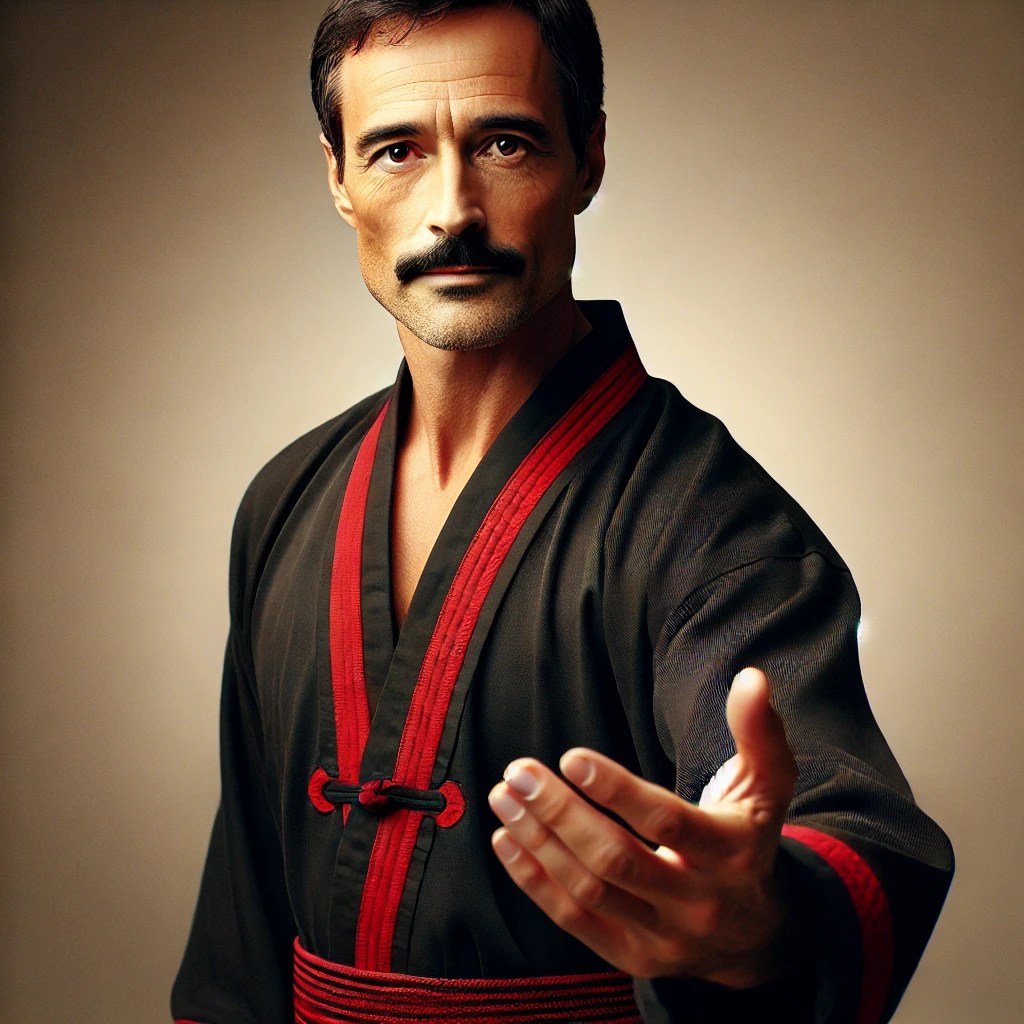
street fighting tactics

  • DENIS DECKER’S FIGHTING GUNG FU – RAT SYNTHESIS TIER 3

    Possum.

    This is the RAT Synthesis expression of Grandmaster Denis Decker’s Gung Fu and Pagua (Bagua).

    Grandmaster Decker was both feared and loved by many martial artists he encountered. His skill was undeniable—he could end fights with advanced practitioners in seconds. But as he aged and evolved, a deeper gentleness emerged. He became more generous, more compassionate—and in the end, he was loved even more than he was feared.


    Overview

    Tier 3 of RAT Synthesis focuses on the combat-tested teachings of Grandmaster Denis Decker. Many can perform flowery forms, but few can scientifically fight and end a confrontation in seconds. Grandmaster Denis Decker mastered both.

    Simply mastering the forms and some drills does not teach how Grandmaster Decker actually fought.

    While we do not include the traditional components of Decker’s system—such as horse training, forms, or other classical practices (many of which were truly poetry in motion)—we have fully integrated his functional, street-proven Gung Fu and Bagua methods.

    This streamlines the Gung Fu component of RAT Synthesis, eliminating unnecessary complexity and overhead.

    An efficient system minimizes its impact on the rest of your life, giving you the freedom to focus on other priorities. 

    Jeet Kune Do is simply to simplify – Bruce Lee


    How Do We Train and get Results Without Forms and other Classical drills?

    Zhan Zhuang

    Instead of relying on forms (kata) or traditional drills, our training focuses on principle-based internal development through Decker’s proven fighting methods:

    • Zhan Zhuang (Standing Meditation that develops strong internal power and proper body structure)
    • Circle Walking
    • Circle Sparring – Similar to the cross-hands position in Enter the Dragon, but integrated with circle-walking.
    • Fight Drills (incorporating patterns of attack and defense)

    These methods develop:

    • Intuition and lightning fast reflexes beyond thought (see Mushin)
    • Mobile rooted structure
    • Fighting centers
    • Internal power
    • Flow

    All key to the Decker methodology.


    Formless Yet Formidable: The Yi Quan Connection

    “Empty your mind, be formless, shapeless – like water.”Bruce Lee

    Our approach aligns with Yi Quan (意拳) – “Mind Boxing”, a modern internal art that also discards forms in favor of:

    • Internal principles
    • Intention (Yi)
    • Standing meditation (Zhan Zhuang)
    • Spontaneous movement

    Tactical Adjustment and Awareness

    Training is hands-on and refined in real-time by the Sifu (teacher) correcting during attack/defense drills and sparring. This is our version of Chi Sao or Push Hands, but more streamlined and complete—similar to how Bruce Lee trained the formidable karate champion Joe Lewis using fight drills.

    It’s like playing chess by mastering a few strong strategies—without needing to memorize every move. Chess isn’t about knowing everything; it’s about consistently knowing how to win. The same applies to martial arts. Martial arts is chess with muscles. The Sifu guides the student through sparring and drills, correcting them like a coach in a chess game. This also lets the Sifu create specific learning experiences to help the student grow.

    Each adjustment sharpens:

    • Structure
    • Internals
    • Timing
    • Spatial awareness

    You learn to dominate with strategy—not brute strength.


    Core Combat Principles

    • Take Command and Control from the Start.
    • Internal Power over Brute Force
    • Circular, Flowing Motion
    • Fight Centers and disrupt their balance
    • Use Triangles and the Pyramid
    • Feet in parallel lines
    • The Octagon
    • Employ Four-Sided Fighting (Pagua)
    • Keep Your Strong Side Forward (Decker was left handed and many copy this)
    • Be Deceptive (Possum)
    • Never give a sucker an even break

    Additional Combat Concepts

    • Attack from flanks and blind sides (Tier 1 of RAT Synthesis emphasized the middle or straight blast. Tier 3 also adds the sides. This is similar to the role of Filipino Kali in Jeet Kune Do).
    • Apply Fajing for explosive short-range power. We develop this by training power strikes on mitts and shields.

    THE GUNG FU CHESSBOARD.

    The gates diagram  is a chessboard or map that teaches warriors how to analyze, protect, and exploit the vulnerable areas of an opponent’s body. The body is divided by thirds, vertically and horizontally, revealing the vertical lanes of engagement: the left outer lane, the middle line (which holds the legendary Wing Chun centerline), and the right outer lane. Add angles (triangles) and circles for attack and defense. Master this, and you master the geometry of battle.

    Bagua Integration

    • Eight Palms
    • Eight Chi Gungs (Zhan Zhuang)
    • Circle Walking
    • Inside Change / Outside Change
    • Side Step and step with Hook Stance to take the sides

    Additional Techniques

    • Black Feather
    • Chinese Hook Punch
    • Golden Peacock
    • Rising Fist
    • Upset Punch
    • Ridge Hand
    • Bear Palm
    • Chop (Shuto)
    • Reverse Fajing (similar to Lop Sao)

    Adaptable Battle Plan: RAT Synthesis 5-Point Attack Strategy (Bagua Style)

    1. Pain – palm strike. Eye jab is ‘number 2’ palm.
    2. Pressure – Use ABC (Attack by Combination) to keep the heat on. E.g. multiple palm strikes executed using fajing.
    3. Terminate – Power strikes: headbutts, elbows, knees, forearms.
    4. Follow-Up (optional) – Continue pressure at close range. Power shots.
    5. Finish – End the fight with one of five options:
      • Rear strangle
      • Push
      • Push-and-kick
      • Takedown variations
      • Ground control & strikes

    On the ground, ground and pound using palm strikes, headbutts, knees, and elbows. Stay to the side or crouched—avoid mounting, as it limits mobility and exposes you to reversal. Then you are prepared for multiple opponents.


    Defensive Strategy: The Six Responses

    1. Accept – Receive their energy and absorb it into the ground, or redirect it to use against them.
    2. Pass – Turn your waist and shift your position so their attack moves past you harmlessly.
    3. Destroy – Attack the opponent’s attacking limb with precision strikes. Here we add the “Bagua Hammer“.
    4. Cancel – Target their structural alignment to break the power behind their attack.
    5. Neutralize – Nullify the incoming force with balance and timing (50/50 approach).
    6. Stop – Use shoulder, bicep, forearm, or fist stops to interrupt their movement.

    Offensive Strategy: The Five Ways of Attack

    Single Direct Attack/Angular Attack, Attack by Combination, Immobilization Attack, Attack By Drawing, Broken Rhythm.


    Attack by Drawing (Possum)

    One of Master Decker’s signature tactics, Attack by Drawing—known as “Possum”—uses calculated deception to bait an attack.

    The advantage? When the opponent takes the bait and commits to an attack, they walk directly into your counter. Their forward momentum amplifies the force of your strike, effectively doubling the impact.

    Like Muhammad Ali but without the dancing, Decker would lure opponents into false confidence—then counter with devastating precision.


    How to Set the Trap

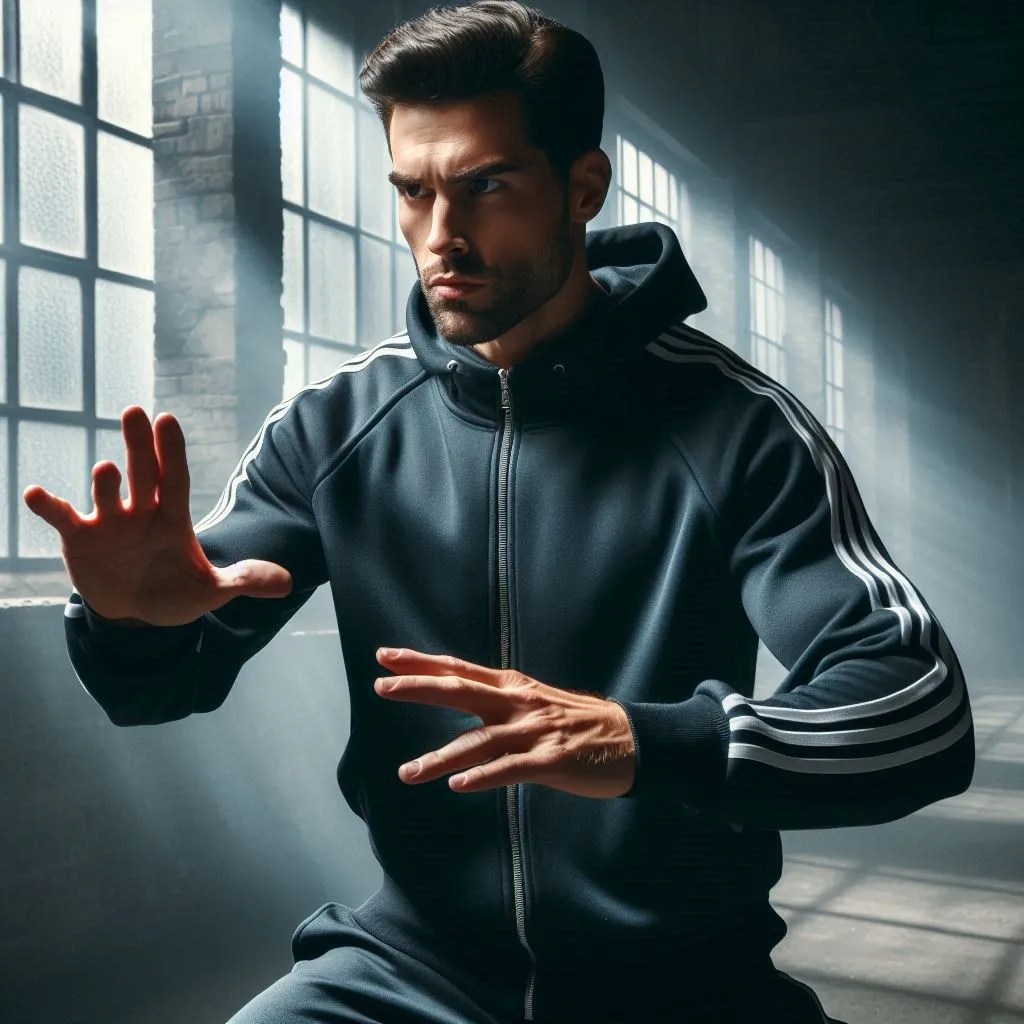
    • Expose a Target using the “W” Guard: Example, lead palm held high to the side, rear palm low and centered—exposing a tempting middle or side lane. Decker would also crane his head forward to present a tempting target—a bold tactic that can be highly effective but is extremely dangerous without advanced timing, precision, and refined attributes.
    • Bait and Counter: Block the first shot, then Stop-Hit the second shot. You could also stop hit on their first shot if you prefer or are able to do so.
    • Reposition and Repeat: Reset the trap and draw again.
    • Power Strike: Land a decisive blow (e.g., rear-hand punch to solar plexus) when the moment opens.
    • ABC (Attack by Combination): Chain strikes to overwhelm and confuse—forcing the opponent further into what Bruce Lee called “the wounded crane” as they retreat under pressure or collapse from the impact.

    MORE INFORMATION:

    Grandmaster Denis Decker: The Gung Fu Genius—A Legacy of Strategic Mastery and Inner Power

    BAGUA CIRCLE SPARRING CHANGES

    Disclaimer: RAT Synthesis™ is an independent system created by Sifu Matt Russo. While Sifu Russo is certified in Rapid Assault Tactics, RAT Synthesis™ is a modified and expanded system that is not affiliated with, authorized by, or endorsed by Paul Vunak or the original RAT organization. The information contained in my videos, webpages, programs, forms, and documents is provided for entertainment and informational purposes only and does not constitute legal, financial, or professional advice.

  • THE ART OF WINNING: MASTERING COMBAT, STRATEGY, AND SUPREME EXCELLENCE IN THE PERSONAL ART OF WAR!

    RAT Synthesis: The Art Of Real World Combat and Personal Development

    “To fight and conquer in all battles is not supreme excellence; supreme excellence consists in breaking the enemy’s resistance without fighting ( to avoid the fight or fight without struggle).”

    — Sun Tzu

    True mastery is not found in endless repetition or rigid techniques—it is forged in the fire of strategy, adaptability, and pure combat intelligence. Inspired by the timeless wisdom of Sun Tzu, RAT Synthesis pushes warriors beyond form, into the realm of tactical supremacy. It is the art of seizing control, exploiting weakness, and striking with precision before the enemy even knows they’ve lost.

    In the chaos of real-world combat, where unpredictability reigns and rules crumble, RAT Synthesis commands a relentless offense—preemptive strikes, absolute control, and victory with minimal effort and maximum devastation. This is not just fighting; this is warfare perfected.


    RIGHT FOCUS?

    Are you practicing the basics? Doing forms, kata, drills, exercises, and polishing your technique?

    But is that all you’re doing?

    Or most of what you are doing?

    A good plan violently executed now is better than a perfect plan executed next week.

    – George S. Patton

    Are you mastering the chess pieces—the movements, the ranks and files of the board—without an opening strategy or a plan to win?

    Do you know all the what-ifs and how to handle them?

    Do you know how to attack not just defend?

    Can you seize opportunities as they arise?

    Adapt to unexpected changes?

    Are you considering all six ranges of combat?

    Fighters who are bigger and more skillful?

    Weaponized?

    Multiple opponents?

    Many traditional martial artists fall into this trap.

    Polishing, polishing, polishing.

    They overemphasize things like:

    • Breaking wood and bricks.
    • Repetitive forms.
    • Two-man forms.
    • Horse stance training and basic drills.
    • Historical reenactments.
    • Cultural rituals, such as lion dancing.
    • Mimicking the founder of a system instead of discovering themselves.

    There’s only so much time in the day.

    The body can only take so much.

    It also needs time to recover and strengthen.

    You also have a life.

    Are you focusing on the most important aspects?

    Like strategy, tactics, and a comprehensive street fighting method?

    The 80-20 rule?

    Or other aspects?

    These practitioners look great in their rehearsed routines, but are they mastering the art of domination and winning?

    The art of chess with muscles?

    Not just playing the game, but excelling at it—winning in three or four moves.

    Or fewer.

    Setting traps.

    Creating advantages.

    Avoiding disadvantages.

    “To win one hundred victories in one hundred battles is not the acme of skill. To subdue the enemy without fighting (to avoid the fight or fight without undue effort) is the acme of skill.”

    Sun Tzu

    PLAYING BY THE RULES?

    MMA fighters and combat sport fighters understand strategy.

    But their battlefield is a sport, confined by rules.

    When there are no rules and your opponent fights differently, your rule based technology could be wiped out.

    For instance, MMA fighters and Muay Thai fighters adopt a wide stance for greater power. This leaves their groin open to attack.

    As another example, when someone is mounted it is illegal to grab the groin, poke them in the eyes, or bite.

    Another example is you are fighting within a weight class.

    You do not confront a larger opponent.

    Or multiple opponents that nullify ground fighting.

    Or weapons.

    No one is dying in the cage.

    Combat sport opponents are usually still standing after minutes of fighting.

    On the streets, seconds count.

    Gangbangers

    TRAINING FOR REAL WORLD SCENARIOS?

    The enemy might be bigger than you—300 pounds of steroid-fueled aggression.

    They might be more skilled.

    They might have friends.

    Weapons.

    A car full of backup, armed with baseball bats.

    Knives.

    Guns.

    If you’re alone, you can run.

    If you’re with family or friends, you have to fight.

    You need a strategy to win fast—and then disappear.

    Or if you’re in your home, they break down the door, and three guys enter, you need to neutralize the threat.

    Forget about calling the cops. You won’t have time for that, necessarilly.

    And by the time they arrive, the deed is done.

    Close-quarters combat leaves no room for flashy moves.

    If you go to the ground and they have friends, you’re dead.

    Then your family is at their mercy—facing torture, rape, worse.

    This is war.

    And war isn’t just about winning—it’s about winning with ease, as Sun Tzu taught.

    How?

    By playing chess with muscles.

    Strategically and efficiently.

    Strategy = You have the advantage. The enemy has the disadvantage.

    We do this through interceptions, destructions, and a relentless offense.

    Like Bruce Lee’s Five Ways of Attack.

    If you wait for the enemy to strike first, you will be on the defensive. Act quickly and take the initiative.

    In Wing Chun, the attack—for example, a well-placed eye jab—is called the Asking Hand.

    It asks a question of the enemy.

    And they must answer.

    They might block.

    Step back.

    Counter.

    Shoot for a takedown.

    Rush in with punches.

    Kick.

    And you already have the perfect response for every possible reaction or response.

    One that keeps you in control.

    One that is efficient—no wasted movement, no wasted time.

    Throwing Money

    DON’T WASTE RESOURCES (TIME, ENERGY, MOTION).

    In business, people throw money at problems, hoping they’ll go away.

    Sometimes it works.

    Most of the time, it’s just wasted resources.

    That’s undue effort.

    That’s not supreme excellence.

    That’s not Sun Tzu.

    Same with combat.

    You don’t just throw strikes and kicks hoping it will work.

    You don’t just shoot in and take them down hoping it will work.

    In chess, “hope chess” refers to making moves without thoroughly analyzing your opponent’s potential responses, especially checks, captures, and threats, and hoping you can handle them on your next move. 

    Hope works in the spiritual realm.

    Hope doesn’t necessarily work in a physical fight.

    BE PREPARED.

    “Victorious warriors win first and then go to war, while defeated warriors go to war first and then seek to win. The general who wins a battle makes many calculations in his temple before the battle is fought. The general who loses a battle makes but few calculations.”

    – Sun Tzu

    The analysis should have already taken place in the kwoon (training hall).

    You should be prepared and already know what to do before the fight.

    This should already be ingrained in your muscle memory.

    There is no time to think.

    The Mushin mindset takes over and the game plan happens instinctively, automatically, strategically, efficiently.

    The RAT Synthesis Mind Range™ training enables this.

    Like the fearless Samurai studied Zen to prepare their minds for battle.

    They knew if the mind was correct they would win without fear or hesitation.

    They knew if their mind was correct intuition would be their wise guide.

    In split seconds of time.

    Stillness is true power.

    END IT QUICKLY OR RISK LOSING YOUR LIFE.

    The longer a fight drags on, the more likely you are to lose.

    The more chances they have to recover.

    The more time for their buddies to join in.

    The more time for them to pull a weapon.

    Seconds count.

    “There is no instance of a country having benefited from prolonged warfare.”The Art of War

    BREAK THE RULES AND EVEN THE ODDS. WIN.

    In RAT Synthesis, we don’t play by the rules.

    RAT Synthesis is MMA for the streets and home invasions.

    We do the things no one wants to talk about.

    We attack vital points.

    Eye jabs.

    Shin destructions.

    Smashing their fists on our elbows.

    Groin kicks.

    Carotid sinus strikes.

    Ear slaps.

    And throat strikes – if required.

    We break their balance.

    Their structure.

    Their will.

    Pain neutralizes size and strength disparities.

    Then, we apply pressure: Straight blast.

    Headbutt.

    Knee.

    Elbow.

    Terminate.

    Follow up.

    Finish.

    If necessary—coup de grâce.

    Then, we leave.

    And once we’re safe, we meditate—to purge the PTSD, the adrenaline, the stress, the emotion.

    We return to normal—because we’ve trained our minds to operate in that range. But the battle leaves residue. The subconscious needs clearing. Our meditation takes care of it, quickly.

    RAT Synthesis.

    No steroids required.

    No illegal weapons.

    We may pull a kubotan.

    No flashy high kicks and routine.

    Just strategy and lean functional muscles.

    You become the weapon.

    The Master Warrior.

    You turn the hunter into the hunted.

    Train RAT Synthesis twice a week or more, and you’ll develop real skill—efficient, adaptable, and deadly.

    “To win any battle, you must fight as if you are already dead.” — Musashi

    CHOOSE.

    If you want to play sports and get a trophy or a championship belt, go to a MMA gym.

    If you want to mimic traditions, there are plenty of dojos for that.

    But if you want to master warfare—the real art of life and death combat—come to me.

    You’ll reach peak fitness.

    Master real world meditation and strategy.

    Train the mind and the body for survival.

    Because martial arts is life.

    Its the art of winning.

    It is also spiritual training.

    Like the fearless Samurai, who studied Zen and pursued transformation.

    “The true science of martial arts means practicing them in such a way that they will be useful at any time, and teaching them in such a way that they will be useful in all things.” — Musashi

    Are you ready?