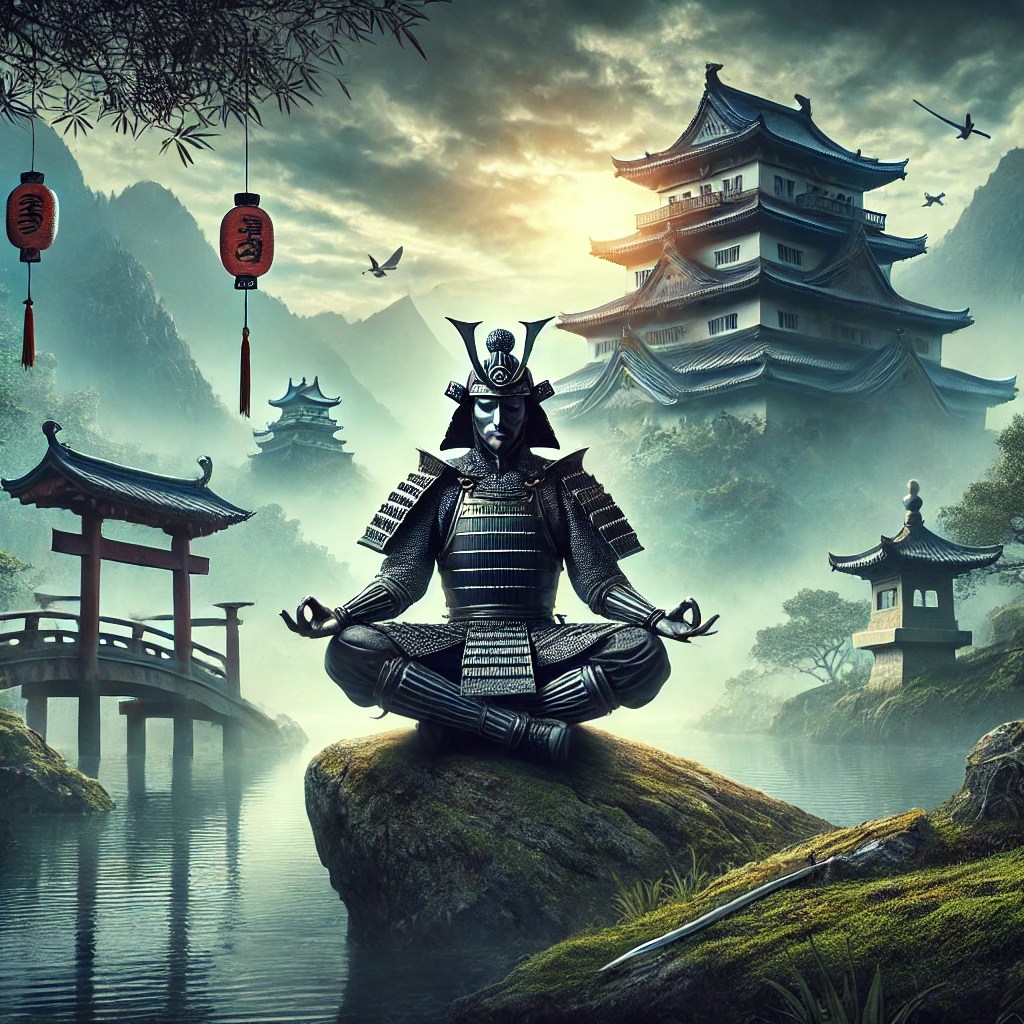
present moment

  • THE KINGDOM OF THIS MOMENT

    “And as we learn to choose rightly between the dualities of good and evil, eventually we rise above both, and attain that state which Jesus and Krishna and the Masters attained — the state of EVENMINDEDNESS, living always in the bliss-consciousness of God in which no dualities can distress or upset us.”

    Yogananda, Paramahansa. Solving the Mystery of Life: Collected Talks & Essays on Realizing God in Daily Life Volume IV (pp. 271-272). Self-Realization Fellowship. Kindle Edition.


    It is alright right where I am.
    Not as resignation. Not as defeat.
    But as a declaration of sovereignty.

    The world howls otherwise. It measures, compares, demands. It points endlessly toward a horizon that recedes with every step—more money, more status, more proof that you have earned your place among the restless. It whispers that peace is conditional, that fulfillment is deferred, that your life is a negotiation with the future.

    It feeds on desire—endless, restless desire—promising that the next acquisition, the next achievement, the next moment will finally complete you. But desire, untethered from truth, is a mirage. It shines in the distance, convincing you to walk farther, strive harder, become more—only to dissolve when you arrive, replaced by another shimmering promise just beyond reach.

    But the deeper truth stands unmoved.

    It is alright right where I am.

    If it changes, if it improves, if the winds turn favorable and fortune smiles—then it is alright then also. Not more alright. Not finally acceptable. Just… alright, again. Because the foundation was never built on circumstance. It was built on presence.

    And if things become worse—if the sky darkens, if loss arrives, if the ground beneath you trembles—it is still alright. Not because suffering is denied, but because something deeper than circumstance remains untouched. There is a ground beneath all ground, and it does not collapse.

    That ground is not empty. It is alive.

    It is the presence of God.

    As Eckhart Tolle said, “Don’t let a mad world tell you that success is anything other than a successful present moment.” But the successful present moment is not merely awareness—it is remembrance. It is the turning of the heart toward God within the now.

    A moment becomes truly successful when it is inhabited consciously—and offered upward. When the breath itself becomes prayer. When attention becomes devotion. When you are not just present, but present with God.

    And in that presence, the illusion of desire begins to fall away.

    You see it clearly—the mind reaching, grasping, insisting: “If only I had this… if only things were different… then I would be at peace.” But in the light of awareness, you recognize the pattern. Desire promises completion, but it perpetuates absence. It keeps you leaning forward, away from the only place God can be known—the present moment.

    This is the hidden fire.

    To be mindful of God in this very moment—to remember, to love, to surrender—is to transform ordinary time into sacred ground. The battlefield becomes an altar. The struggle becomes an offering. The silence becomes communion.

    Because the truth is this: the “mad world” is not just out there. It is internalized. It lives in the voice that says, “Not yet. Not enough. Not until…” It pulls you away from God by pulling you away from now, dressing its urgency in the language of desire.

    But the spiritual warrior returns.

    Again and again, he returns.

    Not to the next desire—but to its dissolution.
    Not to the illusion—but to the real.

    To the breath.
    To the moment.
    To God.

    He does not wait for perfect conditions to remember. He remembers in chaos. He remembers in stillness. He remembers in joy and in pain. He remembers when life rises—and when it falls apart. And when desire arises, he does not become its servant—he becomes its witness, letting it pass like a cloud that cannot anchor him.

    And in that remembrance, he stands unshaken.

    Because this breath is not empty—it is given.
    This moment is not random—it is permitted.
    This life is not owned—it is entrusted.

    And so he stands.

    In traffic, and remembers God.
    In silence, and remembers God.
    In uncertainty, and remembers God.
    In suffering, and remembers God.
    In blessing, and remembers God.

    And he says, It is alright.

    Not because everything is ideal—but because God is here. Not because desire has been fulfilled—but because its illusion has been seen through. Not because the path is easy—but because he does not walk it alone.

    From that alignment, something extraordinary happens. Action becomes clean. Effort becomes focused. Desire, purified, is no longer a chain—it becomes intention aligned with truth. Change, when it comes, is no longer a desperate grasp but a movement guided by trust. Improvement is welcomed—but not worshipped. Difficulty is endured—but not feared.

    Because the foundation remains unchanged:

    It is alright right where I am.
    If it improves, it is alright.
    If it worsens, it is still alright.
    If I remember God in this moment—this moment is successful.

    This is not passivity. This is devotion.
    This is not complacency. This is communion.
    This is not escape. This is union.

    To master the present moment is to sanctify it—to fill it with awareness, to free it from the illusion of desire, and to offer that awareness back to its source. And in that sacred exchange, success is no longer something you chase—it is something you live.

    Right here.
    Right now.
    With God.
    Already.


  • THE MASTERY OF NOW

    Paramahansa Yogananda taught, “Live each present moment completely and the future will take care of itself”.


    The mystics, saints, and sages have all pointed to one blazing truth: the present moment is eternity itself. St. Augustine called time a mystery of the soul; Paramahansa Yogananda spoke of the eternal now as the doorway to God; and modern success teachers remind us that the only point of leverage you ever truly possess is this instant.

    Right now, you stand at a threshold. In this very breath, you hold no karma. The past has dissolved into memory, and the future has not yet been written. You are free. Yet the moment you act, consequences are born. Karma begins to ripple. Each thought, word, and deed is a seed sown into the soil of eternity. And though the fruits of that soil may ripen in ways mysterious to the material mind, to the spiritual eye they reveal perfection, guided by divine love.

    God, as the prophet Samuel said, “looks upon the heart.” Your inner state—your beliefs, your intentions, your energy—is the true measure of your life. Actions matter, but it is the heart behind the action that determines whether the act rises as incense toward heaven or sinks into the mire of self-serving ego.

    This is why moment-to-moment practice matters. Success, both material and spiritual, is nothing more than a succession of present moments, lived rightly, adding up like drops into an ocean. Each now is a chance to align your will with the eternal. Each now is a chance to choose love over fear, clarity over confusion, service over selfishness.

    The Bhagavad Gita reminds us: “You are entitled to the action, but never to the fruits of action.” Do your duty, do it passionately, do it with joy—and then release the outcome. The fruit belongs to God. You were never the Doer, God is. This truth liberates you from the anxiety of results and anchors you in the bliss of the work itself.

    Yes, cunning strategies, manipulation, and Machiavellian tactics often produce quick victories. Evil always comes sugar-coated, or else no one would taste it. But the harvest of such seeds is bitter. Al Capone ended mad with syphilis in prison; Adolf Hitler committed suicide in a bunker of despair. Their fruits rotted. Compare them to Mother Teresa, whose life was radiant with love, or Padre Pio, whose heart became a beacon of miracles. Their fruits endure in eternity.

    Rewards may or may not ripen in this lifetime, but ripen they shall. Karma is patient. Sometimes the lesson comes swiftly, other times over lifetimes.

    But to the soul walking in faith, one more act of love, one more step of courage, one more punch through the veil of illusion can bring a rebirth into greater strength, higher wisdom, and divine joy.

    Love is its own reward. When you choose love now, eternity opens within you. The world is but a dream within a dream, and when the dream ends, all of us must return to the Father. Even the most lost soul has a path home.

    That is the story of the Prodigal Son: no matter how far we wander, God’s grace is waiting-if we repent (Change). The banquet table is set, and the loving Father runs to meet us when we turn our face toward Him.

    So master this moment. The now is your eternity, your destiny, your karma yet unwritten. With every heartbeat, with every breath, let your heart align with love, let your action spring from truth, and let your destiny unfold as a song of grace.

    The Mastery of Now is the mastery of life eternal.

    “In the absolute sense, anything that contradicts true happiness is untruth; and that which gives permanent happiness is truth. Permanent happiness refers not to the temporary thrill that comes with material success and pleasure, but to the joy found in the soul’s attunement with God. By this standard, you can judge any action you perform as to its projected end result – whether or not that action will promote lasting happiness. The ultimate Truth is God; and God is the ultimate Truth.”

    – Sri Sri Paramahansa Yogananda

    Journey to Self-Realization

    “What is Truth”, pg 107


  • Yoga is Not Just About Tying Yourself in a Pretzel: The Forgotten Meditation Aspect and Its Power in Warriorship

    The Samurai warriors practiced Zen to gain an edge in battle, and at the heart of Zen lies yoga.


    Yoga Asanas

    When most people think of yoga, images of contorted bodies twisted into pretzel-like poses often come to mind.

    While the physical asanas (postures) of yoga have gained tremendous popularity, especially in the West, they represent only one aspect of this ancient practice.

    What many overlook is the meditation and mental training that is deeply embedded within the roots of yoga, which not only offers spiritual enlightenment but also plays a pivotal role in the Art of War and the cultivation of true inner strength.

    The Deeper Roots of Yoga: Meditation Over Asanas

    Yoga has long been recognized as a path to spiritual awakening, but it’s crucial to understand that the physical postures are just the surface of a much deeper tradition.

    At its core, yoga is about stilling the mind—calming the endless chatter that often clouds our perception and hinders our ability to act decisively.

    This meditation aspect of yoga is far more powerful than just performing physical poses.

    It’s about transcending the ego and achieving a state of deep awareness, where one’s true self is realized and one can access a state of inner peace that is not shaken by external circumstances.

    In fact, this meditation aspect is so powerful that it became the foundation for other profound traditions, such as Chan Buddhism (which later evolved into Zen) in China.

    The story of Bodhidharma, the enlightened Indian guru who traveled to China, is a testament to how meditation in the form of yoga helped shape not only spirituality but warrior philosophies too.

    Bodhidharma (Dà Mó), the founder of Chan Buddhism and the key figure in elevating Shaolin Kung Fu.

    Bodhidharma’s journey from India to China is legendary.

    He arrived at the Shaolin Temple, where he established Chan Buddhism, a fusion of meditation and martial arts.

    This blend of mindfulness, discipline, chi (pranayama), and physical training would lay the foundation for what became the Shaolin monks’ renowned martial arts expertise, later influencing countless warriors around the world.

    This ancient tradition directly links yoga and meditation to the art of war, demonstrating that the true power of yoga lies not in the ability to perform physical poses but in the mental clarity, discipline, energization (chi), and fearlessness it fosters.

    The meditation-based aspects of yoga create a “no-mind” state—where actions flow effortlessly, free from hesitation, and without the clutter of doubt or distraction.

    This mental fortitude, honed through yoga and meditation, would become the edge in battle, just as it has in life.

    Lord Krishna instructing Arjuna

    The Bhagavad Gita: A Battle Between the Mind and the Self

    One of the most powerful texts that blends yoga, meditation, and warriorship is the Bhagavad Gita, the epic dialogue between Lord Krishna and the warrior prince Arjuna.

    The Gita isn’t just a spiritual treatise; it’s an internal battlefield where Arjuna struggles with his mind, emotions, and sense of duty.

    Through Krishna’s guidance, Arjuna learns to transcend his inner conflict and reach a state of clarity, allowing him to perform his duties without attachment or hesitation.

    This is the essence of the yoga of action—Karma Yoga—where the practitioner performs their duty without attachment to outcomes, free from the limitations of fear, desire, or ego.

    In this state, one is not swayed by external forces but remains anchored in the present moment, ready to take decisive action when necessary.

    This same mental discipline is key for warriors, athletes, and anyone who seeks to live with unwavering focus and clarity.

    The Warrior Caste and the Path of Zen

    Yoga’s connection to warrior philosophy is not just confined to the spiritual practices of ancient India.

    Buddha himself, who was born into the warrior caste, understood the discipline and mental training that warrior culture required.

    Though his journey took him away from the battlefield, the underlying principles of warrior ethos—such as fearlessness, discipline, and acting in the moment—remain closely tied to the teachings of Buddhism and the path of meditation.

    The Samurai of Japan, revered for their code of honor and exceptional skills, fully embraced Zen practice.

    Through Zen meditation, they cultivated a deep mental focus, allowing them to enter battle without fear or hesitation, fully present and aware of every movement.

    The Samurai’s Zen practice allowed them to move beyond themselves, acting as a vessel for the art of war.

    The ultimate goal was to reach a state of “no-self” or “no-mind”, where the mind does not interfere with action and one acts purely out of intuition and experience.

    No Mind, No Self: The Power of Yoga in Life and Battle

    The concept of “no-mind” (or “mushin”) is integral to both Zen and yoga, and it is perhaps one of the most powerful aspects of the practice.

    When we let go of the ego and the constant chatter of the mind, we open up to a state of pure presence, where our actions are aligned with the flow of life.

    This state of non-attachment is essential not only in meditation but also in battle, business, sports, and every area of life that demands focused action.

    In yoga, this concept is cultivated through deep meditation and mindful breathing, allowing the practitioner to reach a state where actions are effortless, clear, and precise.

    The “no-self” principle helps us overcome the limitations of the ego and the fear that often holds us back in life.

    Whether in war or in daily struggles, this mental discipline gives you the edge—the ability to act without hesitation, free from distractions, and aligned with your highest purpose.

    Yoga: More Than Just Feel-Good Poses

    So, the next time you think of yoga, remember: it’s not just about tying yourself in pretzel-like shapes or doing trendy stretches.

    At its core, yoga is about transcending the physical, finding inner peace, and cultivating the mental strength to face any challenge—be it on the battlefield or in the daily struggles of life.

    The meditation practices of yoga, developed over millennia, are the key to unlocking the true power within you.

    Just as the great warriors of history relied on the mental clarity and fearlessness gained through meditation and yoga, so too can we all benefit from its profound teachings.

    Yoga, when practiced in its fullest sense, is not just a physical exercise; it is a way to elevate your warriorship, to act with precision, and to live without fear or limitation.

    Final Thoughts

    Yoga is not just about the body.

    It is the way to train your mind, to enter a state of no-mind, and to cultivate the clarity and fearlessness necessary to face life’s battles—whether physical, mental, or spiritual.

    Just as the ancient warriors did, we too can embrace the meditation aspect of yoga and unlock the deeper power that lies within us all.

    Sri Paramahansa Yogananda

    BE CALMLY ACTIVE

    AND ACTIVELY CALM

    In short, don’t think all the time of just making money. Exercise, read, meditate, love God, and act peacefully, at all times. Learn to be calmly active and actively calm, carrying into your daily activities the calmness gained in the spiritual activity of meditation.

    In the Gita, Bhagwan Krishna teaches: “Remaining immersed in yoga, perform all actions, forsaking attachment (to their fruits). Remain indifferent to success and failure (while performing all actions). The mental evenness during all states of activities (resulting in success or failure) is termed yoga.

    – Sri Sri Paramahansa Yogananda

    MANS ETERNAL QUEST

    Chapter 47 page 402


  • BECOME ONE WITH THE MOMENT AND LEVERAGE THE ENTIRE UNIVERSE!

    The present moment is the nexus and the lever of reality, where thought, action, and universal flow converge. By mastering it, one gains the power to shape destiny effortlessly.

    This is the Grandmaster’s Secret—life is not a struggle but a harmonious dance, where small, precise actions shift massive outcomes.


    INTRODUCTION: THE GRANDMASTER’S SECRET.

    What if you could shape reality with a single, effortless move—like a grandmaster executing the perfect strategy? What if life was not a struggle, but a dance, where you moved in harmony with existence, influencing outcomes with ease?

    This is not fantasy. It is the art of mastering the moment.

    Masters across disciplines—chess, martial arts, business, relationships, spirituality—all understand one thing: shape the now, and you shape everything.

    From Yogananda’s mental broadcasting to Bruce Lee’s five ways of attack, from Zen’s effortless action (wu wei) to the principle of “four ounces moving a thousand pounds,” this revelation will transform the way you engage with life.

    By the end of this journey, you will see that reality is not something to overpower—it is something to feel, steer, leverage, and flow with.

    THE MOMENT: THE LEVER THAT MOVES REALITY

    Every action, decision, and thought originates in the present. Mastering this fundamental truth gives you maximum influence over life.

    • “The moment is the steering wheel of reality.” → Awareness and action in the now shape your destiny.
    • “The moment is the lever.”Small, precise actions shift massive outcomes.
    • “Dissolve into the eternal Now. (Mushin)”Presence frees you from ego, fear, hesitation, and other limited programming, allowing perfect action.
    • Tai Chi Saying: “Four ounces can move a thousand pounds” (四两拨千斤). → Power lies in effortless, surgical precision—not brute force.

    “The supreme art of war is to subdue the enemy without fighting.”

    — Sun Tzu

    Four Ounces can move one thousand pounds

    ULTIMATE FLOW: HOW TO MASTER THE NOW.

    • Strategic Leverage → A well-timed move disrupts the game with minimal effort.
    • Mushin (No-Mind) → You act without hesitation, adapting instantly.
    • Wu Wei (Effortless Action)You align with reality instead of resisting it.
    • Master the Moment, Master Everything → Life is not a battle to be fought—it is a current to be steered.

    DISSOLVE INTO THE NOW: THE ART OF LETTING GO

    To truly master the moment, you must dissolve the self—your programmed limitations, fears, and resistance. True mastery is about moving beyond thought and merging with pure action.

    The secret? Precision over force. Presence over struggle. Intuition over calculation.

    REAL-WORLD APPLICATIONS: HOW MASTERS MOVE

    • Health & Vitality → A true master listens to the body and their intuition, making small yet precise adjustments in diet, breath, and movement to sustain lifelong energy.
    • Relationships → Mastering the moment means knowing when to speak, when to listen, and when to simply be.
    • Wealth & Business → The wisest leaders influence entire industries with a single, well-placed decision.
    • Success & Strategy (Chess) → The grandmaster waits for the perfect moment—one move that shifts the entire game.
    • Samurai → The master swordsman wins with a single, decisive strike—effortless, precise, and unstoppable.
    • Combat Sports → A champion conserves energy, striking with precision and timing to maximize impact while minimizing effort.
    • Martial Arts (Tai Chi & Kung Fu)→ A master redirects force with minimal effort, turning an opponent’s power against them.
    • Zen Archery → The master does not force the shot; he releases at the exact right moment, letting the arrow find its path.

    THE MOMENT AS THE NEXUS: BRUCE LEE’S FIVE WAYS OF ATTACK

    Bruce Lee’s strategic combat philosophy provides a perfect framework for leveraging the moment:

    1. Single Direct Attack (SDA) → A precise, decisive action taken at the perfect moment.
    2. Attack by Combination (ABC) → Fluid movements that break through resistance.
    3. Attack by Drawing → A feint or redirection that sets up the true attack.
    4. Immobilization Attack (IA) → Controlling an opponent’s response before striking.
    5. Broken Rhythm → Disrupting patterns to create an opening.

    These principles extend beyond combat:

    • In negotiations → A well-timed, confident pitch secures a deal (Single Direct Attack).
    • In personal transformation → A sequence of small, calculated changes leads to a major breakthrough (Attack by Combination).
    • In manifestation → Acting as if you’ve already achieved a goal, which influences your subconscious and external circumstances to align with it. (Attack by Drawing)
    • In leadership → Setting firm expectations and boundaries before addressing team issues ensures control of the dynamic (Immobilization Attack).
    • In creativity and innovation → Breaking habitual thought patterns sparks fresh ideas and unexpected solutions (Broken Rhythm).

    THE ULTIMATE EDGE: MASTERING CONSCIOUSNESS ITSELF

    “Jeet Kune Do is the art of fighting without fighting” – Bruce Lee

    True mastery lies in conscious control of reality. The greatest teachers across time reveal the same truth:

    • Yogananda’s Third Eye Focus → Focus at the point between the eyebrows (spiritual eye), will calmly, and reality bends to your will.
    • Christ’s Teaching of Faith → Believe, and it shall be so.
    • Neville Goddard’s Assumption → Assume the state, and it manifests.

    Jesus taught third eye focus also: The light of the body is the eye: if therefore thine eye be single, thy whole body shall be full of light. Matthew 6:22

    Mind is the creator of everything. You should therefore guide it to create only good. If you cling to a certain thought with dynamic will power, it finally assumes a tangible out ward form. When you are able to employ your will always for constructive purposes, you become the controller of your destiny.

    – Sri Sri Paramahansa Yogananda, “The Law of Success”

    Combine the above methods in the present moment through Witnessing-Monitoring™ meditation, moment-by-moment.

    To further enhance this process, practice the Law of Attraction by living in the end result, assuming you already have what you desire. Focus on the third eye while doing this, reinforcing your intention in the present moment. Believe it is already received.

    Further, when you dissolve yourself into the eternal Now and tune into Divine Will through intuition, your will merges with the universal will. You don’t force reality—you steer it, effortlessly.

    Consciousness contains a matrix and the universe is an infinite multiverse of possibilities—by consciously directing your reality, you shift to the timeline of your desired outcome.

    💡 The moment is the steering wheel. The mind is the driver. Faith is the fuel. The Now is the portal to Consciousness.

    CONCLUSION: THE KEY TO UNLIMITED POWER

    “Don’t think, feel. It’s like a finger pointing at the moon. Don’t concentrate on the finger, or you will miss all of the heavenly glory.” – Bruce Lee

    Mastering the moment is the key to ultimate power. Whether through Yogananda’s mental broadcasting, Bruce Lee’s combat strategy, or the Zen principle of wu wei, the truth remains: shape the now, and you shape everything.

    But this is not about overthinking. It is not about calculating every possibility. That’s too big and leads to paralysis. Instead, it is about dissolving the ego, feeling the flow, and moving with it effortlessly.

    • The grandmaster does not calculate—he senses the board and moves with precision.
    • The fighter does not count beats—he disrupts rhythm instinctively.
    • The visionary does not force change—he aligns with its unfolding.

    And the moment is small. It’s right here. It’s right now. It’s manageable.

    When you dissolve hesitation and merge thought, action, and reality into one seamless flow, you become unstoppable. Like the master making a single, decisive move, the fighter disrupting rhythm with perfect timing, or the leader shifting an entire market with one strategic decision—you do not struggle. You steer. You influence. You create.

    The moment is the nexus of all possibility.

    Master it, and the universe moves with you.

    BECOME ONE WITH THE MOMENT. LEVERAGE THE ENTIRE UNIVERSE. BECOME THE GRANDMASTER OF YOUR DESTINY.