Zen

  • ENTER THE MIND RANGE™ 🧠

    “Use every trial that comes to you as an opportunity to improve yourself. When you are passing through the difficulties and tests of life, you usually become rebellious: “Why should this happen to me?” Instead, you should think of every trial as a pickax with which to dig into the soil of your consciousness and release the fountain of spiritual strength that lies within. Each test should bring out the hidden power that is within you as a child of God, made in His image.”

    ~ Sri Paramahansa Yogananda, Where There Is Light.


    You’ve trained your body.
    You’ve sharpened your technique.
    But there is a sixth range—more powerful than all the rest.

    The Mind Range.

    This is where battles are truly won—before the first strike is ever thrown.
    It’s the realm of clarity, strategy, and spiritual force.
    Because if you control your mind, you shape reality itself.

    Every moment, your thoughts either forge you… or chain you.
    Fear, doubt, hesitation—these are the real opponents.
    And through Mind Range™ training, we destroy them.

    In just fifteen minutes a day, you’ll learn to enter Mushin—the no-mind flow of effortless action.
    You’ll master Fudoshin—the immovable mind, calm amid chaos.
    And you’ll awaken Killer Instinct—controlled ferocity guided by purpose and precision.

    When these merge, you become unstoppable—
    not because you fight harder,
    but because you fight smarter, clearer, emptier, freer.

    This is not training.
    It’s transformation.
    A warrior’s rebirth from chaos to command.

    So I ask you—
    will you keep reacting to life…
    or will you Enter the Mind Range
    and start winning from within?

    RAT Synthesis.com – The Sixth Range of Combat and Life.
    Warrior-Sage Mind. Strategic Power. Spiritual Force.

    Read more here: https://ratsynthesis.com/unyielding-life-mastery-with-mind-range-the-warriors-path-to-unleashing-potential/

  • Yoga is Not Just About Tying Yourself in a Pretzel: The Forgotten Meditation Aspect and Its Power in Warriorship

    The Samurai warriors practiced Zen to gain an edge in battle, and at the heart of Zen lies yoga.


    Yoga Asanas

    When most people think of yoga, images of contorted bodies twisted into pretzel-like poses often come to mind.

    While the physical asanas (postures) of yoga have gained tremendous popularity, especially in the West, they represent only one aspect of this ancient practice.

    What many overlook is the meditation and mental training that is deeply embedded within the roots of yoga, which not only offers spiritual enlightenment but also plays a pivotal role in the Art of War and the cultivation of true inner strength.

    The Deeper Roots of Yoga: Meditation Over Asanas

    Yoga has long been recognized as a path to spiritual awakening, but it’s crucial to understand that the physical postures are just the surface of a much deeper tradition.

    At its core, yoga is about stilling the mind—calming the endless chatter that often clouds our perception and hinders our ability to act decisively.

    This meditation aspect of yoga is far more powerful than just performing physical poses.

    It’s about transcending the ego and achieving a state of deep awareness, where one’s true self is realized and one can access a state of inner peace that is not shaken by external circumstances.

    In fact, this meditation aspect is so powerful that it became the foundation for other profound traditions, such as Chan Buddhism (which later evolved into Zen) in China.

    The story of Bodhidharma, the enlightened Indian guru who traveled to China, is a testament to how meditation in the form of yoga helped shape not only spirituality but warrior philosophies too.

    Bodhidharma (Dà Mó), the founder of Chan Buddhism and the key figure in elevating Shaolin Kung Fu.

    Bodhidharma’s journey from India to China is legendary.

    He arrived at the Shaolin Temple, where he established Chan Buddhism, a fusion of meditation and martial arts.

    This blend of mindfulness, discipline, chi (pranayama), and physical training would lay the foundation for what became the Shaolin monks’ renowned martial arts expertise, later influencing countless warriors around the world.

    This ancient tradition directly links yoga and meditation to the art of war, demonstrating that the true power of yoga lies not in the ability to perform physical poses but in the mental clarity, discipline, energization (chi), and fearlessness it fosters.

    The meditation-based aspects of yoga create a “no-mind” state—where actions flow effortlessly, free from hesitation, and without the clutter of doubt or distraction.

    This mental fortitude, honed through yoga and meditation, would become the edge in battle, just as it has in life.

    Lord Krishna instructing Arjuna

    The Bhagavad Gita: A Battle Between the Mind and the Self

    One of the most powerful texts that blends yoga, meditation, and warriorship is the Bhagavad Gita, the epic dialogue between Lord Krishna and the warrior prince Arjuna.

    The Gita isn’t just a spiritual treatise; it’s an internal battlefield where Arjuna struggles with his mind, emotions, and sense of duty.

    Through Krishna’s guidance, Arjuna learns to transcend his inner conflict and reach a state of clarity, allowing him to perform his duties without attachment or hesitation.

    This is the essence of the yoga of action—Karma Yoga—where the practitioner performs their duty without attachment to outcomes, free from the limitations of fear, desire, or ego.

    In this state, one is not swayed by external forces but remains anchored in the present moment, ready to take decisive action when necessary.

    This same mental discipline is key for warriors, athletes, and anyone who seeks to live with unwavering focus and clarity.

    The Warrior Caste and the Path of Zen

    Yoga’s connection to warrior philosophy is not just confined to the spiritual practices of ancient India.

    Buddha himself, who was born into the warrior caste, understood the discipline and mental training that warrior culture required.

    Though his journey took him away from the battlefield, the underlying principles of warrior ethos—such as fearlessness, discipline, and acting in the moment—remain closely tied to the teachings of Buddhism and the path of meditation.

    The Samurai of Japan, revered for their code of honor and exceptional skills, fully embraced Zen practice.

    Through Zen meditation, they cultivated a deep mental focus, allowing them to enter battle without fear or hesitation, fully present and aware of every movement.

    The Samurai’s Zen practice allowed them to move beyond themselves, acting as a vessel for the art of war.

    The ultimate goal was to reach a state of “no-self” or “no-mind”, where the mind does not interfere with action and one acts purely out of intuition and experience.

    No Mind, No Self: The Power of Yoga in Life and Battle

    The concept of “no-mind” (or “mushin”) is integral to both Zen and yoga, and it is perhaps one of the most powerful aspects of the practice.

    When we let go of the ego and the constant chatter of the mind, we open up to a state of pure presence, where our actions are aligned with the flow of life.

    This state of non-attachment is essential not only in meditation but also in battle, business, sports, and every area of life that demands focused action.

    In yoga, this concept is cultivated through deep meditation and mindful breathing, allowing the practitioner to reach a state where actions are effortless, clear, and precise.

    The “no-self” principle helps us overcome the limitations of the ego and the fear that often holds us back in life.

    Whether in war or in daily struggles, this mental discipline gives you the edge—the ability to act without hesitation, free from distractions, and aligned with your highest purpose.

    Yoga: More Than Just Feel-Good Poses

    So, the next time you think of yoga, remember: it’s not just about tying yourself in pretzel-like shapes or doing trendy stretches.

    At its core, yoga is about transcending the physical, finding inner peace, and cultivating the mental strength to face any challenge—be it on the battlefield or in the daily struggles of life.

    The meditation practices of yoga, developed over millennia, are the key to unlocking the true power within you.

    Just as the great warriors of history relied on the mental clarity and fearlessness gained through meditation and yoga, so too can we all benefit from its profound teachings.

    Yoga, when practiced in its fullest sense, is not just a physical exercise; it is a way to elevate your warriorship, to act with precision, and to live without fear or limitation.

    Final Thoughts

    Yoga is not just about the body.

    It is the way to train your mind, to enter a state of no-mind, and to cultivate the clarity and fearlessness necessary to face life’s battles—whether physical, mental, or spiritual.

    Just as the ancient warriors did, we too can embrace the meditation aspect of yoga and unlock the deeper power that lies within us all.

    Sri Paramahansa Yogananda

    BE CALMLY ACTIVE

    AND ACTIVELY CALM

    In short, don’t think all the time of just making money. Exercise, read, meditate, love God, and act peacefully, at all times. Learn to be calmly active and actively calm, carrying into your daily activities the calmness gained in the spiritual activity of meditation.

    In the Gita, Bhagwan Krishna teaches: “Remaining immersed in yoga, perform all actions, forsaking attachment (to their fruits). Remain indifferent to success and failure (while performing all actions). The mental evenness during all states of activities (resulting in success or failure) is termed yoga.

    – Sri Sri Paramahansa Yogananda

    MANS ETERNAL QUEST

    Chapter 47 page 402


  • RAT SYNTHESIS DEFENSE: ATTACK THE ATTACK, END THE FIGHT—MASTER THE ART OF PROACTIVE DOMINATION!

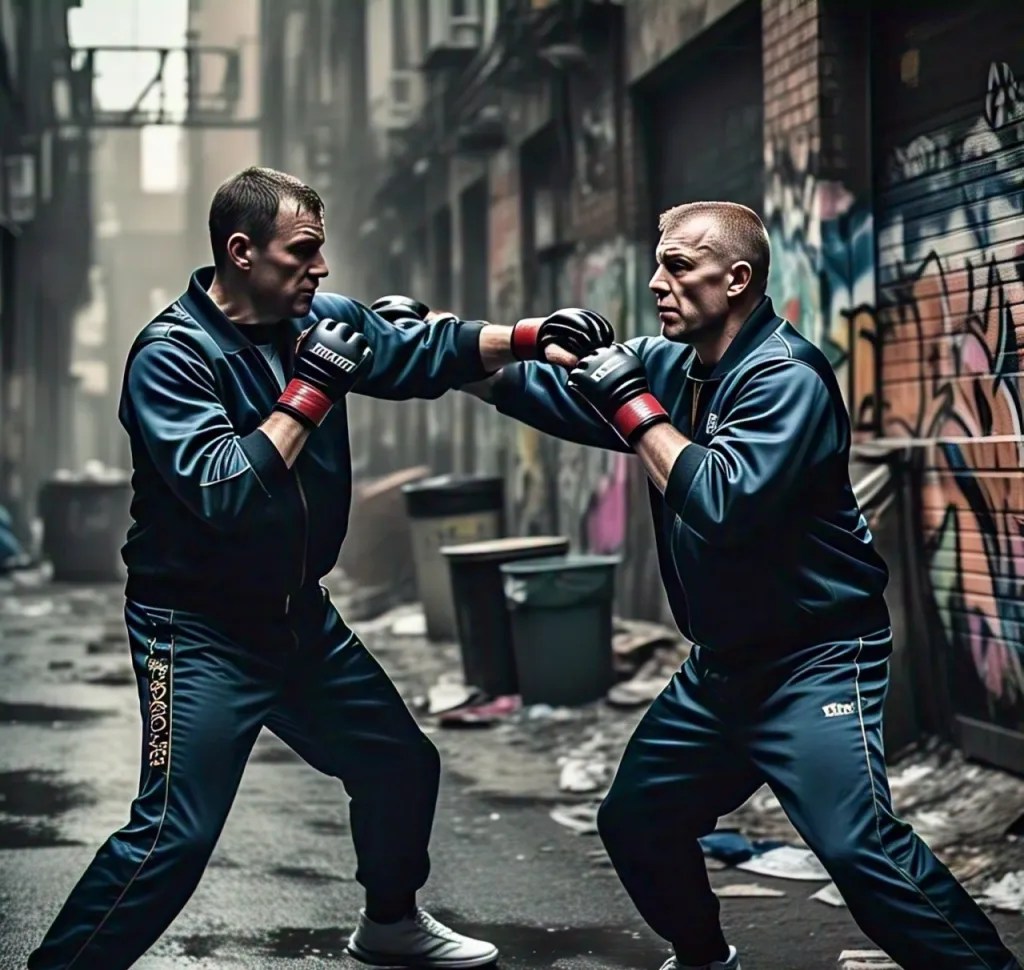
    Relentless Straight Blast: When set up properly, a nearly unstoppable force—pure momentum in motion.

    THE WAY OF STRATEGY

    Attack is the secret of defense; defense is the planning of an attack. – Sun Tzu


    In the realm of combat, hesitation is defeat. RAT Synthesis embraces the philosophy of proactive aggression—the ability to take control of the fight by inflicting pain as defense.

    This method is built on the principles of destruction and interception, ensuring that every movement cripples the attack before it can manifest.

    NO HESITATION.

    RAT Synthesis Mind Range™ training helps transform you into the ultimate warrior

    No Fear, No Hesitation, No Surprise, No Doubt – Miyamoto Musashi

    To eliminate hesitation, fear, and other inner interference, we train Mushin no shin (無心の心) mindset. Pure awareness. No-self. Wide angle vision.

    Learn to tap into no-mind, no-self and move faster, think sharper, and respond with an intelligence beyond the limits of the conditioned self.

    The benefits extend beyond the kwoon (training hall) and into all areas of your life, allowing you to become the calm, still, highly effective center in the midst of life’s storms and chaos.

    “It is not the strongest of the species that survive, nor the most intelligent, but the one most responsive to change.” — Charles Darwin

    When still, we are relaxed yet ready. Same when moving around at a distance.

    When counter attacking, we use intense explosive motion to overwhelm our opponent and throw them off balance.

    There’s a reason Japan’s most fearless warriors, the samurai, embraced Zen.

    Mushin no shin, prepared to intercept and destroy.

    Not being tense but ready; not thinking yet not dreaming; not being set but flexible – ready for whatever may come – Bruce Lee


    The Art of Pain: Destruction & Interception

    “The best way to predict your future is to create it.”Abraham Lincoln

    A successful defense isn’t about blocking; it’s about ensuring your opponent regrets ever initiating the attack. RAT Synthesis employs two devastating approaches:

    • Interception: Striking into the attack, stopping it before it reaches you.
    • Destruction: Counterattacking the attacking limb itself to “defang the snake,” making further attacks impossible.

    “An idiot with a plan can beat a genius without a plan.”

    – Warren Buffet 

    THE BATTLE PLAN: PAIN – PRESSURE – TERMINATE – FOLLOW UP – FINISH!

    1. Pain: Strike a vital point or destroy the attacking limb, creating an opening.
    2. Pressure: Engage with a relentless Straight Blast, overwhelming their defenses.
    3. Terminate: Close range and destroy with headbutts, knees, and elbows.
    4. Follow Up: Ensure they have no chance to recover.
    5. Finish: End the encounter decisively.

    FOLLOW-UP

    • Powerful boxing punches inspired by Mike Tyson
    • Devastating PaGua palm strikes
    • Chops to the throat (life or death) and neck
    • Ridge Hand Strikes (throat and back of the neck) Life or death
    • Doubles
    • Palm strikes to the side of the head

    FINISH

    • Push them away
    • Push them away, then kick
    • White Snake Spits Out Tongue (Tai Chi)
    • Chin Lift and Rear Takedown
    • Rear Strangle
    • Arm Bar

    This battle-tested strategy draws from the legendary Bruce Lee’s Jeet Kune Do, combined with Grandmaster Denis Decker’s Gung Fu, and the explosive power of Mike Tyson’s boxing and kicking. At its core is Rapid Assault Tactics (RAT), pioneered by Sigung Paul Vunak, a system designed for pure combat efficiency. This is the synthesis of battle-tested strategies from some of the most legendary street fighters in history.


    Lead sidekick interception

    TACTICAL BREAKDOWN: THE ART OF INTERCEPTION AND DESTRUCTION

    A simple elbow destruct eliminates their weapons.

    We do not attempt to out box a superior boxer. Instead, we intercept, destroy, and simultaneous block and hit.

    ”Imagine Muhammad Ali with no legs or arms, all he would be is a stump, just bouncing around with no way of harming you”.

    – Dan Inosanto.

    Vs. Straight Punches

    Destructions:

    • Leopard Fist – Attacking the incoming limb with a sharp, penetrating strike.
    • Elbow Destructs – Using your elbow to smash into the opponent’s fist.
    • Gunting (Scissors) – A cutting strike with the middle knuckle to disable the attacking arm.
    • Phoenix Eye Fist – Targeting sensitive areas with precision.
    • Strike their biceps

    A simple knee destruct obliterates their shin when they Thai round kick

    Eye jab interception

    Interceptions:

    • Eye Jab – As they close the distance, blind them immediately.
    • Leopard Fist to Throat – In life-or-death scenarios, neutralize instantly.
    • Front/Side Kick to Groin or Legs – Stop their advance cold.
    • Pat the Jab, Pat the Cross + Intercept:
      • Lead Low Sidekick
      • Rear Thai Kick to Thigh
      • Low Front Kick or Oblique Kick
    • Evade and Counterattack Simultaneously
    • Angle and Fire with Hand strikes or Kicks

    Intercepting with a groin kick and taking them down

    Simultaneous counter punch takes the initiative

    Simultaneous Blocking and Striking

    • Vs. Hook Punches: Outside block while launching an eye jab.
    • Vs. Overhand Punches: Rising block at a 45-degree angle while launching an eye jab.

    Vs. Kicks:

    • High Round Kick: Elbow destruction.
    • Low Round Kick: Knee destruction.
    • Middle Round Kick: Shelf the leg, knee strikes up, elbow strikes down, front groin kick, and trip.
    • Middle Side Kick: Elbow strike down while retreating slightly.
    • Low side kick to leg: raise your knee and tuck your heel a little.
    • Spin Kick: Front heel kick to their butt or lower back to stop it.
    • Heel Hook Kick: Elbow destruction to disable.

    Counter Ground Fighting (RAT).

    We do not attempt to out grapple a superior grappler. Instead we create pain and escape opportunities. We want to be on our feet and in a mobile position.

    Vs. Grappler:

    If they shoot in, use Bagua internals to prevent it. If you end up on the bottom, use RAT counter ground fighting.


    “Float like a butterfly, sting like a bee” – Muhammad Ali

    THE BACKUP PLAN: PURE BLOCKING & EVASION

    While proactive aggression is the core of RAT Synthesis, there’s always a need for defensive fallbacks:

    • Western Boxing Guard: Tight cover, patting punches, and strong blocking.
    • Evasive Maneuvers:
      • Moving back out of range
      • Leaning back to avoid punches
      • Sidestepping and angling to create openings

    Bagua P’eng/Hinge (Ox Tongue)

    ADVANCED COMBAT: TIER 3 & BEYOND

    At higher levels, we introduce advanced Gung Fu and Bagua principles, emphasizing taking the sides and flanking attacks.

    Once the cross-arm position or a connection with their body occurs, Denis Decker Gung Fu principles are applied to manipulate their centers and dominate the encounter.


    Become a Master Warrior

    “The more you sweat in peace, the less you bleed in war.” — Norman Schwarzkopf

    FINAL THOUGHTS: CONTROL THE FIGHT, CONTROL YOUR DESTINY

    RAT Synthesis is not just a fighting system—it is a philosophy of dominance. It is built for those who refuse to be victims, who understand that true self-defense means eliminating the threat before it becomes one.

    Through the synthesis of the most effective martial arts strategies in history, this system ensures that when danger arises, you dictate the outcome.

    Train hard. Attack the attack. Finish decisively. Master the art of proactive aggression. Win.


  • Blades and Wisdom: How Warriors Across Cultures Found Strength Through Spiritual Masters

    The relationship between warriors and spiritual masters transcends cultural boundaries, forming a bond that goes beyond combat techniques to encompass the mind, spirit, and personal growth. Across history, warriors from various cultures sought the wisdom of spiritual masters to refine not only their physical skills but also their mental and emotional strength.

    From the samurai of Japan to the knights of medieval Europe, the Zulu warriors of Africa to the Mongol horsemen, all warriors shared a common understanding: true mastery in battle and life is found through spiritual awakening and self-discipline.

    These warriors, known for their incredible skill in battle, understood that spiritual practice was key to achieving their highest potential. While they taught their spiritual guides about the realities of combat, they were often the students of the spiritual masters who helped them refine their inner discipline.

    For the spiritual teachers, these warriors were more than just students; they represented the embodiment of a path to enlightenment through physical practice. Whether seeking the wisdom of Zen monks, Taoist sages, Sufi mystics, Christian Mystics, or Buddhist monks, warriors across the globe knew that true power came from aligning the body, mind, and spirit. What is interesting to note is that the warriors learned from the monks, but the monks did not necessarily learn from the warriors.

    The Universal Connection: How Spiritual Practices Elevate Warriors’ Performance

    Spiritual teachings across different cultures share a common thread that enhances the warrior’s abilities in both battle and everyday life. The connection between spiritual practices and martial excellence is timeless. Through practices like meditation, mindfulness, and non-attachment, warriors learned how to transcend the limits of their physical bodies and minds, unlocking an enhanced level of performance in battle.

    For example, meditation helps sharpen focus and clear the mind of distractions. This heightened awareness allowed warriors to respond swiftly and decisively in battle, making split-second decisions without hesitation or fear. But the benefits extend beyond the battlefield—being fully present in life’s challenges can transform personal and professional decisions. Warriors applied these practices to remain calm under pressure, giving them an edge in both combat and leadership.

    One critical aspect of many spiritual practices is non-attachment. By relinquishing control over outcomes and embracing the present moment, warriors could perform without fear of failure or death. This concept was integral to many martial cultures, where fearlessness in battle led to ultimate freedom. In life, this same principle enables warriors—and all of us—to navigate challenges with resilience, focusing on what we can control and letting go of stress or anxiety.

    The Art of Balance: Integrating Mind, Body, and Spirit

    Warriors were not solely concerned with physical combat; they sought balance in all aspects of life. Whether through the Zen teachings of the samurai, the internal martial arts practiced by Taoist warriors, or the spiritual disciplines of the European knights, they understood that true mastery came from harmonizing mind, body, and spirit. These ancient spiritual traditions taught that physical prowess was only one part of the equation. The deeper understanding of oneself, the control of emotions, and the ability to connect to a higher consciousness were equally important.

    Balance within the warrior was key to achieving peak performance, and spiritual teachings emphasized integrating physical training with mental clarity and spiritual awareness. This fusion of disciplines helped warriors not only excel in combat but also lead fulfilling lives. By maintaining equanimity and cultivating virtues such as humility, patience, and focus, warriors were able to act with wisdom and integrity, regardless of external circumstances.

    In the modern world, these ancient practices continue to provide warriors—whether on the battlefield, in business, or in personal challenges—with a blueprint for success. By applying the same principles of mindfulness, focus, and non-attachment, we can elevate our performance and lead more purposeful, impactful lives.

    Transcendence Through Discipline: Unlocking True Mastery

    The path to mastery, whether in battle or in life, involves transcending the ego and the distractions of the mind. Warriors across cultures understood that enlightenment was not just about intellectual knowledge; it was about overcoming the illusions of the self and aligning with their intuition and a higher consciousness. Through this process of self-discovery and purification, they could tap into their true potential.

    In many ways, the warrior’s journey mirrored that of the spiritual seeker. Whether practicing Mystical Christianity, Zen, Taoism, or other spiritual philosophies, the goal was the same—awakening to a higher state of being where the warrior no longer acted from ego or fear but from a place of clarity, wisdom, and purpose. The mastery of martial arts was thus a reflection of inner awakening: a process of uniting the physical, mental, and spiritual selves to achieve peak performance.

    In conclusion, the bond between warriors and spiritual masters highlights the universal truth that mastery in life comes from cultivating balance, presence, and a deep connection to our higher selves. The practices shared across cultures have long been recognized as essential tools for success, both in battle and in life. By incorporating these spiritual disciplines, we can unlock our highest potential, perform with precision, and live with purpose, clarity, and grace.

  • No Self, Mushin, and Mastery: Lessons from Ghost Dog: The Way of the Samurai

    In the realm of spirituality and philosophy, the concept of “no self” is a recurring theme, bridging traditions like Christianity, Buddhism, and the teachings of the Dharma. This principle, often associated with humility, detachment, and a transcendence of ego, has profound implications for living effectively and navigating life’s chaos. The film Ghost Dog: The Way of the Samurai offers a modern meditation on this theme, presenting the mindset of “no self” as a practical tool for composure and excellence.

    At the heart of the movie lies the concept of mushin—a Japanese term meaning “mind of no mind.” Rooted in Zen Buddhism and the Bushido code, mushin embodies the state of being fully present, free from distractions, and unencumbered by ego. Ghost Dog, the film’s protagonist, exemplifies this principle through his disciplined life and stoic adherence to the teachings of Hagakure: The Way of the Warrior. His actions reflect a selfless commitment to a higher ideal, illustrating how letting go of ego and attachment empowers him to act with precision, clarity, and purpose.

    The Spiritual Foundation of “No Self”

    The idea of “no self” extends beyond Eastern philosophy. In Christianity, it echoes Christ’s teaching to “deny yourself, take up your cross, and follow me” (Matthew 16:24). This act of self-denial, rather than diminishing the individual, elevates them to a life of service, love, and spiritual alignment. Similarly, the Dharma speaks of anatta, the concept of no permanent self, which liberates one from suffering caused by clinging to identity and desires.

    By transcending the ego, one attains a state of flow—much like mushin—where actions arise naturally and without resistance. This aligns with Jesus’ message of surrendering to God’s will and the Dharma’s emphasis on living in harmony with the universe. In both traditions, selflessness fosters an ability to adapt, endure, and thrive amidst challenges.

    Ghost Dog as a Modern Samurai

    Ghost Dog’s character is a masterclass in applying these timeless principles to modern life. Despite being removed from the historical and cultural context of samurai warriors, his life embodies their ethos. His loyalty to his master, even at great personal cost, mirrors the spiritual virtues of surrender and devotion. His disciplined daily rituals—practicing martial arts, meditating, and caring for his pigeons—reveal the power of routine in cultivating mental clarity and focus.

    What sets Ghost Dog apart is his ability to maintain composure and purpose in the face of chaos. As his world spirals into violence and betrayal, he remains steadfast, guided by the principles of the Hagakure. This detachment from outcomes and unwavering focus on duty illustrate the profound effectiveness of a no-self mindset. By relinquishing attachment to identity and ego, Ghost Dog achieves mastery over his actions and decisions, demonstrating how selflessness can be a source of strength, not weakness.

    Thinking Outside the Box with “No Self”

    The film also challenges us to think outside the box when it comes to personal growth and effectiveness. In a world obsessed with self-promotion and individualism, Ghost Dog: The Way of the Samurai reminds us of the power of humility, discipline, and living for something greater than ourselves. It shows that even in modern, chaotic environments, the ancient wisdom of mushin and no-self can guide us to act with precision, courage, and purpose.

    Moreover, these principles can be applied to everyday life. In business, relationships, and personal challenges, adopting a mindset of no-self allows us to focus on the task at hand rather than being bogged down by fears, insecurities, or the need for validation. Like Ghost Dog, we can learn to navigate chaos with grace, remaining true to our values and purpose, no matter the circumstances.

    Conclusion: The Warrior’s Way in Everyday Life

    The teachings of mushin, no-self, and the Bushido code, as illustrated in Ghost Dog: The Way of the Samurai, offer a powerful blueprint for mastering life. Whether drawn from Christianity, Buddhism, or the Dharma, the principle of selflessness serves as a unifying thread, reminding us that true strength lies in transcending the ego. By doing so, we can maintain composure, think clearly, and act effectively—even in the face of life’s most chaotic moments.

    In the end, Ghost Dog’s journey is not just the tale of a modern samurai—it’s a call to embrace the mindset of a warrior in our own lives. Through discipline, detachment, and selflessness, we can cultivate the resilience and focus needed to excel in a world that often feels like a battlefield.


    REVOLUTIONARY BOOKS SHAKING AMAZON!

    CLICK HERE NOW!


    THE SAMURAI-YOGI ADVANTAGE!™

    Unlock the power of the SAMURAI-YOGI ADVANTAGE™ and master the path to unstoppable business leadership and transformation. This BOOK is your ultimate guide to the RAT Synthesis™ SAMURAI-YOGI ADVANTAGE™ program, offering powerful strategies and training methods for both personal and professional mastery.

    Click https://amzn.to/3ZhqCB6HERE to access your copy on Amazon and start your journey to extraordinary success today!

  • HOW TO PLAY CHESS WITH LIFE: MASTER YOUR MOVES AND WIN BIG

    POINT 1:  BE UNREACTIVE

    In the game of chess, impulsive moves often lead to regret. Similarly, in life, reacting without thinking can create unnecessary complications. The key to mastering this principle lies in the power of pausing and observing.

    The Pause Technique: Whenever you face a challenging situation, take a moment to breathe deeply and center yourself. This simple act can create a space between stimulus and response, allowing you to approach the situation with a calm, clear mind.

    Observation Skills: Develop the habit of observing without immediate judgment. Notice your surroundings, the people involved, and your own emotional responses. By becoming a keen observer, you can gather valuable information that will inform your next move.

    Mindful Assessment: Before making a decision, assess the situation from multiple angles. Consider the potential outcomes and how they align with your long-term goals. This strategic thinking will help you make informed, deliberate choices rather than reactive ones.

    POINT 2:  SEE THE WHOLE BOARD

    A grandmaster sees not just individual pieces but the entire chessboard. This holistic view is crucial for making effective decisions in both chess and life.

    Panoramic Perspective: Take a step back and look at the bigger picture of your life. Understand the interconnections between different areas, such as career, relationships, health, and personal growth. This comprehensive view helps you make decisions that align with your overall vision.

    Situational Awareness: Stay aware of the dynamics around you. Recognize patterns, anticipate challenges, and identify opportunities. By staying alert and informed, you can adapt your strategy to the ever-changing landscape of life.

    Informed Decision-Making: Gather all necessary information before making a move. This means considering both the short-term and long-term implications of your actions. An informed decision is often a winning decision.

    POINT 3: EXPLORE YOUR OPTIONS

    In chess, exploring various moves before committing to one is essential. In life, this translates to understanding and utilizing universal principles like the Law of Attraction and the Law of Karma.

    Law of Attraction: Focus on what you want, rather than what you don’t want. Your thoughts and feelings have a magnetic quality that attracts corresponding experiences into your life. By keeping a positive mindset and picturing your desired outcomes, you can draw in opportunities that match your goals.

    Law of Karma: Understand that your actions create ripples in the world.

    Positive actions usually lead to positive results, whereas negative actions often result in unfavorable outcomes. By being mindful of your actions and their potential impact, you can create a cycle of positive karma that supports your success.

    Creative Exploration: Don’t be afraid to think outside the box and explore unconventional solutions. Sometimes the most effective move is the one that’s not immediately obvious. Embrace innovation and creativity in your approach to life’s challenges.

    POINT 4: TRUST YOUR INTUITION

    Intuition is a powerful tool that can guide you to make the best moves. While logic and analysis are important, sometimes your gut feeling provides insights that are equally valuable.

    Inner Guidance: Cultivate a deep trust in your intuition. This inner voice often knows what is best for you, even when the logical mind is uncertain. By tuning into your intuition, you can make decisions that resonate with your true self.

    Balancing Intuition and Logic: Use intuition as a complement to logical thinking. When faced with a decision, gather all the facts and then check in with your gut feeling. This balanced approach ensures that your choices are both well-informed and aligned with your inner wisdom.

    Practice and Patience: Developing intuition takes practice. Spend time in quiet reflection, meditation, or journaling to strengthen this skill. Over time, you will become more attuned to your intuitive insights and more confident in acting upon them.

    POINT 5: MAKE THE BEST MOVE FOR ALL

    A true chess master aims for moves that benefit the entire board. In life, this principle translates to striving for decisions that create win-win scenarios for everyone involved.

    Collaborative Mindset: Approach situations with the intention of finding solutions that benefit all parties. This fosters cooperation, builds trust, and creates a positive environment where everyone can thrive.

    Empathy and Understanding: See things from others’ viewpoints and take their needs into account. By understanding where others are coming from, you can craft solutions that address their concerns while also meeting your own goals.

    Creating Synergy: Look for ways to combine resources and strengths to achieve a greater outcome. Synergy occurs when the combined effort of a group produces a result greater than the sum of individual efforts. Aim for decisions that harness this collective power.

    CONCLUSION

    By adopting the strategic principles of chess in your life, you’ll move from being at the mercy of circumstances to becoming the master of your destiny. You will no longer feel like a victim of external forces but rather a powerful creator of your own reality. Through deliberate, informed, and compassionate actions, you can navigate life’s challenges with grace and achieve your highest potential. Embrace the wisdom of the Masters and transform your life into a masterpiece of strategic brilliance and success.

    For additional strategies and life philosophies to help you lead a more masterful life, please visit Amazon.com and search for ‘RAT SYNTHESIS’.

    Especially, RAT SYNTHESIS: DHARMA CHESS: MASTERING THE INNER GAME