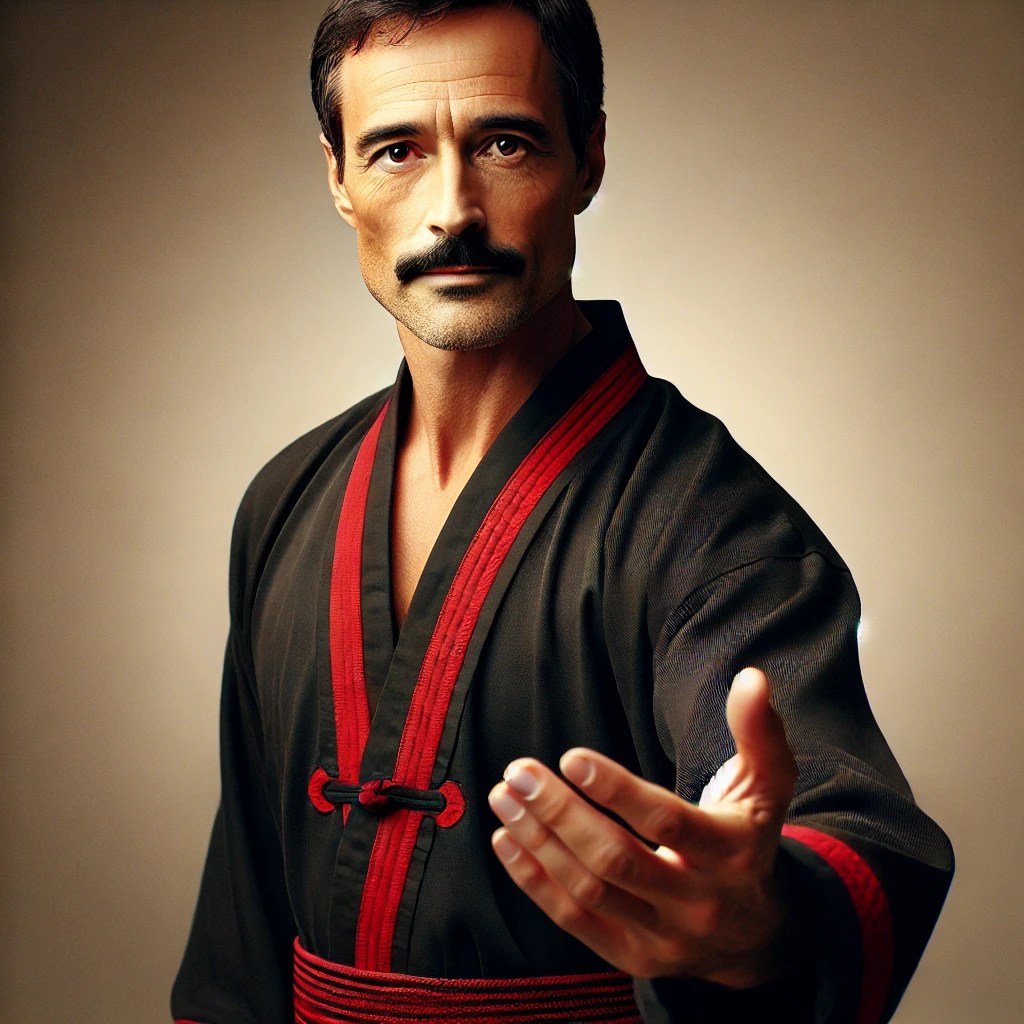
“If you knew you had to fight for your life tomorrow, would you change your training today?”
– Bruce Lee
The UFC is often seen as the pinnacle of combat sports—but don’t confuse it with real street fighting. In truth, UFC fighters follow strict rules that shape how they move, strike, and react. These rules keep fighters safe and the sport entertaining, but they also create habits that can be dangerous liabilities in real-world combat.
The Rules Shape the Fight
There are no referees on the streets.
UFC fighters are elite athletes, no doubt. But the fact remains: rules dictate how they fight. These rules ban techniques that are crucial for true self-defense and survival. For example:
No strikes to the eyes, throat, groin, spine, or back of the neck and head
No headbutts, no grabbing or trapping, no attacks on small joints
Limited use of certain low-line kicks that can end a fight instantly
You can check out the full list of banned moves here.
Real Combat Isn’t a Sport
Welcome to theReal World.
In the street, there are no referees. No tap-outs. No rounds. No weight classes. It’s about survival—fast, brutal, and unpredictable. That’s why we train beyond the rules.
We use:
Ballistic low-line kicks like the oblique and sidekick straight to the knee joint to fracture their legs
Throat strikes that collapse an attacker’s windpipe
Eye gouges to disorient instantly
Groin kicks to drop any opponent
Ear Slaps to burst ear drums
Headbutts and trapping techniques that UFC fighters aren’t allowed to train
We DON’T train high kicks.
High kicks are risky on the streets.
High kicks are risky and difficult to maintain—if your opponent shoots in like a grappler while you’re executing one, you could end up slammed onto the concrete, potentially cracking the back of your skull on impact.
Learn to Dominate and Save Lives
The Way You Train is the Way You Fight.
This isn’t about sport. It’s about protecting yourself and your loved ones when it really counts. By mastering techniques that are banned in the UFC, you gain an edge against fighters trained under limited conditions.
“The art of war teaches us to rely not on the likelihood of the enemy’s not coming, but on our own readiness to receive him; not on the chance of his not attacking, but rather on the fact that we have made our position unassailable.” ― Sun Tzu
RAT SYNTHESIS: THE ART OF STRATEGIC DOMINANCE
For over 2,500 years, Sun Tzu’s The Art of War has stood as the ultimate guide to strategy, influencing leaders, warriors, entrepreneurs, athletes, and spiritual seekers alike.
But this book is not just about war—it’s about winning at life.
It teaches that the highest form of victory is to win without fighting, and the key to mastery lies not in brute strength, but in wisdom, timing, preparation, and understanding the deeper nature of conflict.
🔥 Why The Art of War Still Matters
Life is full of battles—inner and outer. Whether you’re launching a business, navigating relationships, mastering martial arts, or transcending your own limitations, Sun Tzu gives you the mental blueprint to outthink, outmaneuver, and overcome.
🧩 The Five Constant Factors: Sun Tzu’s Strategic Code
“The general who wins a battle makes many calculations in his temple before the battle is fought. The general who loses a battle makes but few calculations.” ― Sun Tzu, The Art of War
Before any campaign, Sun Tzu taught that you must assess “The Five Constant Factors.” These are universal truths that determine success or failure in any venture.
1. 🕊️ Tao (The Moral Law)
Unity of purpose. Harmony between leader and people. A just cause that inspires loyalty, courage, and devotion. Without Tao, there is no cohesion.
2. 🌤️ Heaven
Timing. Seasons. Weather. Cycles of change. Understanding and leveraging time, conditions, and natural rhythms.
3. 🌍 Earth
Terrain, geography, distance, safety and danger. The strategic landscape you operate in—physical or metaphorical.
4. 🧠 The Commander
Wisdom, sincerity, courage, discipline, and humanity. The personal character and skill of the leader determine the outcome.
5. ⚙️ Method and Discipline
Organization, logistics, structure, and systems. Effective execution and order are essential to sustain any mission.
🧠 The Seven Strategic Considerations: Who Will Win?
Sun Tzu gives us a powerful checklist to predict the outcome of any competition or conflict. Ask these 7 questions:
Which leader has the stronger moral authority (Tao)?
Which commander is more capable and virtuous?
Which side has better timing and terrain?
Which side is more disciplined and organized?
Which side is physically stronger?
Whose people are better trained?
Who has the clearer cause and strategy?
✅ If you know the answers, the outcome is already decided.
🎯 The 80/20 of Sun Tzu: The Core Principles That Win Battles and Build Empires
Let’s now distill The Art of War into the 10 most powerful principles—the 20% of ideas that produce 80% of the results.
1. Know Yourself, Know the Enemy
“If you know the enemy and know yourself, you need not fear the result of a hundred battles.” 🧠 Self-awareness and intelligence are your greatest weapons.
2. Win Without Fighting
“To subdue the enemy without fighting is the acme of skill.” 💡 Influence, diplomacy, positioning, and persuasion over brute force.
3. All Warfare is Based on Deception
“Appear weak when you are strong, and strong when you are weak.” 🎭 Master the art of misdirection.
4. Victory Belongs to the Prepared
“Victorious warriors win first, then go to war.” 📜 Planning and foresight are your insurance policies.
5. Be Formless, Be Fluid
“Just as water retains no constant shape…” 🌊 Adaptability is your superpower.
6. Attack Weakness, Avoid Strength
“Attack him where he is unprepared…” 🎯 Go for the soft spots. Outsmart, don’t outmuscle.
7. Avoid Prolonged Engagements
“There is no instance of a nation benefiting from prolonged warfare.” 🕰️ Conserve energy. Don’t drag out battles—win quickly and efficiently.
8. Discipline Determines Destiny
“When the general is weak and without authority… the result is chaos.” 🏛️ Leadership, discipline, and moral authority = unity and strength.
9. Master the Moment
“He who is prudent and lies in wait for an enemy who is not, will be victorious.” 🕊️ Wait for the perfect moment. Strike when your enemy is exposed.
10. Control the Mind of Your Opponent
“By disturbing his plans, we keep him uneasy…” 🧠 Psychological warfare is often more powerful than physical.
🌟 Become the Strategic Sage
Sun Tzu was not just a general—he was a strategic mystic, a philosopher of war and life. His teachings are a call to develop clarity, calmness, adaptability, and inner power.
Whether you’re navigating your career, building an empire, or mastering your inner world, The Art of War invites you to become a Grandmaster of Life—one who wins not by force, but through insight, patience, and superior strategy.
💥 “The greatest victory is that which requires no battle.”
⚔️ Real-Life Applications of Sun Tzu’s Strategic Wisdom
To truly absorb the essence of The Art of War, let’s see how these principles play out in the real world—not on ancient battlefields, but in modern life where strategy is still everything.
🥋 Martial Arts Example: Win Without Fighting
A skilled martial artist avoids unnecessary combat. He reads his opponent’s energy, adapts like water, and uses timing and positioning over brute force. In sparring, he waits for the perfect moment when his opponent overextends, then strikes with precision—ending the conflict swiftly.
💡 Sun Tzu Principle: “To subdue the enemy without fighting is the acme of skill.”
💼 Work Example: Outmaneuvering a Corporate Rival
In a competitive workplace, one employee consistently studies company dynamics, reads market conditions, and anticipates upcoming shifts. Instead of politicking or pushing, she positions herself ahead of time, builds key alliances, and aligns with upper management’s unspoken goals. She becomes indispensable—promoted before others realize what happened.
💡 Sun Tzu Principle: “Victorious warriors win first and then go to war.”
❤️ Relationship Example: Navigating Conflict with Emotional Intelligence
In a heated argument with a partner, instead of reacting emotionally, one partner listens deeply, remains centered, and responds with compassion. By avoiding direct confrontation and creating space, they diffuse the tension. They turn a potential breakup into a breakthrough in understanding.
💡 Principle: “If your partner is angry, irritate her not. Seize the advantage by maintaining calm.”
💰 Wealth Example: Strategic Investing
An investor doesn’t chase trends or gamble on hype. He studies market cycles (Heaven), knows his risk tolerance (self-awareness), and waits patiently for undervalued assets. When others panic during downturns, he moves decisively. Years later, he’s wealthy—not because he was lucky, but because he was strategic.
💡 Sun Tzu Principle: “He who is prudent and lies in wait for an enemy who is not, will be victorious.”
🧘♂️ Health Example: Mastering Discipline and Consistency
Rather than crash diets or extreme workouts, a wise practitioner creates a sustainable daily rhythm. He trains consistently, eats mindfully, and listens to his body. He avoids injury and burnout by adapting like water—intense when needed, soft when required. Over years, he builds a body that’s strong, calm, and resilient.
💡 Sun Tzu Principle: “Water shapes its course according to the nature of the terrain… so should you shape your strategy to circumstances.”
🕊️ Spiritual Mastery Example: Becoming the Observer
A spiritual seeker no longer fights against thoughts or emotions. Although they do resist any negativity within. Instead, he or she becomes the witness—the awareness behind all activity. When challenges arise, they don’t react with fear or desire. They align with Tao (the Divine), the natural flow, and allow clarity to guide their actions. As they transcend ego and judgment, they find peace, power, and divine connection.
💡 Sun Tzu Principle: “Know yourself and you will win all battles.”
🔥 Sun Tzu’s Secret? It’s this:
“True power lies not in fighting the battle… but in making it unnecessary.”
Sun Tzu’s ultimate secret isn’t about brute force, clever traps, or battlefield tricks—though he mastered those too. His deepest insight is about mastery of the unseen: the mind, timing, positioning, energy, and perception.
🧠 The True Core of Sun Tzu’s Strategy:
Know yourself deeply – true awareness is invincible.
Understand your environment – timing, terrain, and energy flows matter more than sheer power.
Master the mind—yours and others’ – wars are won in the mental realm before swords are drawn.
Win without fighting – influence, harmony, and positioning are greater than direct confrontation.
Be fluid like water – adaptable, formless, and untouchable.
Preparation is everything – the battle is won before it begins.
“If your opponent is of choleric temper, seek to irritate him.” “If he is secure at all points, be prepared for him.” “If he is in superior strength, evade him.” — Sun Tzu
💎 Bottom Line:
Sun Tzu’s secret is that life is a game of energy and perception. Victory belongs not to the strongest—but to the most aware, aligned, and strategic.
🔮 Want to Go Deeper?
Leaders are Readers
For 21 earth-shattering books diving deep into these concepts and more, please check them out on Amazon. Free on Kindle Unlimited. Click HERE
Sifu Russo’s works are a collaboration between AI tools such as ChatGPT and himself.
That’s what took me nearly 35+ years to truly understand.
That’s what you need to focus on.
To be able to end street fights in seconds.
Simply.
Like Bruce did.
Rapid Assault Tactics (RAT) gives you the defense and the body. It also adds destructions (defang the snake).
Joe Lewis had the 5 ways of attack and the 3 types of fighters. That’s the offense.
Not sport.
Things like eye jabs and breaking their legs with low line kicks.
Especially the eye jab and the lead side kick.
Champions only focus on a few techniques.
Not millions of techniques.
Not necessarily “kickboxing.”
Not necessarily strong-side forward.
Not necessarily “move hand first.”
Not necessarily classical JKD techniques—yes, efficiency matters.
Not necessarily grinding yourself to exhaustion every day.
Not necessarily 50 different arts.
These things help but they are not the differentiator.
STRATEGY is the differentiator.
And simplicity. Again, not a million techniques, not a million arts.
And efficient techniques and attributes.
And the ability to pass through the door of insanity when the rubber hits the road and execute. Killer instinct.
There it is.
Thousands of dollars invested. Possibly more.
DVDs. VHS tapes. In-person seminars with the greats.
Research, development, hard sparring.
All boiled down.
Jeet Kune Do is simply to simplify – Bruce Lee
Legends never die.
To my knowledge, this simple and comprehensive system of street fighting domination is not documented anywhere.
RATsynthesis.com Teaches the Bruce Lee Street Fighting System as its main strategy. We enhance this with kickboxing inspired by Mike Tyson and Denis Decker’s gung fu/Bagua. We also include the counter-ground fighting from Rapid Assault Tactics (RAT).
Sifu Russo’s works are a collaboration between AI tools such as ChatGPT and himself.
The Strategy of Greatness: How Mastering Mission, Goals, and Tactics Leads to Victory
This blog post offers a unique synthesis of ancient wisdom, martial arts philosophy, and modern strategic thinking under the framework of RAT (Rapid Assault Tactics)Synthesis. It bridges gaps between disciplines—blending Eastern spiritual teachings (like those from the Bhagavad Gita and Christ) with pragmatic tools drawn from Sun Tzu and life coaching principles.
Unlike traditional self-help or martial strategy texts, it presents a unified life philosophy aimed at empowering individuals to become grandmasters of their destiny. This interdisciplinary integration adds a novel, actionable perspective to the fields of personal development, spiritual psychology, and strategic living.
Imagine you’re in a high-stakes game of chess. Every move counts, and each decision will either bring you closer to victory or push you closer to defeat. This is not just the game of chess—it’s life itself.
Whether you’re navigating your career, managing relationships, or pursuing personal growth, every action is a strategic move. The key to success lies in how well you plan, adapt, and execute your strategy. In this post, we’ll break down how mastering the art of strategy can elevate your life to new heights.
🛡️ Mission and Goals: The Foundations of Mastery
Mission
The mission is the overarching purpose or reason for action. It answers the question: Why are we doing this? It provides direction, meaning, and motivation.
Example (Military): “Secure the region to restore stability.”
Example (Personal): “To become the best version of myself and help others awaken.”
🧠 Strategy vs. Tactics: Big Picture vs. The Action Steps
Strategy refers to an overarching plan. It involves thinking about the big picture, the long term, and often, the more abstract aspects of achieving an objective.
The situation determines the plan.
Throughout history, generals have used both successful and disastrous strategies, and those who prevailed were those who could read the situation with clarity and adapt swiftly.
Strategic Wisdom: Integrating Dharma, The Art of War, and Christ’s Teachings for Mastery of Life
In the Bhagavad Gita, the battlefield of Kurukshetra serves as a powerful metaphor for the internal spiritual struggle. Arjuna is torn between duty and personal morality, representing the universal inner conflict we all face in making choices that align with our higher values.
Krishna’s teachings—focused on strategic action, aligning with Dharma, and transcending attachment to outcomes—echo Sun Tzu’s principles of war: overcoming through wisdom, adaptability, and alignment with a greater truth.
Incorporating the principles of The Art of War into Dharma practice offers profound insights into self-mastery and spiritual strategy. Just as Sun Tzu emphasizes the importance of understanding the “terrain” in warfare, Dharma practice invites us to understand the terrain of our own minds—our thoughts, emotions, and reactions. By adopting a strategic mindset in the spiritual realm, we can cultivate inner peace, clarity, and balance.
“Though one may conquer a thousand times a thousand men in battle, yet he indeed is the noblest victor who conquers himself.” – Buddha
In Dharma, we do not “fight” with life; we flow with it, responding to challenges with wisdom and equanimity. The application of strategic thought—whether in personal development or spiritual growth—requires awareness of the internal “terrain” (our desires, thoughts, and tendencies), the “weather” (emotional states), and the “enemy” (ignorance or delusion).
The teachings of Christ mirror these principles. Christ’s message of turning the other cheek and loving one’s enemies resonates deeply with the idea of responding to conflict with equanimity and wisdom. Christ’s ability to remain calm and centered in the face of immense trials shows how strategic thought can transcend reactive, impulsive behavior.
By embodying Christ’s approach of unconditional love, forgiveness, and non-attachment to outcomes, we align ourselves with divine law, same as the principles of Dharma and the strategic wisdom found in The Art of War.
By practicing mindfulness and aligning our actions with a deeper purpose, we can engage with life’s challenges as a warrior would on the battlefield—strategically, with clarity, and without unnecessary conflict.
This synthesis of Dharma, The Art of War, and Christ’s teachings offers a pathway to mastery of both the self and the world around us, ensuring we approach life’s struggles with wisdom, adaptability, and spiritual strength.
⚔️ The Situation in Warfare: Core Factors
1. Terrain
Types: Open, rough, mountainous, forested, urban, desert, river-crossed, etc.
Impact: Affects mobility, visibility, defense, and tactics.
Key Concepts:
High ground gives advantage.
Chokepoints control movement.
Cover and concealment are crucial for survival.
2. Weather
Rain, fog, snow, heat, and wind influence visibility, movement, weapon effectiveness, and morale.
A surprise storm can change the outcome of a battle.
Intelligence gathering is key to understanding the enemy’s capabilities and intentions.
The enemy is seeing only one side of the situation, ignoring the balance of Yin and Yang. Understanding both sides and the interplay between opposing forces creates a more strategic, adaptable approach. Aligning with Yin/Yang/Tao fosters harmony with reality, avoiding partiality—where failing to see both sides can lead to strategic failure. Recognizing the balance of forces offers the clarity to exploit weaknesses and gain an advantage, ensuring successful outcomes. Learn to Think Like A Taoist Master, click HERE
4. Friendly Forces
Your own strength, morale, logistics, and leadership.
Coordination, communication, and cohesion matter.
5. Morale and Psychology
The mental and emotional state of troops.
Often more decisive than numbers—an army that believes it will win is far more powerful.
6. Leadership and Command
Clarity of vision, decisiveness, adaptability, and trust between commanders and soldiers.
Great leadership can overcome poor conditions.
7. Logistics and Supplies
Food, ammunition, fuel, medical care.
“An army marches on its stomach.” – Napoleon
8. Time and Tempo
Timing of attacks, speed of movement, and ability to adapt quickly.
Control of tempo can exhaust and confuse the enemy.
9. Technology and Weapons
Quality and appropriateness of arms and equipment.
In modern warfare: drones, cyber capabilities, communications systems.
War is never just military—it’s always tied to diplomacy, ideology, and society.
The Strategic Harmony of Eastern and Western Approaches
While Western strategies often prioritize logistics and direct confrontation, Eastern wisdom, particularly from Taoist teachings, emphasizes the importance of balance between opposing forces (Yin (flow) and Yang (force)).
Aligning with the flow of life and understanding the interplay of these forces creates a more adaptable, harmonious approach, providing deeper insights into overcoming challenges.
The Yin-Yang of Combat: Mastering Power and Finesse
There are two complementary approaches in Combat: Yang Power and Yin Finesse—both essential for mastery.
Yin Finesse: Ideal for smaller or more agile fighters, this strategy avoids direct confrontation. Practitioners use distance, movement, and timing to weaken opponents, exploiting openings with quick, precise strikes before slipping away again.
Yang Power: Used by larger or stronger fighters, this approach emphasizes dominance through direct force. The goal is to overwhelm the opponent with powerful strikes and gain control quickly.
True mastery comes from balancing both—combining finesse and power, yin and yang—for adaptable and unstoppable strategy.
🧭 Sun Tzu on the Situation
Sun Tzu called the situation “The Five Constant Factors”:
The Moral Law (Tao): Unity of purpose and loyalty.
Heaven: Weather, time, and seasons.
Earth: Distances, terrain, and strategic positioning.
The Commander: Wisdom, sincerity, courage, discipline.
Method and Discipline: Logistics, organization, chain of command.
He also emphasized “The Seven Considerations” to determine who will win:
Who has the better leadership?
Who has the better mission and moral law?
Who has the advantage of terrain?
Who has the better discipline?
Who has the stronger army?
Whose troops are better trained?
Who has the clearer cause and strategy?
⚡ Bonus Wisdom from the Masters
Clausewitz on Friction
Carl von Clausewitz introduced the idea of friction—the unpredictable chaos that derails even the best-laid plans:
“Everything in war is very simple, but the simplest thing is difficult.”
Victory often goes not to the best-prepared, but to the most resilient and fluid. Train for chaos.
Mike Tyson on Reality
The ring reveals all:
“Everyone has a plan until they get punched in the face.” – Mike Tyson
This is the test of real strategy: Can you stay centered and lethal after the hit?
“In the void is virtue, and no evil. Wisdom has existence, principle has existence, the Way has existence, spirit is nothingness.”
Musashi speaks of the Void—a state of clarity and fluid action. In RAT Synthesis, this is the mushinor “no-mind” that allows total responsiveness, not reactivity.
Musashi also said, ‘In battle, if you you make your opponent flinch, you have already won.’
Lao Tzu on Effortless Power
“A good soldier is not violent. A good fighter is not angry. The best warrior wins without fighting (struggle).” – Lao Tzu
This is wu wei—effortless action, supreme fluidity. The sage doesn’t fight the river; he flows with it and becomes the storm.
Using Speech as Wu Wei: Effortless Influence
This idea of wu wei—effortless action—extends to the power of speech. Just as great warriors win by flowing with the natural rhythm of life, leaders use their words to subtly influence and guide without force.
CEOs use mantras, politicians deliver powerful speeches, and great leaders communicate visions—not by exerting physical force, but by aligning with the moral law that shapes perception and action.
In The Art of War, Sun Tzu defines the moral law as the force that unites and motivates the people, ensuring they follow their leader willingly and with confidence. This law, according to Sun Tzu, is key to achieving victory without direct confrontation, for it influences the hearts and minds of the people and determines the flow of a situation.
As Sun Tzu said, words adjust the moral law, shifting the course of events without needing physical intervention. A leader’s ability to speak in harmony with this law creates alignment, guiding others toward the desired outcome effortlessly.
This is the power of speech in wu wei—to guide, influence, and change without force, embodying the effortless power that flows from wisdom and alignment with the universe. The key isn’t in fighting or forcing, but in speaking with intention, clarity, and truth.
Efficiency in speech and action.
“The essentials of speaking are in not speaking at all. If you think that you can finish something without speaking, finish it without saying a single word. If there is something that cannot be accomplished without speaking, one should speak with few words, in a way that will accord well with reason.
To open one’s mouth indiscriminately brings shame, and there are many times when people will turn their backs on such a person.” – Hagakure, the secret wisdom of the samurai
“Four ounces can move a thousand pounds” (四两拨千斤, si liang bo qian jin) – Tai Chi saying.
Meaning a small amount of effort, applied at the right place and time, can overcome even the greatest resistance.
Mastering Minds: The Role of Psychological Warfare in Leadership and Strategy
Psychological warfare, as emphasized in Sun Tzu’s Art of War, is the strategic manipulation of perceptions and emotions to weaken an opponent’s resolve without direct confrontation. By understanding human psychology, leaders can create doubt, confusion, and fear in their enemies while inspiring confidence and unity in their own forces.
This influence extends beyond the battlefield—by mastering psychological tactics, leaders shape outcomes in business, relationships, and personal development. Recognizing the power of psychological strategy enhances leadership, self-mastery, and the ability to sway situations with minimal effort.
Mike Tyson’s Psychological Warfare: Intimidation in the Ring
Mike Tyson is a prime example of psychological warfare in boxing. Known for his ferocious reputation, Tyson used intimidation tactics before and during his fights to instill fear in his opponents. His piercing stare, unpredictably fast movements, and his aggressive persona often led opponents to doubt their own abilities before stepping into the ring.
Tyson’s early knockouts also added to the psychological pressure, making it harder for his adversaries to stay mentally strong. This psychological domination often caused opponents to freeze or hesitate, leading to their eventual defeat, even before the fight truly began.
Psychological Warfare: The Cold War and Reagan’s “Tear Down This Wall” Speech
During the Cold War, the psychological battle between the U.S. and the Soviet Union was not just military but deeply ideological. One notable moment was President Reagan’s 1987 speech in Berlin: “Mr. Gorbachev, tear down this wall!”
This was a clear example of psychological warfare—using words to inspire hope, challenge the Soviet regime, and shift public perception. Reagan’s rhetoric aimed to ignite action, encouraging not just political leaders but populations worldwide to push for change, showcasing how psychological tactics can shape global dynamics.
🧨 Know the Enemy. Know Yourself. Destroy Their Strategy.
There is the opponent’s strategy
There is your strategy
The aim is to destroy their strategy
While ensuring yours succeeds
Tactics are the specific methods used to implement strategy. They answer the “how.” But things keep changing. So your strategy must be adaptable and dynamic.
If the plan doesn’t work—change the plan, not the goal.
RAT SYNTHESIS: THE ART OF STRATEGIC DOMINANCE
🔺 RAT Synthesis: Strategy in Action
Main Strategy:
Pain ➝ Pressure ➝ Terminate ➝ Follow Up ➝ Finish
Defense Tactics:
Interception
Destruction
Simultaneous Blocking & Striking
Offense: The 5 Ways of Attack
Single Direct Attack (SDA): A fast, direct strike to a key target.
Attack by Combination (ABC): Chaining multiple strikes to overwhelm defenses.
Attack by Drawing (ABD): Baiting a reaction, then exploiting the opening.
Immobilization Attack (IA): Trapping, controlling, or destroying limbs to prevent counters.
Broken Rhythm: Disrupting timing with feints, tempo shifts, and redirections.
These five ways are used to overcome the three types of fighters (situation). All fighters fall into these categories:
Jammers – Aggressive, forward-moving attackers who disrupt rhythm. Common in street fighting and grappling.
Blockers – Defensive fighters who rely on blocking and countering.
Runners – Fast, evasive fighters who use movement to avoid direct combat and outmaneuver opponents.
By breaking the opponent’s rhythm and structure before they can execute, we take control from the very first moment.
Application to Life: Practical Steps for Mastering Strategy, Adaptability, and Execution
To apply the principles of strategy, adaptability, and execution into your daily life, start by setting clear, actionable goals. Break them into manageable steps, and always remain flexible in your approach.
Practice the art of observation, becoming aware of how external circumstances influence your decisions. Cultivate mental resilience through daily mindfulness or meditation practices to stay focused under pressure.
Finally, take consistent action—small daily moves compound into massive success over time. Incorporate these strategies, and you’ll begin to see transformative results.
“When your mission is clear and your mind is calm, even chaos bows before you.”
This is the essence of life mastery and combat greatness. Whether you’re navigating the battlefield, a business deal, or your own evolution—the same principles apply:
Clarity of purpose
Awareness of the situation
Adaptable strategy
Disciplined execution
And above all…
“To win one hundred victories in one hundred battles is not the acme of skill. To subdue the enemy without fighting is the acme of skill.” – Sun Tzu
This means either prevention (yin) or to fight and win with ease (yang).
Stay sharp. Stay fluid. And always play the long game.
Step into Your Full Potential
Come join us and learn how to Excel.
Ready to elevate your life mastery? Join ourCombat Fitness Mindset class, where you’ll not only build physical strength but also learn key strategies for success. Explore the principles of adaptability, execution, and strategic thinking while improving your overall mindset.
Don’t forget to check out our bookson Amazon to dive deeper into the RAT Synthesis philosophy. Join us today and start unlocking your true potential!
The Samurai warriors practiced Zen to gain an edge in battle, and at the heart of Zen lies yoga.
Yoga Asanas
When most people think of yoga, images of contorted bodies twisted into pretzel-like poses often come to mind.
While the physical asanas (postures) of yoga have gained tremendous popularity, especially in the West, they represent only one aspect of this ancient practice.
What many overlook is the meditation and mental training that is deeply embedded within the roots of yoga, which not only offers spiritual enlightenment but also plays a pivotal role in the Art of War and the cultivation of true inner strength.
The Deeper Roots of Yoga: Meditation Over Asanas
Yoga has long been recognized as a path to spiritual awakening, but it’s crucial to understand that the physical postures are just the surface of a much deeper tradition.
At its core, yoga is about stilling the mind—calming the endless chatter that often clouds our perception and hinders our ability to act decisively.
This meditation aspect of yoga is far more powerful than just performing physical poses.
It’s about transcending the ego and achieving a state of deep awareness, where one’s true self is realized and one can access a state of inner peace that is not shaken by external circumstances.
In fact, this meditation aspect is so powerful that it became the foundation for other profound traditions, such as Chan Buddhism (which later evolved into Zen) in China.
The story of Bodhidharma, the enlightened Indian guru who traveled to China, is a testament to how meditation in the form of yoga helped shape not only spirituality but warrior philosophies too.
Bodhidharma’s Influence: Yoga’s Link to the Warrior Spirit
Bodhidharma (Dà Mó), the founder of Chan Buddhism and the key figure in elevating Shaolin Kung Fu.
Bodhidharma’s journey from India to China is legendary.
He arrived at the Shaolin Temple, where he established Chan Buddhism, a fusion of meditation and martial arts.
This blend of mindfulness, discipline, chi (pranayama), and physical training would lay the foundation for what became the Shaolin monks’ renowned martial arts expertise, later influencing countless warriors around the world.
This ancient tradition directly links yoga and meditation to the art of war, demonstrating that the true power of yoga lies not in the ability to perform physical poses but in the mental clarity, discipline, energization (chi), and fearlessness it fosters.
The meditation-based aspects of yoga create a “no-mind” state—where actions flow effortlessly, free from hesitation, and without the clutter of doubt or distraction.
This mental fortitude, honed through yoga and meditation, would become the edge in battle, just as it has in life.
Lord Krishna instructing Arjuna
The Bhagavad Gita: A Battle Between the Mind and the Self
One of the most powerful texts that blends yoga, meditation, and warriorship is the Bhagavad Gita, the epic dialogue between Lord Krishna and the warrior prince Arjuna.
The Gita isn’t just a spiritual treatise; it’s an internal battlefield where Arjuna struggles with his mind, emotions, and sense of duty.
Through Krishna’s guidance, Arjuna learns to transcend his inner conflict and reach a state of clarity, allowing him to perform his duties without attachment or hesitation.
This is the essence of the yoga of action—Karma Yoga—where the practitioner performs their duty without attachment to outcomes, free from the limitations of fear, desire, or ego.
In this state, one is not swayed by external forces but remains anchored in the present moment, ready to take decisive action when necessary.
This same mental discipline is key for warriors, athletes, and anyone who seeks to live with unwavering focus and clarity.
The Warrior Caste and the Path of Zen
Yoga’s connection to warrior philosophy is not just confined to the spiritual practices of ancient India.
Buddha himself, who was born into the warrior caste, understood the discipline and mental training that warrior culture required.
Though his journey took him away from the battlefield, the underlying principles of warrior ethos—such as fearlessness, discipline, and acting in the moment—remain closely tied to the teachings of Buddhism and the path of meditation.
The Samurai of Japan, revered for their code of honor and exceptional skills, fully embraced Zen practice.
Through Zen meditation, they cultivated a deep mental focus, allowing them to enter battle without fear or hesitation, fully present and aware of every movement.
The Samurai’s Zen practice allowed them to move beyond themselves, acting as a vessel for the art of war.
The ultimate goal was to reach a state of “no-self” or “no-mind”, where the mind does not interfere with action and one acts purely out of intuition and experience.
No Mind, No Self: The Power of Yoga in Life and Battle
The concept of “no-mind” (or “mushin”) is integral to both Zen and yoga, and it is perhaps one of the most powerful aspects of the practice.
When we let go of the ego and the constant chatter of the mind, we open up to a state of pure presence, where our actions are aligned with the flow of life.
This state of non-attachment is essential not only in meditation but also in battle, business, sports, and every area of life that demands focused action.
In yoga, this concept is cultivated through deep meditation and mindful breathing, allowing the practitioner to reach a state where actions are effortless, clear, and precise.
The “no-self” principle helps us overcome the limitations of the ego and the fear that often holds us back in life.
Whether in war or in daily struggles, this mental discipline gives you the edge—the ability to act without hesitation, free from distractions, and aligned with your highest purpose.
Yoga: More Than Just Feel-Good Poses
So, the next time you think of yoga, remember: it’s not just about tying yourself in pretzel-like shapes or doing trendy stretches.
At its core, yoga is about transcending the physical, finding inner peace, and cultivating the mental strength to face any challenge—be it on the battlefield or in the daily struggles of life.
The meditation practices of yoga, developed over millennia, are the key to unlocking the true power within you.
Just as the great warriors of history relied on the mental clarity and fearlessness gained through meditation and yoga, so too can we all benefit from its profound teachings.
Yoga, when practiced in its fullest sense, is not just a physical exercise; it is a way to elevate your warriorship, to act with precision, and to live without fear or limitation.
Final Thoughts
Yoga is not just about the body.
It is the way to train your mind, to enter a state of no-mind, and to cultivate the clarity and fearlessness necessary to face life’s battles—whether physical, mental, or spiritual.
Just as the ancient warriors did, we too can embrace the meditation aspect of yoga and unlock the deeper power that lies within us all.
Sri Paramahansa Yogananda
BE CALMLY ACTIVE
AND ACTIVELY CALM
In short, don’t think all the time of just making money. Exercise, read, meditate, love God, and act peacefully, at all times. Learn to be calmly active and actively calm, carrying into your daily activities the calmness gained in the spiritual activity of meditation.
In the Gita, Bhagwan Krishna teaches: “Remaining immersed in yoga, perform all actions, forsaking attachment (to their fruits). Remain indifferent to success and failure (while performing all actions). The mental evenness during all states of activities (resulting in success or failure) is termed yoga.
🎥 WATCH: Tier 1 Training — Just 4 Months In. RAT Synthesis trains you fast, real, and ready for the streets.
🎥 WATCH: STREET MMA. NO RULES. NO NONSENSE. SAVE YOUR LIFE & LOVED ONES.
Sport MMA has rules. Rules dictate how you fight. And the way you train is the way you fight. You can’t rewire your nervous system in the heat of the moment. Under pressure, you’ll react exactly how you’ve trained. RAT Synthesis is STREET MMA. It’s scientific street fighting—beyond traditional styles and modern trends.
🥋Master the Art of Counter-Grappling. We don’t play by their rules. We don’t out-wrestle wrestlers—we unleash sudden pain, disrupt their game, and escape with ruthless precision.
What Will You Do When There’s No Referee—Just Life or Death?
Live For Something Or Die For Nothing
Forget Rules. Forget Tradition. Forget Sport. This Is Real.
RAT Synthesis was forged by Sifu Matt Russo, a master martial artist, Raja yogi, and life strategist. After studying dozens of systems and teaching for years, he saw the fatal flaws in most martial arts:
❌ Too Many Rules – Real fights don’t follow a rulebook. There are no weight classes and referees. ❌ Too Defensive – Waiting to react gives the attacker the upper hand. ❌ Too Many Arts, Drills, and Fancy Moves – If you spread yourself thin you lose power. Complicated techniques collapse under real pressure. Kata and drills don’t guarantee real-world readiness. High kicks get you tackled in the street—not the dojo. ❌ No Mental Preparation – Most systems ignore the psychological warfare of real violence.
So he built a new way—a synthesis of only what works when life is on the line.
THE RAT SYNTHESIS™ FIGHTING SYSTEM.
Sifu (Teacher) Matt Russo’s evolutionary approach includes:
Bruce Lee perhaps the greatest martial artist of the current era.
Mike Tyson needs no introduction.
Denis Decker is known as a Kung Fu prodigy in traditional martial arts circles.
Weapons Mastery: Kubotan. Legal in New Jersey, USA. Compact. Non-lethal by design— but fully capable of delivering deadly force when the moment demands it.
Mind Range™. Warrior Mind. Strategic Power. Spiritual Force. The missing link in most martial, personal and professional development training today.
STRATEGIC DOMINANCE: The Art of Controlling and Conquering Any Opponent
STRATEGY IS A CRITICAL FACTOR—THIS IS MUSCLE CHESS.
Become a tactical genius in the chaos of combat. Sun Tzu is strategy. Clausewitz is strategy. Chess is strategy. Bruce Lee, Mike Tyson, and Denis Decker were all strategic geniuses. Yes, efficient techniques and attributes matter—but strategy matters more.
RAT SYNTHESIS™ Core Combat Principles:
Street-Ready MMA, Not Sport: Brutal low-line kicks, eye jabs, ear slaps, groin shots—designed for survival, not points.
No Forms. No Fluff: Forget katas, chi sao, and patterned drills. Drills like Hubud build drill skill but not necessarily fight skill. We build real fight skills through adaptive, live-pressure training.
Relentless Domination: Offense is your best defense. Command and Control the fight before it starts.
Minimalist, Maximum Impact: Master just 40 lethal techniques across 4 combat ranges—no fluff, no wasted motion. Why get lost in hundreds of moves and endless counters… when a precision arsenal, scientific street-fight strategy, and ruthless vital point targeting can end the chaos and own the fight in seconds—not rounds?
Mindset Meets Strategy: Integrated training for the body, mind, and battlefield.
A simple system wastes nothing. You train smarter, faster, and still have energy for life.
“I fear not the man who has practiced 10,000 kicks once, but the man who has practiced one kick 10,000 times.” – Bruce Lee
Our system is efficient. You get results with less time and less fluff. A lower maintenance system gives you freedom through mastery.
🔒 Our Defense Is Offense:
We intercept, destroy, and simultaneous block-strike rather than block and then counter, combining defense and counterattack in one seamless motion
⚔️ Our Offense = Relentless Attack:
Direct Attack: Fast and straight.
Combinations: Rapid-fire hits.
Drawing: Bait and counter.
Immobilization: Trap and shut them down.
Broken Rhythm: Disrupt their timing.
On the street, 80% of offense is ABC (Attack by Combination) and trapping—because ranges collapse fast. There’s no time for feints or setups like in dojo or sport fighting.
But when distance is kept and bombs are exchanged, RAT Synthesis still has you covered. RAT Synthesis gives you all the tools and prepares you for any scenario.
🧠 Our Formula:
PAIN → PRESSURE → TERMINATE → FOLLOW-UP → FINISH
We break down all fighters:
Jammers (aggressive)
Blockers (defensive)
Runners (evasive)
We take the lead, break their structure, and finish the fight fast.
🚀 4-Tier Training System:
Tier 1 (Initiate): Core street tactics—learnable in 6 months. Includes the Bruce Lee Fighting System and street kickboxing. Also basic ground defense and kubotan fighting.
Tier 4 (Master): Self-Mastery and Freedom of Expression (non-physical training).
Training is real-time, hands-on, and strategic. Like chess, you don’t need to know every move—just how to win.
HOW WE SPAR.
Your Sifu coaches you through fight drills and sparring, correcting timing, structure, and awareness. You’ll face a variety of live-action scenarios and evolving challenges designed to sharpen your adaptability and response under pressure.
Our “muscle chess” drills build true combat ability in dynamic, high-stakes situations—just like Bruce Lee used to train champion Joe Lewis.
When ready, students engage in tactical sparring—good guy vs. bad guy, not ego vs. ego—focusing on strategy, timing, and mission-based intent.
Motorcycle helmet fight drills from Rapid Assault Tactics™ for realistic chaos.
Weapons defense sparring to prepare for armed threats under pressure. Also kubotan sparring.
Counter-groundfighting drills, highly realistic and designed to simulate live ground combat with an emphasis on survival, escape, and rapid neutralization.
Mass attack sparringto train awareness, movement, and dominance against multiple attackers.
You don’t overpower—you outthink, outmove, and outstrike.
For a deep dive into our Four Tier System, please click HERE.
FITNESS DEVELOPMENT.
Kicking Shield Training Our methods develop explosive power—matching or surpassing even Muay Thai.
Each class is split into two parts:
Technical Training: Learn and refine real-world combat techniques. Attack/defense drills, especially our Five Point Formula – and sparring, when the student is ready.
High-Intensity Conditioning: Strike mitts, punch and kick shields, lift kettlebells, perform calisthenics, and build explosive power with resistance tubing. You’ll build serious cardio and functional strength.
Straight Blast
Shadow fighting using rubber resistance tubing
RAT Synthesis™ delivers real results.
Here’s a photo of me at 57—living proof of the system.
I train just 2.5 times a week and maintain peak performance across my entire strategic system.
I don’t hit the gym, use weight machines, jog, or ride ellipticals.
It’s scientific street fighting paired with a proven, science-based training approach.
MINDSET & STRATEGIC MASTERY: REAL WORLD PERSONAL DEVELOPMENT.
“I’ve always believed that the mind is the best weapon.” – John Rambo
This is where RAT Synthesis stands alone. It’s not just training—it’s transformation.
Every class ends with 15 minutes of life mastery:
Inner Stillness & Emotional Control
Warrior Meditation
Law of Attraction & Energy
Tactical Visualization
Combat & Life Strategy
The path of the tactician. The yogi-sage. The spiritual warrior.
Master this—and life becomes your game.
To take a deep dive into our 15-minute Mind Range™ sessions—click HERE.
Why RAT Synthesis Is for You:
You don’t have time for gimmicks—you want what works.
You don’t care about belts—you care about survival.
You’re not looking to compete—you’re training to win when it counts.
You want to be stronger, smarter, faster, and spiritually grounded.
Whether you’re a beginner, martial artist, or everyday citizen—if you want to dominate the moment instead of be dominated, this system is for you.
Live for Something. Or Die for Nothing.
Don’t wait for violence to find you. Train today. Win tomorrow.
RAT SYNTHESIS: Combat. Fitness. Mindset. This is the way of the warrior.
“The good fighters of old first put themselves beyond the possibility of defeat, and then waited for an opportunity of defeating the enemy.” — Sun Tzu
Preparation. Defense. Mental Toughness. Mastery.
The wisdom of Sun Tzu echoes through the ages, resonating deeply not only in warfare but in martial arts, sports, business, and life.
The secret lies not in mere aggression but in positioning yourself so flawlessly that defeat becomes impossible, while you wait patiently—strategically—for the perfect moment to strike.
This is more than brute strength.
This is more than skill.
This is calculated inevitability.
The Matrix (1999): The sound of inevitability
The Pillars of Invincibility
Solid Defense: The Yang Element
Mental Toughness: The Yin Element
Tactical Openings: Drawing the Enemy Out
1. Solid Defense and Openings: The Yang Element
Solid Defense and Openings
In combat, whether on the street or the battlefield, your stance, guard, and positioning dictate the fight.
Your body language.
Like a chess opening.
A set up.
Put yourself beyond the possibility of defeat.
You know the pattern and the what if’s so well you can dictate and control the game.
Take Floyd Mayweather’s Philly Shell defense—a masterpiece of efficiency and control.
Observe closely:
Lead shoulder up, chin tucked, rear hand guarding the body.
Head exposed just enough to bait.
Body language calm, relaxed, untouchable.
THE PHILLY SHELL: Floyd Mayweather Jr vs Everybody Else
Bruce Lee, the Little Dragon, adopting the Philly Shell
Bruce Lee adapted the same principle.
He opens a line—the head—inviting the opponent in.
The moment they commit, he intercepts.
Pain.
Then follow with a straight blast.
This is called Attack by Drawing(ABD).
It’s the chess equivalent of sacrificing a pawn to trap the queen.
Denis Decker, the creative genius of Gung Fu
Denis Decker, the Gung Fu Grandmaster used Attack by Drawing also.
He called it Possum.
Possum
Your body language is the chessboard.
Your stance, your guard—like an opening in chess—forces your opponent to play your game.
2. Mental Toughness: The Yin Element
Suki (opening): Japanese Kendo
No stance is unbreakable if the mind behind it is weak.
In Japanese Kendo, there’s a concept called Suki: An opening—not just in your physical guard, but in your mind.
“Four ounces can move a thousand pounds.”– Tai Chi Saying
Tai Chi and other Chinese internal martial arts contain real, legitimate power—refined over centuries and rooted in deep principles of energy, structure, and strategy.
However, let’s be honest: many of the so-called “masters” being exposed and defeated by MMA fighters in China are not true representatives of these arts.
They are misusing the name and philosophy of internal martial arts without embodying the real skill, discipline, or combat-proven ability behind them.
In short—they are internal power impostors.
Their failures are not a reflection of Tai Chi itself, but of their own lack of authenticity and experience.
This Chinese tai chi master tried to fight a MMA fighter!
I’ve experienced true internal power firsthand.
It’s real.
I can apply some of it myself, and we specifically teach these principles at Tier 3 in RAT Synthesis, drawing from the powerful Bagua system and Denis Decker’s gung fu.
So, how do you deal with a legitimate internal martial arts fighter?
The answer is simple:
Avoid close-range engagement.
Notice all these guys are crossing hands with them?
Don’t get trapped in cross-hands, sticky hands, or push-hands scenarios.
Instead, stay at long range and use low-line attacks—specifically, low kicks to break their legs and target the groin.
Disrupt their power base before they can channel their internal energy.
Their foundation is both mental and physical—their mind and their legs.
This is known in Jeet Kune Do as “fencing with the feet.”
It allows you to control the distance, dictate the pace, and neutralize their strengths.
This is the ‘non-contact’ phase.
Once you’ve compromised their foundation and inflicted pain, then close the distance decisively.
Pain disrupts the mind and blocks their ability to focus or channel internal power (Unless they’re an advanced meditator).
If their hands and arms are still in the way, attack them using destructions like leopard fists and phoenix eye fists.
That will prevent you from having to go into a cross-arm position.
Once you penetrate, strike the eyes to disrupt their vision, immediately follow with relentless pressure—like a straight blast—to overwhelm them, then finish the job.
Alternatively, consider Mike Tyson’s brutal approach:
Use broken rhythm to set them up—throw off their timing—and deliver a devastating knockout punch.
This too is the ‘non-contact’ phase.
Broken Rhythm is one of the legendary Bruce Lee’s Five Ways of Attack, here analyzed and applied by martial arts icon Joe Lewis, Bruce Lee’s student and world champion.
We teach all Five Ways of Attack in the RAT Synthesis system—giving you the edge in any fight.
The Mike Tyson entry
And here is Iron Mike using it in the ring.
He closes the gap using head movement and broken rhythm (non-contact) which sets them up and knocks them out.
Right hook with head movement
That was quick.
Did you catch it?
But be warned—these strategies aren’t foolproof.
A true high-level internal martial arts master is in a league of their own.
At very high levels they can vibrate their chi through their legs, creating a shockwave effect that causes your kick to bounce off, repelled by their energy.
Worse, you could get hurt just by making contact.
Some can even withdraw their testicles, rendering groin strikes useless.
Then what?
At that point, your best strategy may be to respectfully disengage—after all, wisdom is knowing when not to fight.
Then, take the time to study authentic Tai Chi for yourself—and when you’re ready, return to engage in push hands with them.
The Reality Check
Internal power is real—but very few have truly mastered it.
Especially the ability to vibrate shock waves through their body repelling strikes and kicks sending your force boomeranging back into you.
Or withdrawing testicles.
That is even rarer.
That’s why, after just six months of serious training in RAT Synthesis—achieving Tier 1 level—you’ll be equipped to handle 80% of street fighters.
They’re not internal masters.
They’re not elite-level Silat fighters.
They’re not elite combat sport fighters with exceptional physical attributes.
They’re not seasoned warriors.
Conclusion:
This post exposes the myth of fake Tai Chi “masters” while acknowledging the real power behind authentic internal martial arts. It offers practical strategies for dealing with legitimate internal fighters—avoiding close-range traps, using long-range low kicks, disrupting their base, and employing tactics like broken rhythm and eye jabs to dominate.
RAT Synthesis integrates these strategies along with advanced principles from Jeet Kune Do, Bagua, and Bruce Lee’s Five Ways of Attack. The key message: adapt, improvise, overcome—and always train smart to win.
When your life—and the lives of those you love—are on the line.
The Sumbrada Flow Drill
All respect to Sifu Singh. I used to train Sumbrada often back in the day—it definitely helped. But it doesn’t teach you how to fight strategically to dominate and win. It’s like trying to win the Super Bowl by only running tires, hitting tackling dummies, and running football drills—without a real game plan.
I understand it may be a teaching tool and for beginners, but, in my opinion, drills have become the new “kata,” and too many people are overemphasizing them while neglecting real fight strategy—how to actually win. Don’t get me wrong, drills have their place, but they can easily turn into flashy routines disconnected from reality.
Too many drills or too much kata can also become unnecessary overhead. There’s only so much time in the day, and overtraining leaves no room for your body to recuperate and come back stronger. At RAT Synthesis we drop the unnecessary overhead (kata, drills).
MMA tends to avoid this trap because they constantly test their skills in the ring. However, their strategies are sport-oriented, not combat-oriented. The focus isn’t on the streets—where targeting vital points and ending a confrontation quickly is crucial.
And it’s not just about vital points; whole sections of their techniques break down the moment you break the rules—like grabbing the groin when mounted. So all that time spent focusing on sections of sport technique is out the window because it no longer applies.
In RAT Synthesis, we approach it differently.
Our drills are fight drills that revolve around applying the core fight strategy: pain, pressure, terminate, follow-up, finish—whether initiating from defense or attack. We also work counters to the blast, and counters to those counters. No hubud. No chi sao.
Instead, we integrate everything within the fight drills, always focusing on the end goal: winning. We’ll also isolate specific areas—like Immobilization Attack or Trapping—to sharpen and refine them.
We incorporate the RAT Drill, where the attacker wears a motorcycle helmet to safely absorb the straight blast, while the defender works the main strategy under realistic pressure.
From there, we move to sparring. One student plays the “bad guy,” mimicking specific fighter types. The other plays the “good guy,” tasked with neutralizing and defeating them. This method sharpens strategy and helps keep egos in check—the bad guy is meant to lose. Of course, ego never disappears entirely, but this structure helps manage it.
Eventually, we remove the limitations and let things flow freely—though always keeping it at a level of play.
There’s a recent movement against sparring, highlighted in some popular YouTube videos. But the pushback is really against hard, knockdown-drag-out sparring. The solution, as Jesse Enkamp wisely says? Play with it.
Bruce Lee knew this too—hence his quote:
“A good fight should be like a small play, but played seriously.”
Check out Jesse’s informative breakdown here:
Why Everyone Stopped Sparring
Conclusion:
In this post, we examine the limitations of traditional martial arts drills like Sumbrada, hubud, and chi sao, emphasizing that while they can build coordination, they often lack strategic depth for real combat situations.
RAT Synthesis takes a different approach—cutting unnecessary overhead and focusing on practical fight strategies designed for real-world self-defense. We prioritize drills that revolve around pain, pressure, termination, follow up, and finishing, integrated with sparring methods that sharpen both strategy and ego management.
Inspired by Bruce Lee’s philosophy and modern perspectives, our goal is clear: train to win, not just perform.
“Comparison is the seed of defeat; presence is the root of victory.”
A friend once asked me if I thought I could beat a certain legendary martial artist.
The question wasn’t innocent—they implied I couldn’t, and they had already decided the same for themselves.
Honestly? I don’t know.
What I do know is this: I’m far from who I was in my youth.
I’ve dedicated over 44 years to martial arts.
I’ve forged the RAT Synthesis System—a culmination of Bruce Lee’s no-nonsense street-tested fighting methods, honed in the crucible of Hong Kong’s roughest streets and America’s wildest neighborhoods.
It’s a strategy proven against icons like Chuck Norris, Joe Lewis, Bolo Yeung, Bob Wall, and countless others.
Added to that is kickboxing inspired by Mike Tyson and Denis Decker’s Chinese Gung Fu Fighting / Bagua.
And it’s streamlined for even greater results and power.
I’ve trained relentlessly, drilling these techniques into my muscle memory until they became second nature.
But martial prowess alone isn’t the key.
I’ve also immersed myself in the deeper arts—spirituality, meditation, mind training.
My mind is not the same as it once was.
It’s sharper, calmer, more resolute.
It’s the mind of no-mind, self of no-self for most of the day.
And that gives advantages.
Yet, even after all this, whether I could “beat” someone is irrelevant.
Because comparison itself is the invitation to defeat.
The Fatal Flaw of Comparison
The moment you compare yourself, you’ve already placed yourself in a mental hierarchy.
You’ve seeded doubt.
And once defeat grows in the mind, it manifests in reality.
Legendary karate champion Mike Stone knew this.
Winner of 91 consecutive karate tournaments, Stone had one simple mental rule:
“I’m never going to lose.”
He visualized an unbeatable opponent—an enormous, unstoppable warrior no one could defeat.
And in his mind, Stone attacked relentlessly, moving, striking, flowing without hesitation, until that giant crumbled.
So when real opponents stood before him, they seemed small, manageable.
This is why in RAT Synthesis training, we close every session with our unique Mind Range™ sessions which includes visualizations—not just for combat readiness, but for life mastery itself.
The battlefield is in the mind.
The Samurai Secret: No-Mind, No-Self
“The Way of the warrior is resolute acceptance of death.”
– Miyamoto Musashi
So die to self—and finally, truly live.
The samurai understood this centuries ago.
Victory wasn’t determined by technique alone, but by the mastery of the mind.
They trained rigorously in Zen meditation, cultivating Mushin—the mind of no-mind, the self of no-self.
In this state, hesitation vanishes. Fear dissolves. The self disappears. You are not thinking about yourself.
What remains ispure awareness, a boundless intelligence beyond thought.
Bruce Lee described it perfectly:
“When the opponent expands, I contract. When he contracts, I expand. And when there is an opportunity, I do not hit—IT hits all by itself.”
What is “IT”?
It’s the universe itself.
Bruce wasn’t fighting—awareness was.
The conditioned self steps aside, and something far more powerful takes over.
The True Answer
So, if asked today whether I could beat that legend, my answer is simple:
I don’t compare.
Comparison is ego’s game.
And ego fights a losing battle.
I simply enter the Mushin state—no-mind, no-self.
It’s my natural state, cultivated through 24×7 meditation.
And then, what happens, happens.
IT fights for me.
Where “Matt Russo” may fail, pure awareness will not.
The good fighters of old first put themselves beyond the possibility of defeat, and then waited for an opportunity of defeating the enemy – Sun Tzu
Key Takeaways:
Never compare yourself to others—comparison seeds doubt and invites defeat.
Master your mind first. Victory begins internally.
Visualization is a powerful weapon—mentally conquer before you ever face the battle.
Cultivate no-mind, no-self. Drop the ego, eliminate fear, and let universal intelligence flow through you.
Train until your techniques are instinct, but strengthen the mind until hesitation disappears.